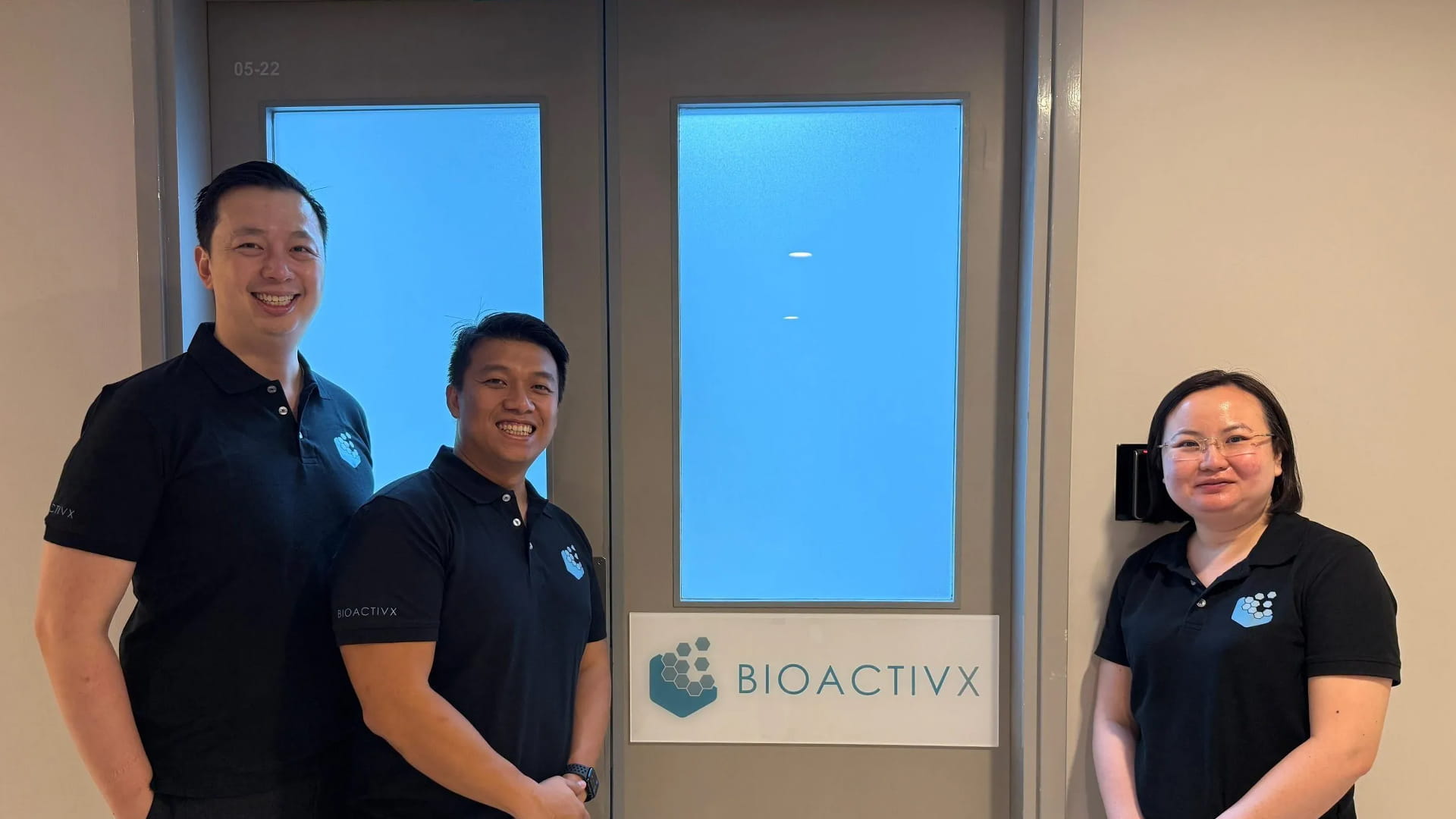
The current week's deal flow contains a specific set of signals that Malaysian operators in the relevant categories should be reading with particular attention. The first specific signal is the Bioactivx pre-Series A funding. Bioactivx is an A*STAR and SingHealth spinoff developing wound care technologies, and the company has raised USD 3 million in a pre-Series A funding round co-led by Martin Krupp (managing director of Swiss family office ContInvest) and Cocoon Capital. The latest round brings Bioactivx's total funding to USD 4.9 million. The company is developing Bioactiv Matrix, a fully synthetic skin substitute designed to support tissue regeneration, reduce inflammation, and improve wound healing without using animal-derived materials. The specific commercial positioning worth reading precisely is that the product does not require cold chain storage or use in a sterile operating theatre, which potentially expands its use in military operations, emergency response, remote healthcare, and other resource-constrained environments. Bioactivx will use the funding to expand its manufacturing capabilities in Singapore and strengthen its commercial and regulatory teams. That specific commercial trajectory (from A*STAR and SingHealth research through pre-Series A funding through regional manufacturing expansion) is the specific pathway that Singapore's biomedical spinoff ecosystem has been producing at increasing frequency, and Malaysian equivalents should be studying which specific institutional structures produce the equivalent Malaysian pathway.
The second specific signal is the SMBC Asia Rising Fund and Singtel Innov8 investment in fileAI. fileAI is an enterprise software company that automates complex file and data workflows through its fileForge platform, which captures, validates, matches, and reconciles data from unstructured and semi-structured files before publishing structured records into enterprise systems. The company has also launched fileScout, an AI-based tool designed to map and process unstructured enterprise data while reducing token usage. fileAI will use the funding to expand in Japan and deepen its capabilities for the financial services sector, including establishing a local sales, engineering, and customer success team, and building relationships with enterprises moving AI applications from pilots into production. The specific corporate investor combination (SMBC Asia Rising Fund is Sumitomo Mitsui Banking Corporation's regional strategic investment vehicle, and Singtel Innov8 is Singtel Group's corporate venture arm) is the specific pattern of Japanese-Singaporean corporate strategic capital that will increasingly shape Southeast Asian enterprise software category development over the coming three years.
The third specific signal is the Ajaib Series C funding from SBI Holdings. Ajaib, an Indonesian online investment platform, has raised USD 270 million in a Series C round from Japan's SBI Holdings, bringing its total funding to more than USD 500 million. SBI is set to hold a 20 percent stake in Ajaib following the investment. Based solely on the investment amount and stated ownership stake, the transaction implies a valuation of about USD 1.35 billion, although the final figure would depend on the deal structure. Founded in 2019, Ajaib started as a stock trading app with no minimum deposit targeting younger retail investors, and has since expanded its offerings to include global stocks, cryptocurrencies, and stablecoins. The specific implication for the Malaysian consumer fintech operator is that Japanese strategic capital is now flowing into Southeast Asian retail investment platforms at unicorn-scale valuations, which changes the competitive positioning of the entire regional consumer fintech category. Malaysian consumer fintech operators (StashAway Malaysia, Wahed, Versa, and various robo-advisory platforms) should be evaluating whether their own commercial trajectory is aligned with the specific pattern that produces this scale of strategic capital investment.
The Lumio Solar pre-seed funding is worth briefly flagging because it represents a specific commercial model that Malaysian rural energy operators should be studying. Lumio Solar is a Philippine technology company building a distribution network for consumer-ready solar appliances and equipment (solar-powered fans, lights, freezers, portable power stations) that require little or no installation. The company raised USD 900,000 in a pre-seed round led by climate technology venture builder 100x100. The specific commercial hypothesis is that households, micro, small, and medium enterprises, agribusinesses, and institutions facing cost, installation, or property constraints when adopting conventional rooftop solar represent a specific addressable market. That specific market segment exists in Malaysia as well, particularly in Sabah, Sarawak, and rural Peninsular Malaysia. Malaysian rural energy operators should be evaluating whether the Lumio Solar commercial model transfers to Malaysian rural energy market conditions, and if so, whether specific Malaysian operators should establish comparable distribution networks before Lumio Solar or equivalent Philippine operators expand into the Malaysian market.
The Editor's Note
If you are reading this and the pattern fits your business, start the conversation before the conversation starts itself. editor@unpublished.my.
The China deals worth flagging represent a specific coordinated pattern of embodied AI infrastructure investment that Malaysian technology investors should be reading precisely. Zhongke Miwei, a space computing and satellite intelligence company, raised more than RMB 100 million (USD 14.8 million) across Series A1 and Series A2 rounds with Bohua Industrial Investment, Matrix Partners, GL Ventures, and others participating. InstAdapt, a Shanghai-based embodied AI infrastructure company, raised an eight-figure USD sum in seed funding with Xiechuang Smart Technology, V Fund, PDVC, and Wuyue Angel participating. Xingyi Space, a commercial space telemetry, tracking, and control company, raised a nine-figure RMB sum in Series A from Suzhou Capital Group, Lihe Qingtong, Septwolves Holdings, and others. Lingluo Technology, a Shenzhen-based sleep technology company, raised an eight-figure RMB angel round led by Shenzhen HTI Group. LingYu Robotics, an embodied AI infrastructure provider whose robots have been deployed at scale in 7Fresh supermarkets, raised a nine-figure RMB pre-Series A. Synapath AI, a Shenzhen-based embodied AI infrastructure company converting human behaviour in real-world work settings into robot training data, completed two consecutive angel plus funding rounds totalling nearly RMB 200 million.
The specific coordinated pattern across the China deals is worth articulating explicitly: five separate embodied AI or embodied AI-adjacent Chinese companies raised meaningful institutional funding in a single week. That specific frequency of funding across the category is the specific signal that Chinese institutional capital is treating embodied AI as a category positioning play rather than as individual company bets. Malaysian technology investors evaluating exposure to the category should be reading the specific institutional funding pattern as evidence that the category window is opening now, not opening at some indefinite future date. The specific commercial move for Malaysian technology investors is to identify the specific Chinese embodied AI operators most likely to expand into Southeast Asia during the current cycle, and to evaluate whether Malaysian institutional capital should participate in the follow-on funding rounds of those specific operators.
For the Malaysian and broader Southeast Asian operator, four implications run from this deals brief.
One. The Malaysian medtech operator should be reading the Bioactivx trajectory as a specific reference case for how Malaysian biomedical research can be commercialised through institutional funding. The specific institutional pathway that produced the Bioactivx outcome (A*STAR research base, SingHealth clinical validation, ContInvest and Cocoon Capital funding, Singapore-based manufacturing) has direct Malaysian equivalents (SIRIM research base, hospital network clinical validation, potential Malaysian institutional funding, domestic manufacturing). The Malaysian equivalent institutional pathway is not currently producing the equivalent commercial outputs. The specific structural gap needs to be diagnosed and addressed before Malaysian biomedical research falls further behind the Singapore pathway.
Two. The Malaysian enterprise software operator should be reading the fileAI corporate strategic investment as validation that enterprise data workflow automation is now a specific investable category, and that Japanese-Singaporean corporate strategic capital is the specific investor type most likely to fund the next generation of operators. Malaysian enterprise software operators building in this specific category should be establishing direct relationships with SMBC Asia Rising Fund, Singtel Innov8, and equivalent corporate strategic investors during the current cycle, before the corporate strategic capital consolidates around Singaporean and Vietnamese portfolio positions.
Three. The Malaysian consumer fintech operator should be reading the Ajaib SBI Holdings investment as a specific competitive positioning signal. Japanese strategic capital flowing into Indonesian consumer fintech at unicorn valuations produces specific competitive dynamics that the Malaysian consumer fintech operators need to evaluate. Specifically: is Malaysian consumer fintech operators' commercial trajectory positioned to attract equivalent strategic capital, and if not, what specific commercial adjustments would enable the equivalent capital attraction. The window for capital attraction on comparable terms is likely to close as Japanese strategic capital consolidates around the Indonesian consumer fintech positions established in the current cycle.
Four. The Malaysian technology investor with capacity to allocate to embodied AI should be reading the specific frequency of Chinese embodied AI funding as evidence that the category is entering a specific investment window. The specific commercial move is to identify one or two specific Chinese embodied AI operators most likely to expand into Southeast Asia (Sharpa, AgiBot, Unitree, Galbot, and several others), establish specific institutional relationships with those operators, and evaluate whether Malaysian institutional capital should co-invest in specific follow-on rounds or in the Southeast Asian entity structures those operators will establish for regional expansion. Waiting for the operators to establish their regional structures without Malaysian institutional involvement produces meaningfully worse strategic positioning than participating in the structure formation during the current window.
The headline is a routine weekly deals brief. The story is the specific corporate strategic capital flows, category positioning signals, and coordinated Chinese embodied AI funding patterns that will collectively reshape the Southeast Asian technology investment landscape over the next twelve months. The Malaysian operator who reads the deals brief as background news is reading the wrong version. The right version asks which specific corporate strategic relationships, which specific category positioning decisions, and which specific co-investment opportunities the operator should be pursuing this quarter to be positioned when the current investment window closes.