Chery Automobile's first interim results as a Hong Kong-listed company are the specific disclosure the Malaysian automotive supplier and industrial estate operator should be reading with meaningfully more attention than the trade press has been providing. The headline numbers are individually impressive but collectively frame a specific strategic direction that will shape the Southeast Asian automotive manufacturing landscape over the next thirty-six months. Revenue for the six months ended June 30 was RMB 143.28 billion, about USD 21.3 billion, up 1.2 percent year-on-year. Gross profit rose 25.1 percent to RMB 23.04 billion. Gross margin expanded from 13 percent to 16.1 percent. Net profit margin reached 6.3 percent, against roughly 3.8 percent for the broader Chinese automotive manufacturing sector and about 1.5 percent for the average Chinese vehicle manufacturer. Cash and cash equivalents at the end of the period stood at RMB 63.42 billion, or about USD 9.4 billion. Those numbers describe a company that is materially more profitable than its Chinese peers and holds enough liquidity to fund significant capacity expansion decisions over the coming three to five years.
The specific composition of that growth is where the story sits. Chery's overseas revenue reached RMB 98.97 billion, or about USD 14.7 billion, up 51 percent year-on-year. That specific rate of overseas growth is meaningfully faster than the growth of the underlying global automotive market, which the company itself cites at a compound annual growth rate of about 5.2 percent for 2026 to 2035. Chery is growing overseas at approximately ten times the market rate, which is the specific signal that the company is taking meaningful share from incumbent operators in each of the markets it is entering. The composition of that overseas growth also matters. NEV exports at group level rose 175.7 percent year-on-year in the first seven months of 2026, more than twice the growth rate of overall exports during the period. In Europe specifically, Chery sold more than 100,000 NEVs during the same seven-month period, up 332.5 percent year-on-year, with NEVs accounting for roughly half of the company's total European vehicle sales.
The strategic frame Chery articulated for the shift is worth reading precisely. The company has said it is moving from primarily exporting vehicles to building a more localised operating system across production, sales, and after-sales services. That specific framing is not the language of an export-focused Chinese automaker. It is the language of an internationalising OEM building durable operating positions in each of its target markets. The twelve global production bases, three of which are already outside China, are the operational manifestation of that strategic frame. The specific question for Malaysia is which of the next several production base decisions Chery will make will land in Southeast Asia, and on what terms. The competitive dynamic is that Chery's Thailand production base and Indonesia production base decisions have been the subject of active regional attention. Malaysia is not yet on Chery's publicly disclosed list. The window for Malaysia to establish itself as a credible location for the next production base decision is approximately eighteen months. Beyond that, the strategic decision will have been made without Malaysian input.
The Editor's Note
If you are reading this and the pattern fits your business, start the conversation before the conversation starts itself. editor@unpublished.my.
The NEV positioning within Chery's group results is also worth reading carefully. The company has articulated a battery technology roadmap that spans ternary lithium and lithium iron phosphate chemistries, along with short-blade, prismatic, and large cylindrical cell formats. Its Rhino solid-state battery cells have reached energy density of 400 watt-hours per kilogram, with development targets of 600 Wh/kg. By the end of 2025, vehicles equipped with Rhino batteries had accumulated more than 1.2 billion kilometres of mileage. The specific technical maturity of Chery's NEV portfolio (particularly the solid-state programme, which is broadly considered the next generation of automotive battery technology) is what will determine the durability of the company's NEV growth trajectory over the medium term. Solid-state batteries at 600 Wh/kg would meaningfully change the competitive positioning of the entire NEV category. Chery is one of a small number of Chinese OEMs actively pushing that envelope.
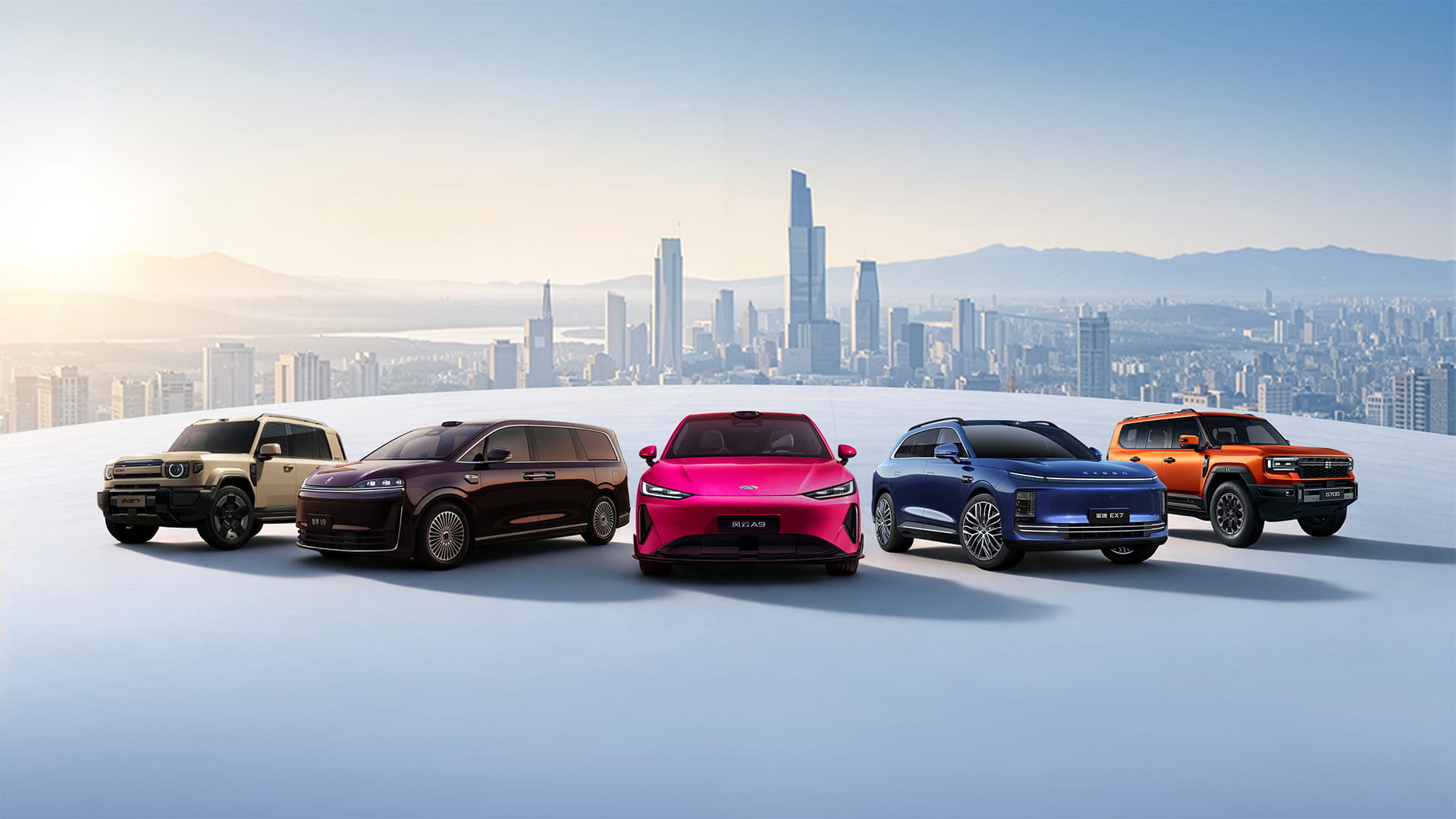
The multi-brand portfolio deserves brief comment because it explains why Chery's growth trajectory is structurally different from single-brand competitors. The company oversees five automotive brands: Chery, Jetour, Exeed, iCar, and Luxeed. They span segments from mass market vehicles and family-oriented SUVs to premium and technology-focused models. Recently launched models across the portfolio have shown strong early demand. The Fulwin A9 electric sedan received 31,000 presale orders within 15 days. The new QQ3 exceeded 10,000 units in monthly sales for four consecutive months. The iCar V27 has led monthly sales among range-extended SUVs in the RMB 200,000 price segment since launch. Monthly deliveries of the Luxeed V9 surpassed 10,000 units. The Freelander 8 received more than 10,000 presale orders within 48 hours of its presale launch. That specific breadth of successful product launches across multiple brands is what gives Chery the ability to enter multiple regional market segments simultaneously, rather than depending on a single flagship product to carry the international expansion.
For the Malaysian and broader Southeast Asian operator, four implications run from this story.
One. The Malaysian automotive supplier ecosystem has a specific window to secure position inside Chery's expanding regional supplier network. The company's shift from export model to localised operating system implies significant increases in regional supplier procurement over the coming three to five years. Malaysian suppliers who qualify into Chery's Southeast Asian supplier network during the current expansion phase will participate in the growth. Suppliers who do not qualify will watch that procurement flow through Thai, Indonesian, and Vietnamese suppliers instead. The qualifying evaluation and audit cycle takes six to twelve months per supplier, which means the credentialing work has to begin now to have any chance of being ready when Chery makes its next round of Southeast Asian supplier decisions.
Two. The Malaysian industrial estate operator has a specific product to sell to Chery. Malaysia's automotive industrial estates (Proton City in Tanjung Malim, Automotive Hi-Tech Valley in Perak, and various established estates across Selangor and Kedah) have specific competitive advantages relative to Thai and Indonesian alternatives, including established supplier density, proximity to the Port Klang container gateway, and Malaysia's specific industrial land and tax incentive frameworks. The specific commercial proposal that Malaysia needs to be presenting to Chery is a comparative site selection document that positions Malaysian estates against the already-announced Thai and Indonesian options. That document has not been publicly developed yet.
Three. The Malaysian NEV charging infrastructure operator has a specific decision to make about whether to design for Chery's specific vehicle portfolio. Chery's NEV lineup uses a specific combination of battery chemistries, charging protocols, and vehicle architecture that produce specific charging infrastructure requirements. Charging network operators (TNB Electron, Gentari, ChargEV, EV Connection) that design specifically for Chery's expanding regional NEV base will position themselves as preferred infrastructure partners for Chery's Southeast Asian market entry. Operators that design for a generic global standard will not receive the same commercial positioning.
Four. The Malaysian dealer network operator has a specific opportunity to secure early Chery distribution rights before the Thai and Indonesian dealer networks establish reference commercial terms. Chery has said its overseas strategy is shifting toward a localised operating system, which implies country-specific distribution partnerships rather than a single regional distributor structure. The Malaysian dealer network operators (DRB-Hicom, Sime Darby, UMW, Bermaz, and the various family-owned automotive distributors) should be evaluating whether Chery represents a strategic distribution opportunity for the domestic market, and if so, on what specific commercial terms. Waiting until Chery approaches the operators, rather than approaching Chery first, produces meaningfully worse commercial terms.
The headline is a Chinese automaker's first set of interim results. The story is the specific manufacturing, supplier, and distribution footprint decisions that Chery is about to make across Southeast Asia over the next eighteen months, and the specific position Malaysian operators need to be establishing before those decisions are finalised. The Malaysian automotive operator who reads the interim results as an earnings story is reading the wrong version. The right version asks which specific commercial actions the Malaysian ecosystem needs to be taking this quarter to be inside Chery's regional expansion when the site selection decisions are made.