Chinese restaurant operators reported a sequence of earnings results over the last quarter that reads like a casualty list. Quanjude Group, the operator of the well-known Peking duck chain with eighty-nine locations and a corporate history dating to 1864, posted full-year fiscal 2025 sales down 11 percent to RMB 1.25 billion. Net profit dropped 77 percent. Both figures fell for the second consecutive year. Tang Palace Holdings, which runs high-end restaurants in Shanghai and other major Chinese cities, posted 2025 sales down 12 percent to RMB 894.58 million. Net loss for the second consecutive year. Even Haidilao, the dominant Chinese hot pot chain, saw revenue fall 7 percent to RMB 37.5 billion.
The reasons stack in a specific order. The Chinese government tightened austerity rules in May 2024, banning civil servants from entertaining at expensive restaurants with elaborate food and alcohol. Ordinary citizens followed the same restraint pattern. A high-end brand image, which used to be a moat in Chinese restaurant economics, became a liability. Customers who would previously have chosen the prestige venue for a business dinner began choosing more modest options or skipping the dinner entirely. The signal value of dining at Quanjude or Tang Palace flipped from positive to negative.
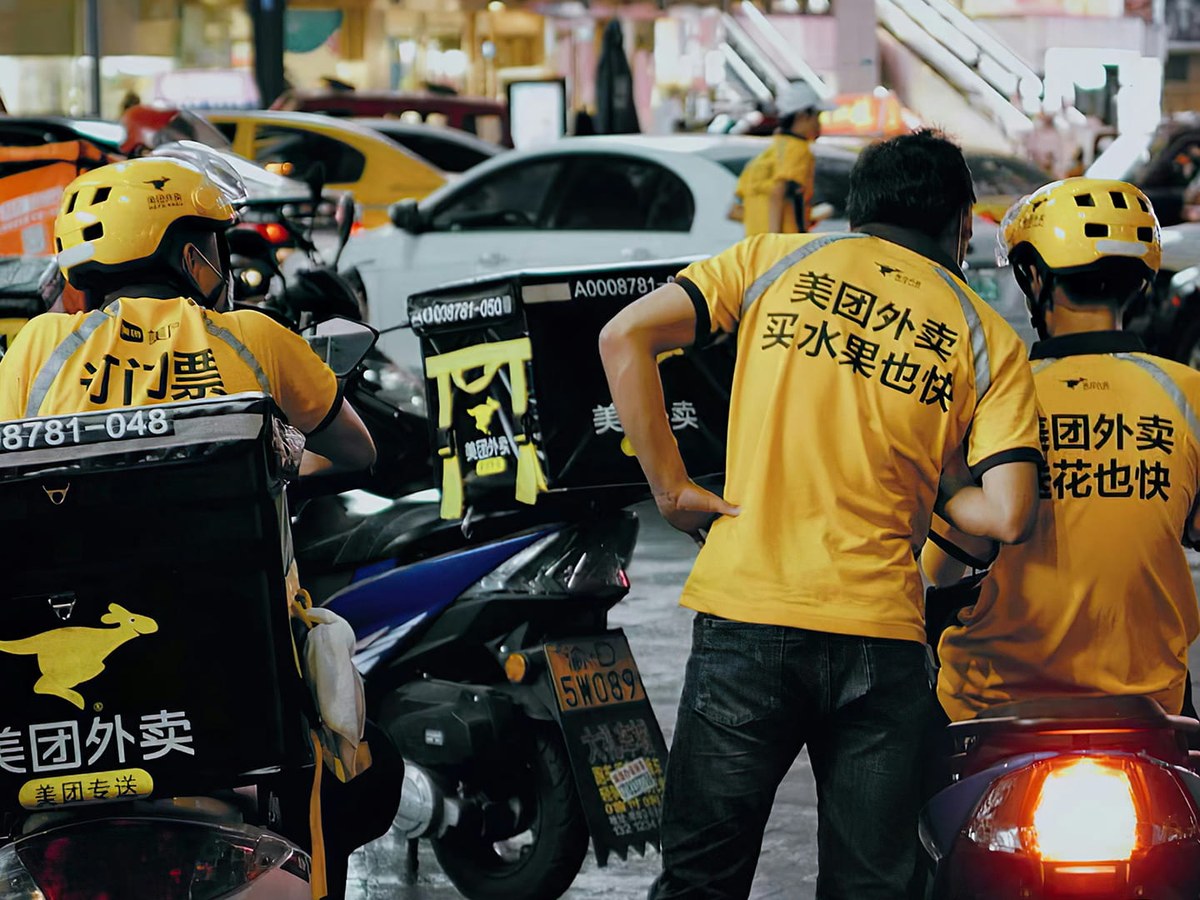
On top of that, the delivery platforms are running a structural price war that is hollowing out the dine-in restaurant economics from a second angle. Meituan, Alibaba, and JD.com collectively spent RMB 74.4 billion on discounts and promotions between April and September 2025, according to local media estimates. That subsidy flood made delivery the most cost-effective way to eat for Chinese consumers who were already cutting back. Approximately 629.79 million Chinese consumers used domestic food delivery services in 2025, according to the China Internet Network Information Center.
Read that number again. Six hundred and twenty-nine million delivery users in a single year. The behavioural shift is permanent. Once the convenience and price differential of delivery has been established in a consumer's daily life, the dine-in option has to compete on something delivery cannot offer. For most mid-market and lower-tier restaurants, the answer is nothing. Their dine-in proposition was convenience and reasonable pricing. Delivery now wins on both.
Hot pot has been hit particularly hard because the cooking-at-the-table experience does not transfer cleanly to delivery. Haidilao has tried to adapt. They prepare disposable aluminium pots for home use. Delivery sales more than doubled year-on-year to RMB 2.6 billion. The increase is real and significant. It is also not enough to offset the dine-in decline. The Pomegranate Plan, Haidilao's response, calls for launching new restaurant formats, conveyor belt sushi, barbecue, desserts, branched out to twenty different formats by the end of 2025. The strategy is to find segments where the delivery substitution dynamic does not apply as severely.
Yum China, the local operator of KFC and other fast food chains, is the counter-example. Revenue grew 4 percent in 2025 to USD 11.7 billion. Delivery orders accounted for 48 percent of revenue, rivalling in-store dining. The difference is that Yum China's product is designed for delivery from the start. The unit economics of a KFC bucket travel well. The unit economics of Peking duck do not.
A BDO survey of 2,298 Chinese restaurants found that nearly 80 percent reported profits hit by the takeout price war. The damage is not a few high-profile chains. The damage is structural across the entire dine-in restaurant category.
Now bring this back to Malaysia and Southeast Asia, because the pattern is two years ahead of where the local market is now.
Malaysian and Singaporean restaurant operators reading this should map the Chinese sequence onto the regional timeline. Consumer austerity arrived in Malaysia through 2025 and is tightening into 2026. The delivery platforms, GrabFood, foodpanda, ShopeeFood, are running aggressive promotional cycles that train customers to expect discounted delivery as the default. The pricing power of mid-market and upper-mid-market dine-in restaurants has been compressing since late 2024. The question is not whether Malaysian restaurants will face the Chinese version of this problem. The question is how far behind the Chinese curve the regional sequence is running.
The Editor's Note
If you are reading this and the pattern fits your business, start the conversation before the conversation starts itself. editor@unpublished.my.
The structural disadvantage is the same. Rent eats restaurant economics whether the orders come from dine-in or delivery. Delivery orders generate platform commissions that compress margins even when volume rises. The customer who used to walk in for a RM45 meal now orders a RM38 delivery, and the restaurant pays a platform commission on the RM38, and the restaurant also still pays the rent on a space that is now less full at peak hours than it used to be. The economics do not work.
Three things distinguish operators who survive this from operators who do not.
One. Format alignment. Restaurants designed around dine-in experience that do not transfer to delivery face a structural disadvantage that cannot be operated around. Hot pot, premium tasting menus, anything where the product is the experience, not the food. These operators either need to develop new formats that work for delivery, the Haidilao strategy, or they need to position the dine-in experience as a premium worth paying for, which only works in a small upper-tier segment of the market.
Two. Brand defensibility. Operators with strong brand equity can defend pricing even when the delivery economy compresses the broader category. Yum China's KFC commands premium over generic fried chicken even on delivery, because the brand still carries weight. Malaysian restaurant operators without that brand equity become commodities the moment the customer orders through a delivery app, where the brand recedes and the price tag becomes the primary comparison.
Three. Platform independence. Operators who can drive a meaningful percentage of orders through direct channels, their own website, their own WhatsApp, their own loyalty programs, retain margin that the platform-dependent operators cede entirely. This is hard. It requires investment in technology and customer relationship infrastructure that most Malaysian SME operators have not made. But the operators who did make those investments in 2024 are visibly outperforming the ones who did not in early 2026.
The Chinese sequence is the early warning system. The dynamic is structural, not cyclical. The Malaysian F&B operator who is still treating delivery as supplementary income to a fundamentally dine-in business model is operating on a category definition that the consumer has already abandoned. The operators who survive the next eighteen months are the ones who restructure their cost base, format, and brand position for a market where delivery is the primary channel and dine-in is the premium experience for the customer who has explicitly chosen to be there.
China is starving while the platforms feast. Malaysia will follow if Malaysian operators keep planning for a market that does not exist anymore.