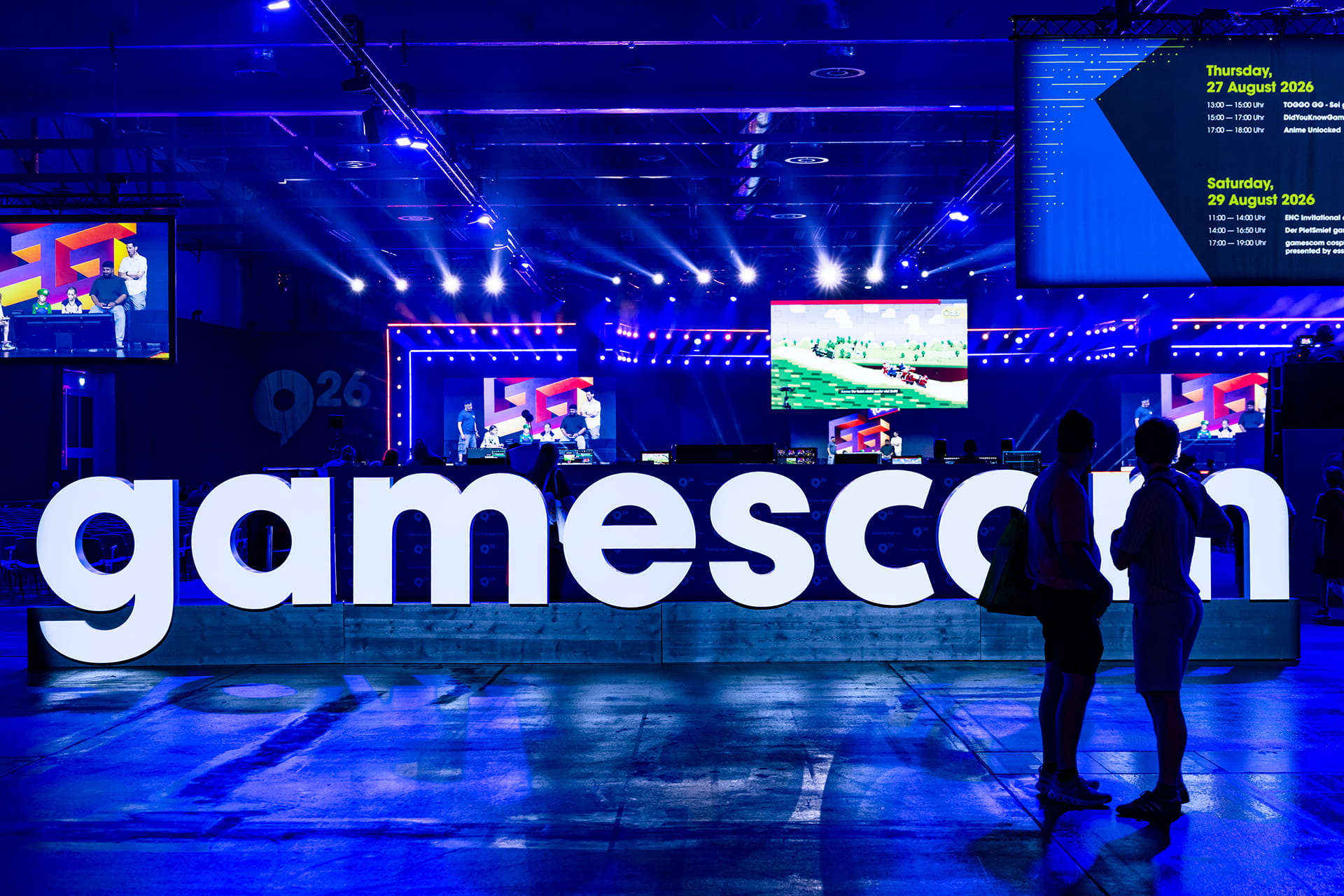
Gamescom is one of the two largest video game trade shows in the world, alongside Tokyo Game Show. Its Opening Night Live program is the specific segment that global media coverage focuses on most heavily, because it is the segment where major publishers and studios unveil their upcoming release slates for the following twelve to eighteen months. The specific presence at Opening Night Live is the reference credential for a studio's international commercial viability, particularly for premium single-player and multiplayer titles targeting the Western and Japanese markets. Gamescom 2026 was the specific edition where Chinese-developed and Chinese-published titles crossed a specific numerical threshold that the trade press had been tracking. Fourteen of the more than fifty games featured during Opening Night Live were developed or published by Chinese companies. That specific count is the highest in the event's history, and it represents a categorical shift in the international perception of Chinese game development capability.
The specific composition of the Chinese slate deserves careful reading. Mihoyo, operating internationally as Hoyoverse, opened the show with Nodusfall, a mythology-inspired 3D cooperative title that combines elements of ancient Chinese mythology (the Classic of Mountains and Seas, the Chinese flood myth, the nine-tailed fox) with Western mythological elements (the dragon from the Nibelungenlied). That specific creative mixing (deliberately combining traditions from multiple cultures within one fantasy world) is a departure from Mihoyo's previous work, which drew more narrowly on East Asian aesthetic traditions. Mihoyo co-founder Liu Wei described it as a game that felt very unlike Mihoyo. The specific creative departure signals that Mihoyo is deliberately expanding its cultural range in ways that broaden the international appeal of its future titles.
NetEase's Ananta is the specific Chinese title with the most immediate global commercial significance. The game is scheduled for a January 15, 2027 global launch with simultaneous releases on PC, PS5, and mobile platforms. It combines an anime-style urban environment with an open-world design model that recognisably draws on Hangzhou and Shanghai landmarks (the Oriental Pearl Tower, the Bund, West Lake, Leifeng Pagoda, Longjing Village) integrated into a single fictional city. That specific setting deliberately positions Chinese urban aesthetic and cultural references as a core commercial asset of the game, in the same way that Japanese urban aesthetic and cultural references have been core commercial assets of Japanese role-playing games and adventure titles for decades. If Ananta converts internationally, the specific pattern (Chinese urban aesthetic as globally saleable content) will be repeated by other Chinese studios seeking international commercial position.
Tencent brought six titles and related projects to Gamescom this year, spanning several genres and business models. The lineup included in-house-developed and published games, projects based on established overseas IP (Monster Hunter Outlanders under license from Capcom, developed by TiMi Studio Group), and titles released through international publishing brand Level Infinite. Level Infinite's slate included Control Resonant from Finland's Remedy Entertainment and Exterminauts from Behaviour Interactive (developer of Dead by Daylight). That specific portfolio breadth (in-house Chinese IP, licensed Chinese-developed adaptations of established international IP, and published titles from established international studios) illustrates Tencent's specific commercial strategy of playing every side of the global game category simultaneously. That strategy produces revenue diversification and commercial optionality that single-strategy publishers cannot easily match.
The Editor's Note
If you are reading this and the pattern fits your business, start the conversation before the conversation starts itself. editor@unpublished.my.
The smaller studio presence at Gamescom 2026 is the specific development that deserves more attention than the trade press has provided. Nekcom Games brought Showa American Story, a game set in an alternate US colonised by Japan. Nekcom founder Luo Xiangyu previously worked at Ubisoft Shanghai and an EA studio. The company has completed several financing rounds. Haotang, developer of The Defiant, is a smaller team of dozens working on a first-person shooter about China's resistance against Japan during the second World War. TiGames' Zoopunk is a third-person action title in the same universe as its predecessor FIST: Forged In Shadow Torch. Happy Elements' Silver Palace received a Gamescom Award nomination for Best Mobile Game. Each of these specific studios represents a smaller-scale Chinese game development operation that has secured international stage presence at Gamescom for the first time, which is the specific commercial credential that opens international distribution partnerships, international investor relationships, and international publishing opportunities.
The specific creative direction underneath the Chinese Gamescom presence is worth articulating precisely because it explains what has changed in international perception of Chinese game development. For roughly a decade, Chinese-developed games competing internationally were characterised primarily as free-to-play mobile titles targeting scale monetisation rather than as premium single-player or multiplayer experiences targeting critical recognition. Black Myth: Wukong, released in 2024, was the specific title that shifted that perception by demonstrating that Chinese studios could produce premium single-player titles that competed internationally with the best Japanese, American, and European work. The Gamescom 2026 slate is the specific evidence that the Black Myth: Wukong breakthrough was not a one-off event, but the beginning of a sustained pipeline of premium Chinese titles that will compete for international commercial and critical position over the next several years. Tides of Annihilation, nominated for Best PlayStation Game at Gamescom 2026 alongside Dragon's Dogma 2, Metro 2039, and Onimusha: Way of the Sword, is the specific title that most directly extends the Black Myth: Wukong pattern.
For the Malaysian and broader Southeast Asian operator, four implications run from this story.
One. The Malaysian digital content investor with exposure to game development should be evaluating whether the current portfolio positioning captures the specific Chinese game development pattern that is producing international commercial breakthrough, or whether the portfolio is positioned for the earlier free-to-play mobile pattern that is now increasingly commoditised. The specific evaluation question is whether Malaysian portfolio companies are targeting premium international positioning (Steam-native single-player or multiplayer titles, console releases, international critical recognition) or whether they are targeting the Chinese domestic mobile market. Both are valid commercial positions. They produce meaningfully different investor return profiles.
Two. The Malaysian game studio should be reading the smaller-studio Chinese Gamescom presence as a specific demonstration that international stage presence is now accessible to studios below the Tencent, NetEase, and Mihoyo scale. Malaysian studios (Streamline Studios, Passion Republic Games, Kaigan Games, Metronomik, and various smaller operators) should be evaluating whether their current product development trajectory, marketing positioning, and international partnership relationships are aligned with the specific requirements for future Gamescom, PAX, or Tokyo Game Show stage presence. The specific commercial move is to establish the international relationships and stage presence during the current window, before regional competitors from Thailand, Vietnam, and Indonesia establish reference international commercial positions.
Three. The Malaysian government body responsible for digital content industry support (Cradle Fund, MDEC, Ministry of Communications and Digital) should be evaluating whether current support programmes are aligned with the specific pathway that produces Chinese studio international breakthrough. The specific pathway includes premium single-player and multiplayer title development (rather than exclusively mobile free-to-play), Chinese cultural design language incorporation (rather than generic Western pastiche), and international stage-presence investment (rather than exclusively domestic marketing). Malaysian equivalents of each of these categories (Malaysian cultural design language incorporation, premium title development support, international game trade show presence funding) would produce meaningfully better positioning for Malaysian studios than the current programme mix.
Four. The Malaysian retail landlord in the entertainment and F&B category should be reading the specific rise of Chinese premium gaming culture as a specific consumer segment opportunity. Chinese premium gaming culture (esports viewing, gaming lifestyle merchandise, gaming-themed food and beverage) has produced meaningful retail activity across Chinese Tier 1 cities. That specific consumer segment is likely to emerge as an addressable market in Kuala Lumpur, Penang, and Johor Bahru over the next thirty-six months as Chinese premium gaming brands expand internationally. Retail landlords positioning specific spaces for the emerging gaming culture consumer segment will capture the specific tenant demand that will follow.
The headline is Chinese games taking centre stage at Gamescom 2026. The story is the specific categorical shift in international perception of Chinese game development capability, and the specific commercial pathway that is now available to Southeast Asian studios seeking international commercial position. The Malaysian operator who reads the Gamescom coverage as a China story is reading the wrong version. The right version asks which specific commercial actions Malaysian digital content investors, game studios, government support agencies, and retail landlords need to be taking in the next eighteen months to be positioned when the international game industry consolidation around Asian premium content continues.