The wearable health monitoring category is one of those consumer electronics segments the trade press has been declaring mature for about three years, and yet the underlying market conditions keep producing structural shifts that the maturity framing does not capture. Global wearable device shipments reached about 200 million units in 2025, according to Omdia. Health monitoring is the specific application category driving that volume. The problem the incumbent operators have been unable to solve is retention. Many devices are purchased, worn for a few months, then left in a drawer because users find them uncomfortable to wear continuously, annoying to charge, or difficult to interpret. When the data does raise questions, users still need to consult a doctor. That specific gap between purchase and sustained use is where the category is quietly restructuring, and the trade press coverage has been undercounting the strategic significance of the shift.
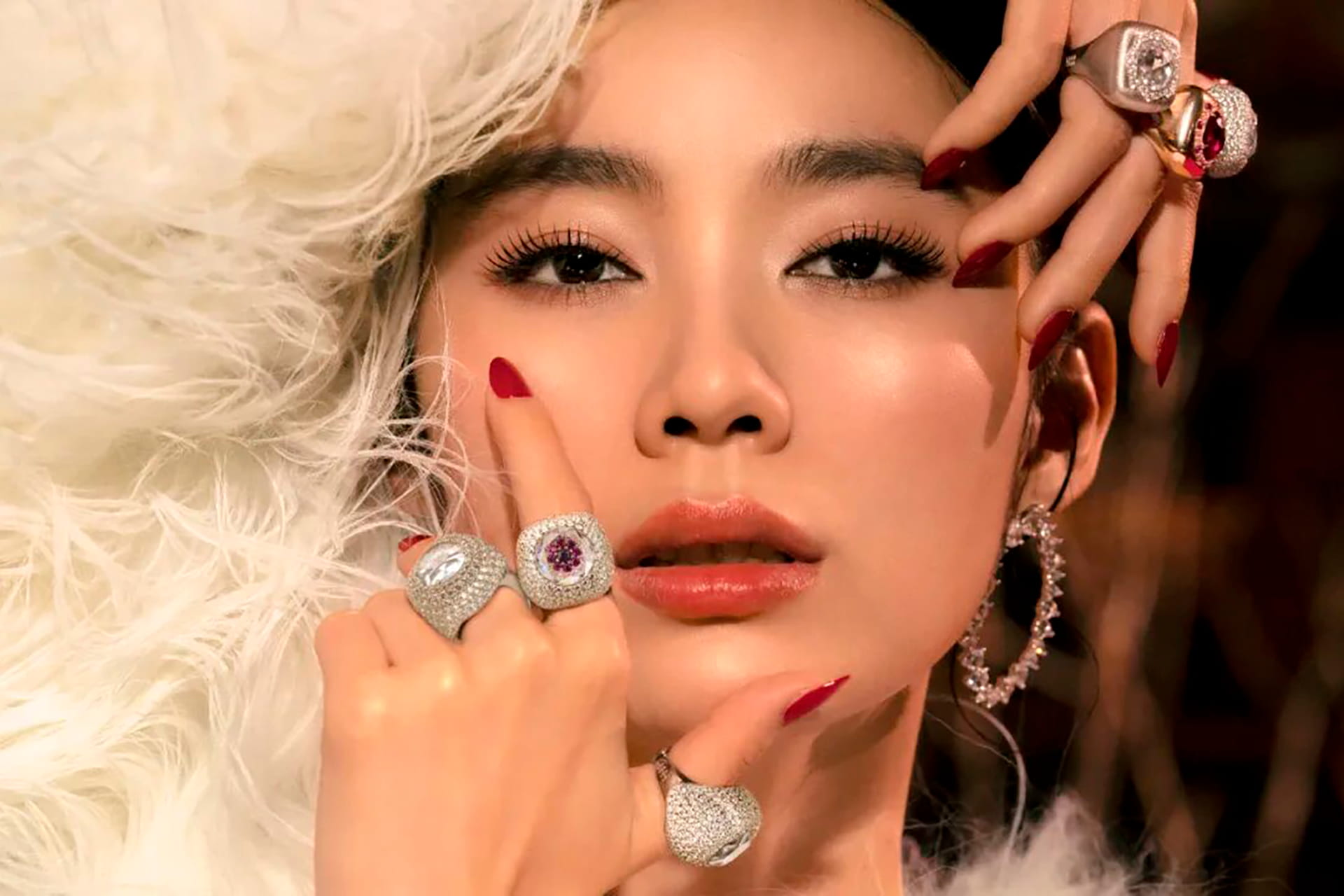
Dr H is the Hong Kong smart wearable brand that has moved most explicitly to redefine the category around that retention gap. Founded in 2023 by Haichuang Intelligent Technology, which operates as HC Smart, and by prominent Hong Kong designer Alan Chan, the brand chose deliberately not to compete in the wristband or watch categories where Apple, Fitbit, Samsung, Garmin, and Xiaomi have already established structural competitive positions. Dr H made a smart ring. The brand has launched two series to date, Wuji and Taiji, positioned as combining Eastern design sensibility with Western refinement. The specific product decision that separates Dr H from the smart ring competitors like Oura, RingConn, and Ultrahuman is that Dr H is engineered to look like a piece of fine jewelry rather than a piece of technology. The Wuji ring draws on the language of fine jewelry to change how consumers perceive traditional wearable devices, with the specific commercial hypothesis that users will wear a jewelry-form-factor device continuously in ways they would not wear a technology-form-factor device.
The strategic logic underneath the form factor decision is worth reading carefully. The specific weakness of watches, wristbands, and other visible wearables is that users take them off during meetings, showers, charging, business trips, and social occasions. Once the device is removed, continuous monitoring is interrupted. Continuous monitoring is what produces the density of data that makes trend analysis meaningful. A ring, particularly a ring engineered to be worn as jewelry rather than as visible technology, is more likely to be worn continuously across all those interruption scenarios. The commercial hypothesis is that continuous wear produces better data, better data produces better health insights, and better health insights produce sustained user engagement that keeps the device from ending up in a drawer. If the hypothesis holds, the underlying business model produces materially better lifetime value per device than the traditional wearables category has been able to achieve.
The subscription-free positioning is the second commercial decision worth reading. Most consumer health wearables have shifted toward recurring revenue models where the hardware is a customer acquisition cost and the software subscription is the durable revenue stream. Whoop, Oura, and Apple Watch Health+ all follow variants of that model. Dr H has explicitly rejected the subscription model, positioning the device as a one-time purchase with ongoing app functionality included. That decision produces meaningfully lower ongoing revenue per user, but structurally higher purchase intent among the specific customer segment that resists subscription models. The strategic tradeoff is between recurring revenue optimisation and purchase resistance optimisation, and Dr H has made the deliberate choice that positions the brand against the specific customer segment (consumers who have grown resistant to subscription creep) that the subscription-heavy competitors cannot easily attract.
The Editor's Note
If you are reading this and the pattern fits your business, start the conversation before the conversation starts itself. editor@unpublished.my.
The health management ecosystem Dr H is building around the ring is the piece the trade press coverage has been undercounting. Beyond monitoring hardware, Dr H has built an app with a health assistant trained on more than one million professional journal articles that provides companion-style health consultations around the clock. The assistant is positioned as a pre-consultation tool between users and professional medical care, not as a substitute for diagnosis. It can help users understand their bodies more frequently, and may help them describe symptoms more clearly when they seek medical treatment. The company has partnered with the Hong Kong Productivity Council on algorithm development and built a medical expert advisory system focused on endogenous anti-aging research. The brand is also moving into adjacent products (smart glasses with translation and audio functions, smart eye masks for sleep support, smart water bottles for hydration tracking) that expand the ecosystem beyond pure health monitoring into a broader smart living portfolio.
The category-level frame the Dr H strategy expresses is worth articulating explicitly. The wearable health monitoring category is now splitting into three positions. The first position is the technology-first watch and wristband segment, where Apple, Samsung, Fitbit, and Garmin have established structural competitive advantages. The second position is the recovery-and-performance segment, where Oura, Whoop, and Ultrahuman have built subscription-based ecosystems targeting specific health optimisation use cases. The third position is the jewelry-form-factor everyday-wear segment, where Dr H is deliberately positioning to define the category. Each position produces meaningfully different customer acquisition strategies, different price points, different distribution channels, and different lifetime value structures. Malaysian retailers evaluating the category should be reading it as three separate segments rather than as a single wearables market.
For the Malaysian and broader Southeast Asian retail operator, four implications run from this story.
One. The jewelry-form-factor position is the specific opportunity Malaysian premium jewelry retailers should be evaluating carefully. Habib, Poh Kong, Wah Chan, and the various premium jewelry operators have distribution infrastructure, customer trust, and price-point positioning that align with the Dr H product category. A partnership between Dr H (or a similarly positioned regional operator) and Malaysian premium jewelry retailers would produce a category launch that neither participant could achieve independently. The specific move is not to license the finished product line. The specific move is to co-develop a Malaysia-specific smart jewelry range that leverages the retailer's brand credibility with the technology partner's operational capability.
Two. The subscription-free positioning is the specific competitive edge Malaysian brands should be considering when they compete against globally subscription-heavy competitors in adjacent product categories. Consumers across Southeast Asia have grown increasingly resistant to subscription models when equivalent functionality is available as a one-time purchase. Malaysian consumer product operators evaluating category entry decisions should be considering whether the specific positioning against subscription creep opens meaningfully underserved customer segments in categories including software, streaming, wellness apps, and connected devices.
Three. The Hong Kong Productivity Council partnership model is the specific institutional partnership template the Malaysian equivalent should be studying. The Malaysian Productivity Corporation and various Malaysian research institutes have technical capabilities that could support similar algorithm development partnerships for Malaysian consumer product operators. The specific model (private-sector product company partners with government-adjacent research institution on algorithm development, with defined IP allocation and go-to-market commitments) produces credibility and technical capability that individual Malaysian consumer product operators cannot easily build from scratch.
Four. The smart living portfolio expansion is the specific business model Malaysian consumer product operators should be reading as a template for category diversification. Dr H is not building a single-product company. It is building a category-defining smart living brand that expands into adjacent products (glasses, eye masks, water bottles) that share the same design sensibility but serve different daily use cases. The specific portfolio approach produces cross-selling economics and brand equity compounding that single-product operators cannot match. Malaysian consumer product operators considering how to build durable brands should be reading Dr H's portfolio strategy as a specific template for the underlying commercial logic.
The headline is a Hong Kong brand launching a smart ring. The story is the deliberate splitting of the wearable health monitoring category into three separate strategic positions, with a specific opportunity opening for regional retailers positioned to occupy the jewelry-form-factor everyday-wear segment. The Malaysian retail operator who reads the smart ring as a smart ring is reading the wrong version. The right version asks which position Malaysian retailers should be occupying and what specific partnerships need to be built now to occupy it.