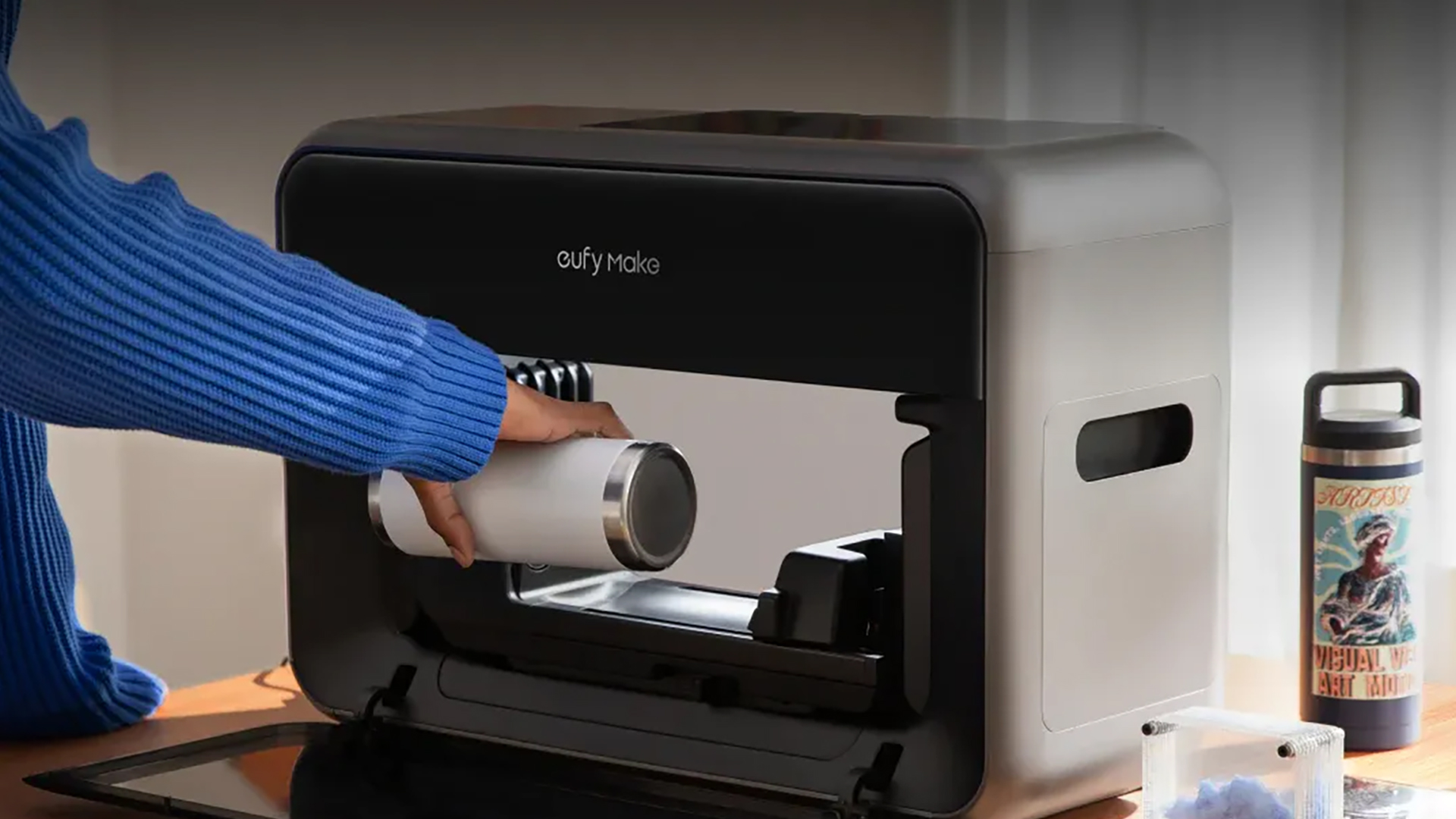
At ten o'clock on the evening of April 29, 2025, the EufyMake E1 went live for crowdfunding on Kickstarter. In the first minute, it raised USD 1 million. By the time the campaign closed, it had raised USD 46.7 million. That total is now the highest-funded project in the history of Kickstarter. A year later, the product has been delivered to most of those original backers and has gone on sale in China. Anker, the parent company, is now sitting on a category that did not exist eighteen months ago.
The press coverage of this story has focused on the crowdfunding numbers. Most readers will see those numbers and pattern-match to a familiar narrative. A clever hardware company runs a viral campaign and rides the wave. That framing is comfortable. It is also wrong. The interesting part of the EufyMake story is not the demand-side moment. It is the supply-side discipline that was required for that demand-side moment to translate into actual shipped product instead of becoming another high-profile crowdfunding failure.
Anker has a recent reminder of what can go wrong. The company's previous hardware project, AnkerMake's 3D printer, also set a crowdfunding record. Mass production and delivery then ran into problems and the launch stumbled. Different team, different category, same parent. The institutional memory was direct and recent. For EufyMake, the question was whether the second time around the company could ship at scale without repeating the same operational stumble.
The answer, based on what Cheney Xie, EufyMake's product and R&D lead, told 36Kr, was that the team treated the supply-side build as the actual product. The crowdfunding was the marketing layer. The mass production system was the company being built. They held nearly 200 review meetings during the development phase. By day, the team worked on the product. By night, they reviewed individual modules to ensure each one used the optimal architecture. Xie remembers the conference room door handle being broken during one of the more heated sessions. That detail is the more honest portrait of the company than the crowdfunding screenshots.
What did the operational discipline produce that the campaign hype did not. Three categories of structural advantage that most Asian hardware companies do not yet have.
One. Cost engineering through reverse decomposition. When EufyMake studied the industrial UV printing market, they found a printhead control board selling for RMB 40,000, or roughly USD 5,888. Asking the supplier for a high-volume price brought it down to RMB 4,000, still around USD 589 per unit. EufyMake could not afford that either. So they disassembled the board, calculated the bill of materials, and found that the actual component cost was about RMB 400, or USD 59. The other ninety-nine percent of the price was R&D amortisation. Industrial suppliers were selling only a few thousand boards a year while paying for over a hundred R&D staff. The pricing was a function of the supplier's cost structure, not the technology's cost structure. Once EufyMake knew that, the decision to develop the board in-house was straightforward. The cost came down because the company moved up the supply chain and absorbed the R&D function. This is not a clever insight in isolation. It is the operating discipline of looking through a price quote and asking what is actually inside it.
Two. Category redefinition through architecture compression. Industrial UV printing is divided into four distinct machine categories. Flatbed printers. Rotary printers. Crystal label printers. Roll-to-roll printers. Industrial specialisation works because the customer is a factory with one specific use case. The consumer is a long-tail creator with many possible use cases. So EufyMake compressed the functions of all four machines into a single unit, while shrinking the volume to one-tenth of an industrial machine. They overturned the architecture three times before settling on a staggered dual-Y-axis design borrowed from 3D printing's gantry structure. They opened the mould, and then after seeing textured paintings at an exhibition decided to add 3D texture as the headline innovation, which required restarting the mould process and delaying the project. They made that decision because they had visited Dafen Village, printed sample textured paintings, and watched user eyes light up when seeing them. The decision to add 3D texture cost them schedule. They added it anyway, because the user-side signal was clear. This is a different decision-making framework than most Asian hardware companies operate from. The dominant pattern in regional hardware is to ship on schedule and add features later. EufyMake delayed schedule to add the feature now. That difference shows up in the product positioning.
The Editor's Note
If you are reading this and the pattern fits your business — start the conversation before the conversation starts itself. editor@unpublished.my.
Three. The hardest part of building a new category. Building the consumer-grade version of an industrial supply chain that does not yet exist. UV ink is the cleanest example. More than 80 percent of the world's UV ink is produced in China, but it is industrial UV ink, used in factories on machines that cost hundreds of thousands of RMB. Industrial UV ink does not need to be safe to touch. It does not need to meet child-touch certification. It can clog printheads because professional workers can clean a printhead with a syringe. None of these conditions apply when the machine is sitting in a consumer's living room and a child is touching the output.
EufyMake had to redefine UV ink for the consumer category. They approached UL for the strictest available environmental and safety certification, Greenguard Gold. They set a color difference standard, Delta E less than six, that meets industrial print quality. They built a sealed cartridge system, because the ink is mildly corrosive before curing and consumers should not be reaching into the machine to touch it. They added chips and QR codes to the cartridges for tracking from production source through expiry. They built filtration in a Class 10,000 cleanroom because consumers cannot use a syringe to clear a clogged printhead. They designed a Jet Clean automatic maintenance system that fills the printhead with maintenance fluid when the machine is idle, because they know consumers will not maintain it. They offer printhead replacement insurance, because the printhead is expensive and consumers expect to be protected.
Each of these decisions raised cost. The ink now sells overseas for USD 42.99 per 100 millilitre cartridge. Some consumers have called the ink expensive, comparing it to industrial UV ink prices. EufyMake's answer is that the comparison is structurally wrong. The product is a different category. The cost reflects the redefinition.
This is the part that the Malaysian and Southeast Asian hardware founder should read most carefully. The temptation when entering a category that already exists at industrial scale is to ride the existing supply chain and capture the consumer market by riding on industrial cost structures. EufyMake's analysis says that this strategy does not work. The industrial supply chain is optimised for a different customer. It cuts corners that the consumer category cannot accept. Once you set genuinely consumer-grade specifications, you discover that the supply chain you need does not exist yet, and you have to help build it. Costs rise. Margins compress. The compensating advantage is that you are now the company that built the supply chain, and the next competitor entering the category has to either ride yours or build their own from scratch.
For Anker specifically, this is the company's second consumer hardware act after its original power and charging business reached saturation. The first attempt, AnkerMake's 3D printer, struggled with the same supply chain transition. EufyMake's E1 succeeded in part because the team had access to Anker's broader supplier network for mould, plastic, and assembly, and could focus its supply chain innovation on the parts that were genuinely novel, the printhead system and the ink chemistry. This is the parent-company advantage that most regional hardware startups do not have. The lesson is not to imitate Anker. The lesson is to identify what your own version of the parent-company advantage is, and build only the components that genuinely have to be built from scratch.
The EufyMake E1 is now in tens of thousands of homes. Other Chinese hardware companies, including xTool and Bambu Lab, are following up with their own UV printer products. The category that did not exist eighteen months ago is now a category. The question for any operator in the regional hardware ecosystem is which category will be created next, and whether they are operating with the discipline required to be the company that creates it, or the discipline required to be the company that arrives second.
The headline is a crowdfunding record. The story is a supply chain that did not exist being built one component at a time. That is the durable advantage. The campaign was the announcement. The category build was the company.