In 2026, Hong Kong has entered an IPO cycle led by artificial intelligence companies. Compared with the 2025 rush of hard tech listings and A-share dual filings, this year the dominant theme has shifted toward AI. The market is also showing greater tolerance for high valuations and stronger investor enthusiasm than at any point in the previous five years.
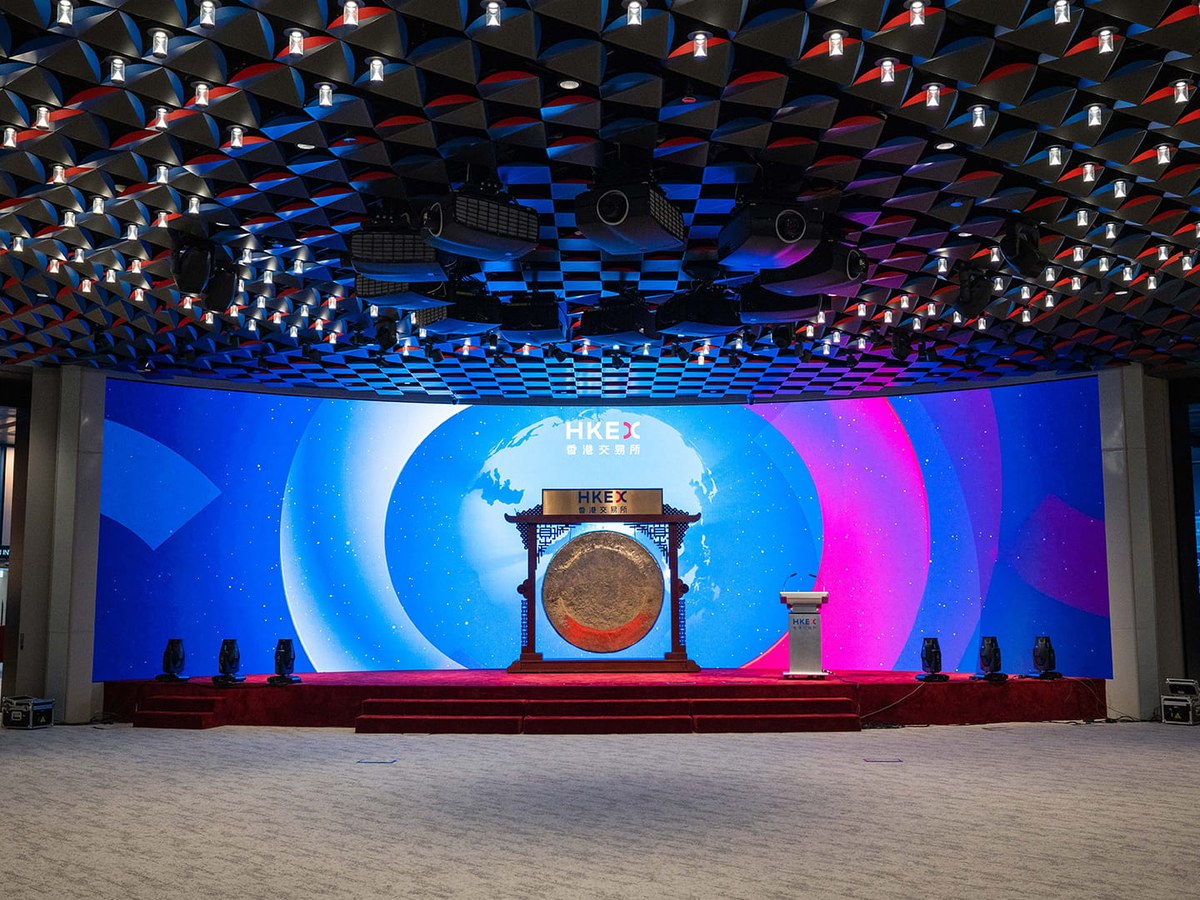
The numbers are visible. The Hong Kong Stock Exchange raised HKD 109.9 billion in IPO proceeds in the first quarter of 2026 alone, across 40 listings, nearly six times the amount raised in Q1 2025. Chapter 18C specialist technology listings accounted for HKD 19.5 billion of that total, around 18 percent. Hong Kong reclaimed its position as the world's top IPO fundraising hub.
Several Chinese AI companies have crossed RMB 100 billion in market capitalisation since the start of the year. Large model developers Zhipu AI, also known as Z.ai, and MiniMax both reached valuations in the hundreds of billions of RMB. Xunce Technology surged 500 percent since its listing to enter the same valuation tier. Chip companies including Iluvatar CoreX and Biren Technology also crossed the threshold. Shanghai Biren Technology, the first listing of 2026 on 2 January, debuted with a 76 percent first-day gain, opening at HKD 35.70 versus an IPO price of HKD 19.60, and closing at HKD 34.46 on a turnover of HKD 5.52 billion.
The pattern is unmistakable. The market is paying premium valuations for Chinese AI companies that, in many cases, have limited revenue and significant losses. The 2026 IPO logic for these names is not driven by current financial performance. It is driven by strategic positioning in a category that the Chinese government, the major Chinese hyperscalers, and a broad base of domestic enterprise buyers have all explicitly committed to scaling rapidly over the next three to five years.
Now the question the original 36Kr analysis raised, and that Hong Kong's IPO market will spend the rest of 2026 answering. Can industrial AI companies carry the rest of the year?
Industrial AI is the category of applications that embed AI into manufacturing, logistics, energy, construction, and other industrial processes. The companies in this category are typically not large model developers or chip designers. They are operators that take AI capability and apply it to specific industrial workflows, often replacing labour or improving process efficiency in established sectors. The economics are different. The valuations have historically been more modest. The path to public listing has been less obvious than for the model and chip companies that have led the 2026 wave.
Three questions matter for whether industrial AI can carry the next phase of Hong Kong's IPO market.
First, can growth move from leading enterprise customers into a broader base of midsized manufacturers? The early traction in industrial AI has come from large-scale enterprise customers with the technical resources to integrate AI into complex existing operations. Foxconn. CATL. BYD. Sinopec. These customers can absorb the cost of integration and have internal teams to drive adoption. The much larger commercial opportunity is the long tail of midsized manufacturers across China and Asia who do not have those resources but who collectively represent a much larger total addressable market. Whether industrial AI companies can package their offerings into products that midsized buyers can deploy without heavy customisation will determine whether the category is a niche or a market.
The Editor's Note
If you are reading this and the pattern fits your business, start the conversation before the conversation starts itself. editor@unpublished.my.
Second, are narrowing losses being supported by genuine internal cash generation? The 18C listings of 2026 have been priced on the assumption that the loss-making AI companies will eventually become profitable through volume scaling. That assumption is harder to sustain for industrial AI than for model companies, because industrial AI typically involves longer sales cycles, more customised implementations, and lower software gross margins than pure software-as-a-service economics imply. The investors who priced the 18C tech listings at premium valuations will start scrutinising actual cash conversion much more carefully if the macro environment turns less forgiving in the second half of 2026.
Third, can scale effects translate into hard financial metrics that survive after listing? The Hong Kong IPO pipeline includes industrial AI companies in robotics, factory automation, predictive maintenance, computer vision for quality control, and AI-powered supply chain optimisation. Each of these categories has plausible scale economics. None of them has yet produced a public-market reference case that demonstrates the post-IPO financial trajectory in a way that institutional investors can model with confidence.
The introduction of AI into production processes is a key issue in the intelligent transformation of manufacturing. But this is not simply a matter of experimenting with technology. It is also a response to demographic changes and rising labour costs across the Chinese manufacturing base. For enterprises, replacing labour with machines and using AI to optimise operations is no longer an optional efficiency play. It is a structural necessity driven by the same labour cost dynamics that are also affecting Southeast Asian manufacturing.
This is the part that should matter to Asian operators outside China. The industrial AI buildout that is currently being financed through Hong Kong listings is producing technology that will be exported into the broader Asian manufacturing ecosystem over the next five to ten years. Malaysian manufacturers in Penang, Kulim, and the Iskandar region will increasingly find that the competitive baseline for industrial productivity is being reset by Chinese factories running AI-powered operations. The same dynamic applies to Vietnamese, Thai, and Indonesian manufacturers.
The Hong Kong IPO market is therefore not just a Chinese capital market event. It is the capital raise that funds the next phase of Chinese industrial competitiveness across the entire Asian manufacturing region. The companies that go public in Hong Kong over the next twelve months are the ones building the tools that will reshape what Asian manufacturing looks like by 2030.
For Southeast Asian operators reading this, the strategic implication is specific. The cost of AI-powered industrial capability is going to fall rapidly as the Hong Kong-listed industrial AI companies scale and standardise their offerings. The capability that costs a million USD to deploy today will cost fifty thousand to deploy in three years. The Asian manufacturer who waits for the cost to fall before adopting will be operating two years behind the competitor who moves earlier. The competitive position is determined by adoption timing, not by absolute cost.
Hong Kong's IPO wave is real and significant. The model companies and chip companies have led it. The industrial AI companies are next. The question of whether the second wave delivers the same returns to investors as the first will be answered in the financials of the post-IPO names over the next six to twelve months. The question of whether Asian manufacturers reading these IPO announcements understand what is about to happen to their competitive landscape is more important, and will be answered in the order books of the industrial AI companies whose customers they are about to become.