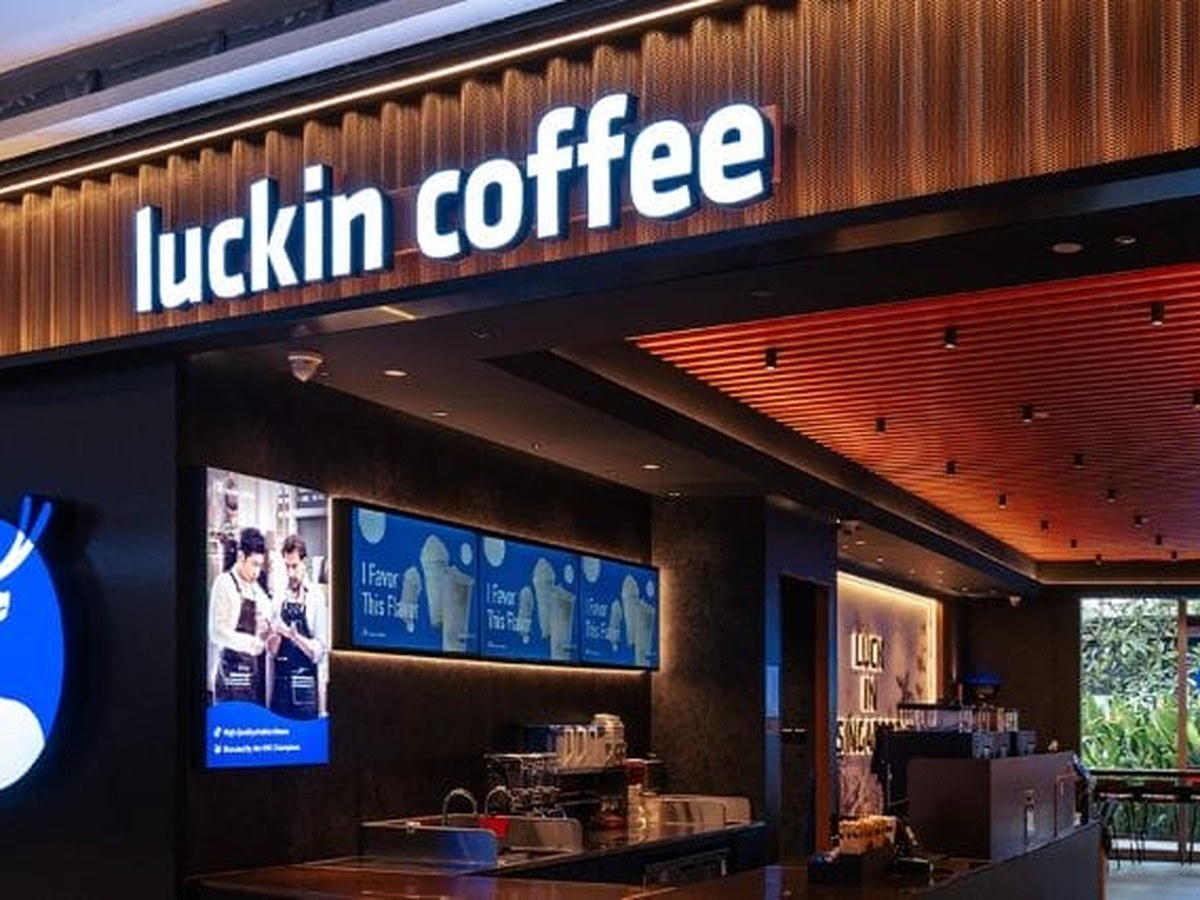
On 18 May 2026, Luckin Coffee launched two specialty alcoholic drinks at its cafes across China. The drinks contain 15 millilitres of gin and whiskey respectively, pushing alcohol content above 0.5 percent by volume. Under Chinese classification, both qualify as alcoholic beverages. They are available for in-store pickup only and cannot be sold to minors.
The launch is being framed as Luckin's entry into the slight buzz category. It follows pilot programs in selected Shenzhen and Shanghai locations earlier in 2026, where Luckin tested alcohol-infused drinks using gin, plum wine, and whiskey. Industry sources close to the company confirmed the pilots ran for several months before the national launch decision was made.
The framing in the local trade press is that Luckin is following Starbucks, which has been adding evening alcohol options selectively in international markets for years, into a more comprehensive use of off-peak retail hours. The framing is accurate but misses the more interesting structural reading.
What Luckin is actually doing is a unit economics play, not a beverage strategy play.
As of 31 March 2026, Luckin operated 33,596 stores globally. Most of those stores are configured around peak morning and lunchtime traffic. The afternoon and evening hours, particularly after 4pm, represent significant fixed cost coverage with minimal incremental revenue. The store is open. The rent is being paid. The staff is on shift. The equipment is operational. Every cup sold during those hours generates incremental margin against a cost base that is already committed.
The economic logic of adding alcohol to those hours is straightforward. The customer who walks into a Luckin at 6pm for an alcoholic drink is not displacing a morning coffee customer. They are buying revenue against fixed cost coverage that would otherwise produce no revenue at all. The marginal economics of that customer are dramatically better than the marginal economics of a morning coffee customer, even if the absolute revenue per ticket is similar.
Now scale that math against 33,596 stores. If the alcohol launch generates an additional five customers per store per evening, at an average ticket of RMB 30, the total daily revenue addition is approximately RMB 5 million across the network. The annualised impact would be in the range of RMB 1.8 billion. Almost all of that revenue translates directly to gross margin because the underlying cost base has not increased. The store is already open. The staff is already on shift. The only incremental cost is the alcohol itself and a small additional volume of preparation labour.
This is the part that the Malaysian F&B operator should be reading carefully. The number that matters is not whether Luckin's alcoholic drinks taste good or whether consumers actually want gin-infused coffee. The number that matters is whether the operator's existing physical footprint can be productively used during hours that currently generate no revenue.
Almost every Malaysian F&B operator has the same problem Luckin had before this launch. Stores open for fourteen hours per day. Peak revenue concentrated in three or four of those hours. The remaining ten or eleven hours generate fractional revenue against the same fixed cost base. The conventional response is to accept the off-peak as a structural cost of being open for the peak. The Luckin response is to ask whether the same physical asset can be repositioned to produce a different category of revenue during those hours.
The Editor's Note
If you are reading this and the pattern fits your business, start the conversation before the conversation starts itself. editor@unpublished.my.
The repositioning options are not limited to alcohol. They include any product or service that fits the physical infrastructure of the store and the consumer state of mind in the off-peak hours. A morning-focused breakfast venue could become an afternoon meeting space with light retail products. A lunch-focused mamak operator could become an evening shisha lounge. A coffee chain could become an evening cocktail bar, which is exactly what Luckin is now doing. A daytime healthy cafe could become an evening alcohol-free social space for the demographic that is increasingly seeking sober options.
Each of these repositioning moves involves the same calculation. What is the fixed cost coverage during the underused hours? What incremental revenue could a different product category produce against those hours? What is the marginal cost of the operational change required to make the repositioning work? If the math holds, the repositioning produces gross margin that the operator would not otherwise have captured.
The Malaysian F&B operator should also note what Luckin specifically did not do. Luckin did not launch a separate alcohol brand. Luckin did not open new evening-only locations. Luckin did not require staff retraining at the bartender level. The drinks contain modest alcohol content, are prepared using equipment that resembles standard coffee preparation, and slot into the existing operational rhythm of the store. The repositioning was designed to require minimal disruption to the existing business while opening a new revenue category.
This is the discipline that distinguishes operators who execute strategic moves from operators who plan them. The strategic insight, which is that off-peak hours represent unproductive fixed cost coverage, is widely understood. The execution discipline, which is to find a repositioning that fits the existing infrastructure rather than requiring a parallel build, is rarer and more important.
Luckin's alcohol launch also has implications for how the Chinese coffee category is going to compete over the next two years. Cotti, Nowwa, and the smaller chains will now be evaluating whether they need to match Luckin's evening offer or whether they can compete on a different repositioning of their own. The arms race for off-peak revenue across the Chinese coffee retail category has now started in earnest. Similar arms races are likely to follow in other Asian markets as operators study the Luckin playbook.
The competitive question for the Malaysian F&B operator is whether they are going to wait for an imported chain to demonstrate the off-peak repositioning in their market before they consider whether their own format could benefit from the same approach. The early movers will be the ones who study what Luckin is doing structurally and apply it to their own operations within the next twelve to eighteen months. The late movers will be the ones who get their lunch eaten by chains that arrived from abroad with a playbook that the local operators could have written first if they had been paying attention.
Luckin is not selling alcohol. Luckin is selling revenue per store per hour. The Malaysian F&B operator who reads the launch announcement and only sees the cocktail menu is missing the strategy entirely.