In the Chinese hardware sector, a company that has grown fifty percent a year for five consecutive years is a company that has done something the trade press should be paying more attention to than it has. Especially when that company sits in a category dominated on one side by DJI, which effectively defined the consumer drone and gimbal category globally, and on the other side by Insta360, which built the consumer 360-degree camera category from nothing. To grow at fifty percent a year for five years in the shadow of those two competitors is not a coincidence of market timing. It is the result of a specific strategic discipline that the Malaysian hardware operator should be reading with unusual attention.
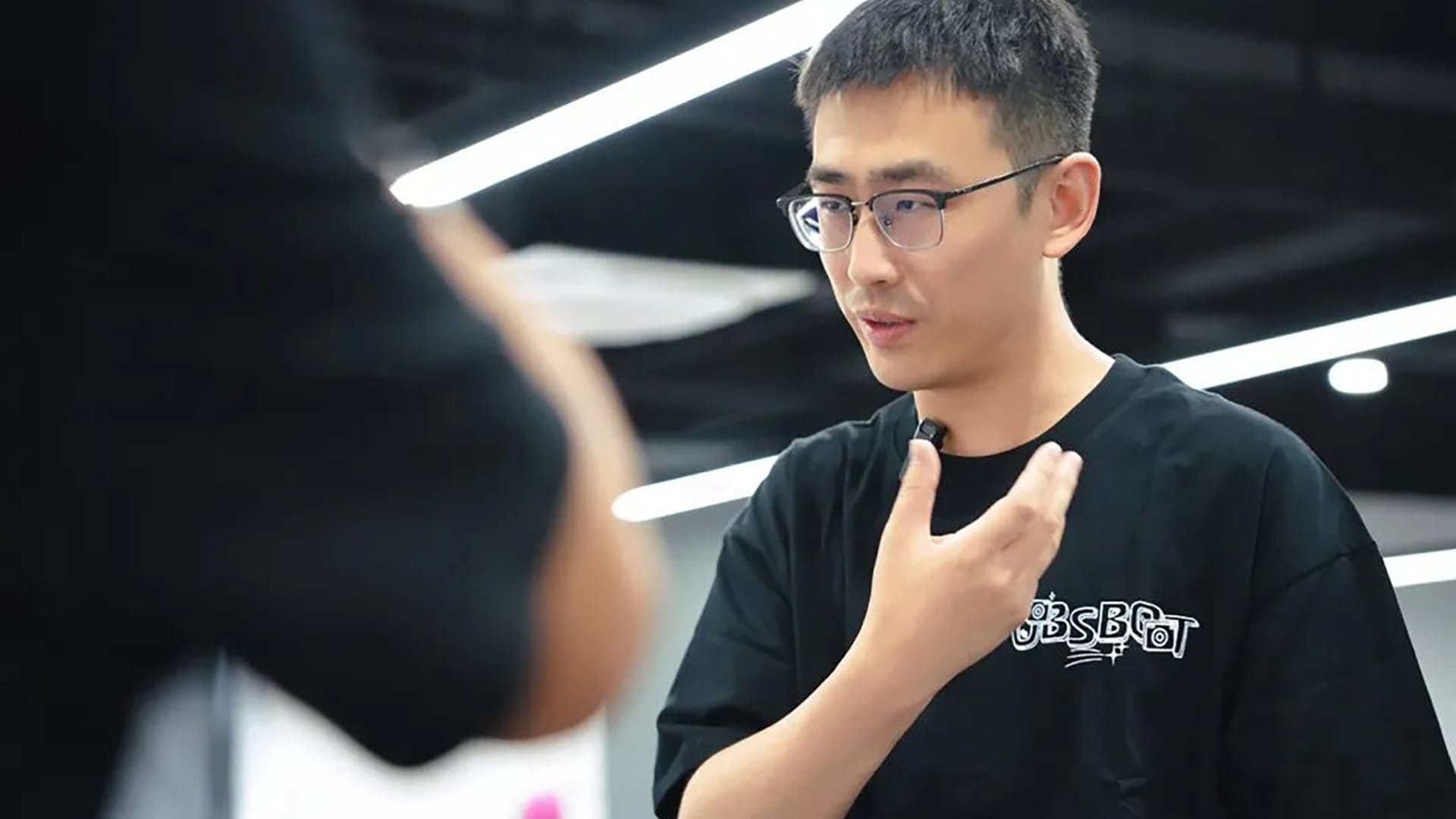
OBSBot, headquartered in Shenzhen, is the company. Liu Bo is the founder. His story starts the way most Shenzhen hardware stories start. In 2016, he graduated from Zhejiang University and went to Shenzhen to start a business. His background, as he tells it, did not stand out much among the high-profile founders the Chinese technology press was celebrating. He did not attend one of the elite universities that produced Alibaba, Tencent, or ByteDance. He came from a robotics competition background, which meant he understood hardware engineering from the actual hardware side rather than from the internet software side that most Chinese startup founders trained through. That biographical detail is more consequential than it initially looks. The founders who came up through robotics competitions think about hardware differently than the founders who came up through internet software. The two ways of thinking are not compatible. Liu figured out early that hardware requires time, patience, and detailed iterative refinement. The internet software model of rapid trial and error and high-frequency iteration does not work when every product cycle costs money to open a mold and money to produce a batch of goods.
The near-death moment came in 2019. A mistake in product definition left the company with unsold inventory. It had only enough cash left to last a few months. It laid off half its staff and halted related businesses. Liu described it in his own words as the quietest winter. Most hardware startup histories skip this part of the story. The trade press likes the exponential growth chart, not the almost-went-broke chapter. But the almost-went-broke chapter is where the strategic discipline gets built. Companies that survive that kind of moment come out with a much clearer sense of what they will and will not do commercially. The lessons compound. The mistakes do not repeat.
The turnaround came in 2020. Remote work went from a niche practice to a normal one within a period of weeks as the pandemic reshaped the global office. Demand surged for webcams used in video meetings. Liu spotted something specific. Most webcams on the market were fixed. But people working from home did not sit upright all day. They moved. They stood up. They changed posture. He decided to make a webcam that could track intelligently and frame automatically. In 2020, OBSBot released the Tiny series. That single product decision, made at that specific moment, saved the company. Over the subsequent five years, OBSBot took more than fifty percent of the high-end webcam market and ranked first in the segment. It raised a nine-figure USD sum from investors including Didi, HongShan, Forebright Capital, CMB International, HKX, and Brizan Ventures.
The Editor's Note
If you are reading this and the pattern fits your business, start the conversation before the conversation starts itself. editor@unpublished.my.
The discipline that separates OBSBot from the hardware companies that failed in the same period is category restraint. Liu understands clearly that webcams are a niche category. A segment needs to grow to at least ten billion US dollars before the giants see enough reason to enter and divide the market. Webcams do not reach that scale. But that is the strategic asset, not the strategic problem. The category is large enough to support a company with several hundred employees, high margins, and durable market share. It is too small for DJI or Sony to bother taking seriously. That size mismatch is the moat. It is not a technology moat. It is a market-size moat. The category is deliberately too small for the incumbents to defend and deliberately too specific for a broad consumer electronics play to dominate. OBSBot's growth strategy is to remain within this size mismatch while building adjacent categories that share the same characteristic. Compact enough that the giants ignore it. Specific enough that the technical requirements are hard to replicate. Profitable enough that the cash flow funds R&D into the next adjacent category.
The R&D discipline is the operational expression of the strategy. R&D personnel account for more than sixty percent of the company. Every year, twenty percent of company revenue is invested in R&D. Those are extraordinary ratios for a hardware business at OBSBot's scale. They are the ratios of a company that has decided its competitive advantage is technical depth in a narrow category rather than marketing depth in a broad one. The Tiny series has iterated from a 1/2.8-inch sensor to a 1/1.5-inch sensor to a 1/1.28-inch sensor while the overall device size shrunk. That combination (larger sensor, smaller device) required optimisations across the mainboard, motor miniaturisation, thermal management, and power consumption that most competitors are not investing the R&D capital to match.
The strategic frame Liu articulates most clearly is that hardware and software follow opposite logics. Hardware costs money. The switching threshold is high. Every product must be refined to the highest standard before shipping because a failed product batch is a warehouse of goods stuck as inventory. Software emphasises rapid trial and error and high-frequency iteration. The two working styles are completely different. Companies that try to run hardware businesses on software timelines produce hardware that fails in the market. Companies that try to run software businesses on hardware timelines produce software that is obsolete before it launches. OBSBot's discipline is to run hardware on hardware timelines and let the software layer iterate as fast as it needs to, without letting either logic contaminate the other.
For the Malaysian and broader Southeast Asian hardware operator, four implications run from this story.
One. The category size mismatch strategy is portable and underused. Most Malaysian hardware operators are attracted to categories that look like they have significant addressable market potential. That instinct is directionally wrong. The most defensible hardware businesses are in categories large enough to fund the operation but small enough that the global giants will not enter. Malaysian operators in industrial vision systems, specialised photography equipment, professional audio, medical imaging peripherals, and industrial IoT sensors should be studying whether the specific niche they are targeting is structurally too small for DJI, Sony, Panasonic, or Bosch to defend, and whether that structural absence of giant competition is the actual asset. If the answer is yes, the operator should be increasing R&D investment ratios to OBSBot-comparable levels to compound the technical depth advantage.
Two. The R&D ratio is the leading indicator. Twenty percent of revenue reinvested in R&D annually is a ratio most Malaysian hardware operators do not currently maintain. The typical Malaysian hardware operator reinvests less than eight percent. That ratio produces a company that iterates slowly and eventually falls into price competition with lower-cost regional producers. The OBSBot ratio produces a company that stays two or three product generations ahead of any regional competitor and can therefore command premium pricing. The strategic question for the Malaysian hardware operator is not whether to increase R&D reinvestment. The strategic question is how quickly the operator can restructure the capital allocation to move from the current ratio to the OBSBot ratio without triggering a cash flow crisis in the transition.
Three. The founder discipline is the piece the Malaysian venture capital community should be pricing. Liu did not raise money before he had a survivable business. He raised a nine-figure USD sum after OBSBot had already achieved market leadership in its category. That sequencing (achieve market position, then raise growth capital) produces very different founder-investor dynamics than the more common sequence (raise capital, then try to achieve market position). Malaysian founders operating in hardware categories should be evaluating whether they are running the OBSBot sequence or the more common one. The two sequences produce different capital structures, different governance dynamics, and different long-term outcomes.
Four. The Shenzhen ecosystem effect is real but portable. Liu explicitly credited the Shenzhen supply chain, the domestic engineering education system, and the concentration of hardware talent as structural advantages that overseas competitors find hard to replicate. Malaysia has a smaller but structurally analogous asset in Penang, where the semiconductor packaging and testing ecosystem has produced a concentration of hardware engineering talent that has not yet been fully deployed in domestic product companies. The Malaysian hardware operator who consciously builds product development capability in Penang, drawing on the accumulated hardware talent pool that currently mostly serves foreign multinationals, is operating in a structurally more advantageous position than the operator who tries to build the same capability from scratch elsewhere in the country.
The headline is a fifty percent annual growth rate for five consecutive years. The story is the strategic discipline that produced that growth rate in a category most Southeast Asian hardware operators would not have thought defensible. The Malaysian operator who reads the growth number is reading the wrong version. The right version is the disciplined refusal to enter categories the giants dominate, combined with the disciplined investment in R&D depth within the category the operator chose to defend.