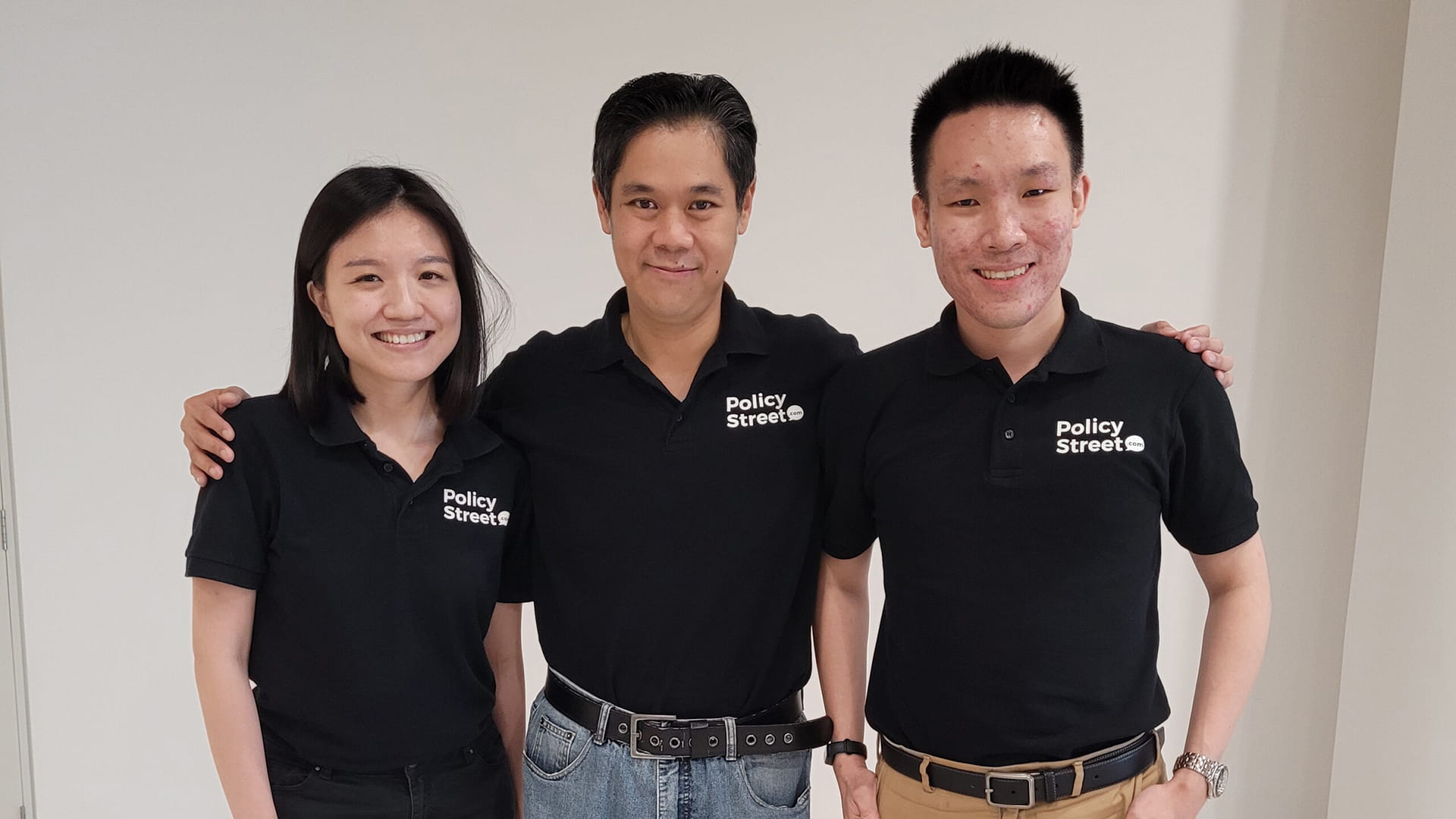
PolicyStreet secures USD 5 million from BlueOrchard, closing Series C at USD 26 million
PolicyStreet, the Malaysian insurtech founded in 2017, has secured an additional USD 5 million investment from BlueOrchard through the InsuResilience Investment Fund. That capital brings the Series C round to a total of USD 26 million. BlueOrchard, which is part of Schroders Group, joins PolicyStreet's existing backers including Khazanah Nasional, Cool Japan Fund, Altara Ventures, and Gobi Partners. The company said it has served more than ten million customers, facilitated more than USD 10 billion in total insured value, and reached more than fifty thousand small and medium enterprises directly and indirectly. It works with more than forty insurance and takaful providers, embedding coverage into the products and services of partner platforms. The new capital will support regional growth, technology strengthening, embedded insurance partnerships, and product development for underserved consumers and businesses. The stated 2030 targets are 1.5 million gig workers and 300,000 small businesses.
The trade press coverage of the round is treating it as a straightforward funding announcement, which is directionally correct but strategically incomplete. The more consequential detail is which investor made the specific investment. BlueOrchard is not a generalist growth investor. It is one of the largest impact-focused private equity managers in the world, specifically positioned to deploy capital into emerging market financial services that expand access to insurance, credit, and risk mitigation for underserved populations. The InsuResilience Investment Fund is BlueOrchard's dedicated insurance impact vehicle, backed by public and private commitments specifically to strengthen climate risk insurance and financial resilience in emerging markets. That fund's decision to write a check to a Malaysian insurtech is the specific signal that PolicyStreet's operational model (embedded insurance, takaful integration, gig worker coverage, SME insurance) meets the impact criteria that unlock a class of capital that most Malaysian founders have never seriously pursued.
The strategic implication for Malaysian founders in adjacent categories is worth reading precisely. The impact-focused investors (BlueOrchard, LeapFrog, responsAbility, Global Innovation Fund, Omidyar Network, and roughly a dozen similar institutional investors) collectively manage tens of billions of dollars in capital that is specifically mandated to be deployed into financial services, healthcare, education, agriculture, and climate resilience businesses in emerging markets. Malaysia sits within the geographic mandate for most of these funds, but the trade press coverage of Malaysian fundraising has consistently underrepresented the role that impact capital plays and could play in the domestic ecosystem. The specific Malaysian sectors that most obviously fit impact investment mandates (Islamic finance, halal supply chain, palm oil sustainability, financial inclusion, rural agricultural technology, healthcare access for underserved populations) are the sectors where domestic founders should be systematically building relationships with impact investors, not waiting for the impact investors to discover the local ecosystem.
PixVerse Series C extended to USD 439 million total
PixVerse has completed an extension of its Series C round, bringing the total round size to USD 439 million. The extension size was not disclosed. New investors participating alongside the round include Alibaba, Lollapalooza Capital, Ivy Capital, Grand Mount Capital, Eastern Bell Capital, Mirae Asset, BlueFocus, and CloudAlpha. Returning backers include iGlobe Partners and LionX Ventures, which is backed by OCBC. Founded in 2023, PixVerse operates a platform that generates videos from text prompts, photographs, and existing clips, and now claims more than 150 million users. The company is expanding beyond video generation into interactive games and live entertainment, with a planned game engine using its R1 real-time world model to generate environments that respond to player instructions in natural language, plus live streaming tools that enable AI-generated characters to respond to viewers in real time.
The specific detail worth reading is the participation of Alibaba as a new investor. Alibaba's strategic capital commitments track specific technology categories the company considers strategically important to its own long-term positioning. Alibaba's investment in PixVerse suggests the company is treating real-time generative video as a category with meaningful strategic weight, likely as it relates to Alibaba's own e-commerce, gaming, and content platforms. Malaysian generative AI operators evaluating their positioning against Chinese platform investors should be reading the Alibaba-PixVerse deal as a signal about the specific technology categories that will attract strategic Chinese capital over the next twelve to eighteen months.
The Editor's Note
If you are reading this and the pattern fits your business, start the conversation before the conversation starts itself. editor@unpublished.my.
Ant Group takes 28 percent of Boohee Health, targeting the AQ health app integration
Ant Group has completed a strategic investment in Boohee Health, acquiring a stake of more than 28 percent and becoming the Chinese health management company's largest external shareholder. Financial terms were not disclosed. Boohee founder and CEO Ma Haihua will remain the largest overall shareholder. Founded in 2008, Boohee provides weight management, nutritional guidance, and chronic disease prevention services. Ant Group intends to integrate Boohee's dietary knowledge and behavioural intervention capabilities into AQ, the company's health-focused application that currently offers doctor recommendations, hospital appointment bookings, and online consultations. The two companies will initially focus on dietary tracking and weight management, then explore health-related e-commerce and joint AI model training as the integration develops.
The Ant-Boohee deal is worth reading as a template for the Chinese consumer platform strategy in health-adjacent categories. Ant is not building the health app category from scratch. It is acquiring meaningful operational stakes in specialised health operators, integrating their capabilities into its own platforms, and positioning to be the default consumer health interface for the Chinese market. That specific playbook (specialist acquisition rather than internal build-out) is the pattern the trade press should expect to see replicated across other Chinese consumer platform companies over the next thirty-six months in categories including mental health, nutrition, chronic disease management, and reproductive health. Malaysian health technology founders should be evaluating whether they want to position their businesses to be acquired by regional platform companies pursuing similar consolidation strategies, or to build independent regional platform positions of their own.
Other deals worth flagging
SimpleAI, the Singapore-founded AI agent operator focused on accounting, finance, and fund administration workflows, secured USD 5 million in seed funding and a separate USD 10 million debt facility for Asia Pacific acquisitions. The specific structure (equity for platform development, debt for acquisitions of established accounting businesses) is the specific rollup model that consolidation-focused AI operators are now deploying across regional financial services categories. Malaysian accounting and fund administration operators should be evaluating whether SimpleAI's model represents a potential acquirer for domestic firms, or a competitive threat, or both.
LimX Dynamics, a developer of humanoid robots, raised nearly USD 200 million in a pre-IPO round with IDG Capital, Lens Technology, GGG Group, Redstone VC, WestSummit Capital, and Hefei Binhu Industry Development Group participating. Stone Venture followed on, while Vitalbridge, Shenzhen Co-Stone Asset Management, Nanshan SEI Investment, Shang Qi Capital, and Nio Capital increased commitments. The specific investor mix (state-linked venture capital, industrial development groups, and existing strategic investors) is the template for how Chinese humanoid robotics companies are capitalising through their pre-IPO phase.
Snapmaker, the consumer 3D printer manufacturer, raised RMB 1 billion (about USD 147 million) in a round led by Cathay Capital, with TAL Education making a strategic follow-on investment. Meituan, DragonBall Capital, GL Ventures, and Shunwei Capital participated as returning investors. The specific participation of TAL Education, a listed education company, signals convergence between consumer 3D printing and the education technology category as 3D printing becomes integrated into STEM curriculum offerings across Chinese schools. Malaysian consumer 3D printing operators, and Malaysian education technology operators, should both be reading the specific investor mix as a signal about category direction.
The four remaining deals worth briefly flagging: Amity Robotics, a Thailand-based operator, raised USD 7 million in seed through East Ventures and 500 Global. Acti, a Singapore-based AI startup founded by former Baidu executives, raised USD 5.3 million led by Bitkraft Ventures. Qashier, a Singapore-based fintech, raised USD 6.125 million in a Series A+ combining equity and debt from Cocoon Capital, IFP Securities, and BlackSoil Global. PvX Partners provided Feenko, a subscription management app, with a USD 30 million growth facility structured as non-dilutive user acquisition financing tied to customer cohort performance. Each of these transactions represents a specific position on the regional venture capital landscape that Malaysian founders in adjacent categories should be tracking.
For the Malaysian and broader Southeast Asian operator, three implications run from this deals brief.
One. The impact investor category is systematically underused by Malaysian founders and represents the specific unlocked capital pool that could accelerate domestic investment in financial inclusion, halal supply chain, sustainability, and healthcare access. The PolicyStreet-BlueOrchard deal is the specific proof point that Malaysian companies can meet impact investor criteria and secure capital on favourable terms.
Two. The Chinese platform consolidation strategy (specialist acquisitions rather than internal build-out) is the template that will shape the regional consumer platform category over the next thirty-six months. Malaysian founders in health, education, financial services, and adjacent categories should be evaluating their strategic position against acquisition-focused Chinese platform companies with meaningful cross-border ambition.
Three. The Southeast Asian venture capital ecosystem is generating a specific set of category signals through the deals being closed each week, and the founders who systematically read the deals data with strategic intent (rather than as raw fundraising news) will position their businesses meaningfully better than the founders who treat deals data as background noise.
The headline is a Swiss investor writing a check to a Malaysian insurtech. The story is the specific capital pools, strategic patterns, and investor positioning that are quietly shaping the terms of Southeast Asian venture capital over the next thirty-six months. The Malaysian founder who reads the deals as deals is reading the wrong version. The right version asks which specific investor relationships, which specific strategic patterns, and which specific category positions the founder needs to be building this quarter.