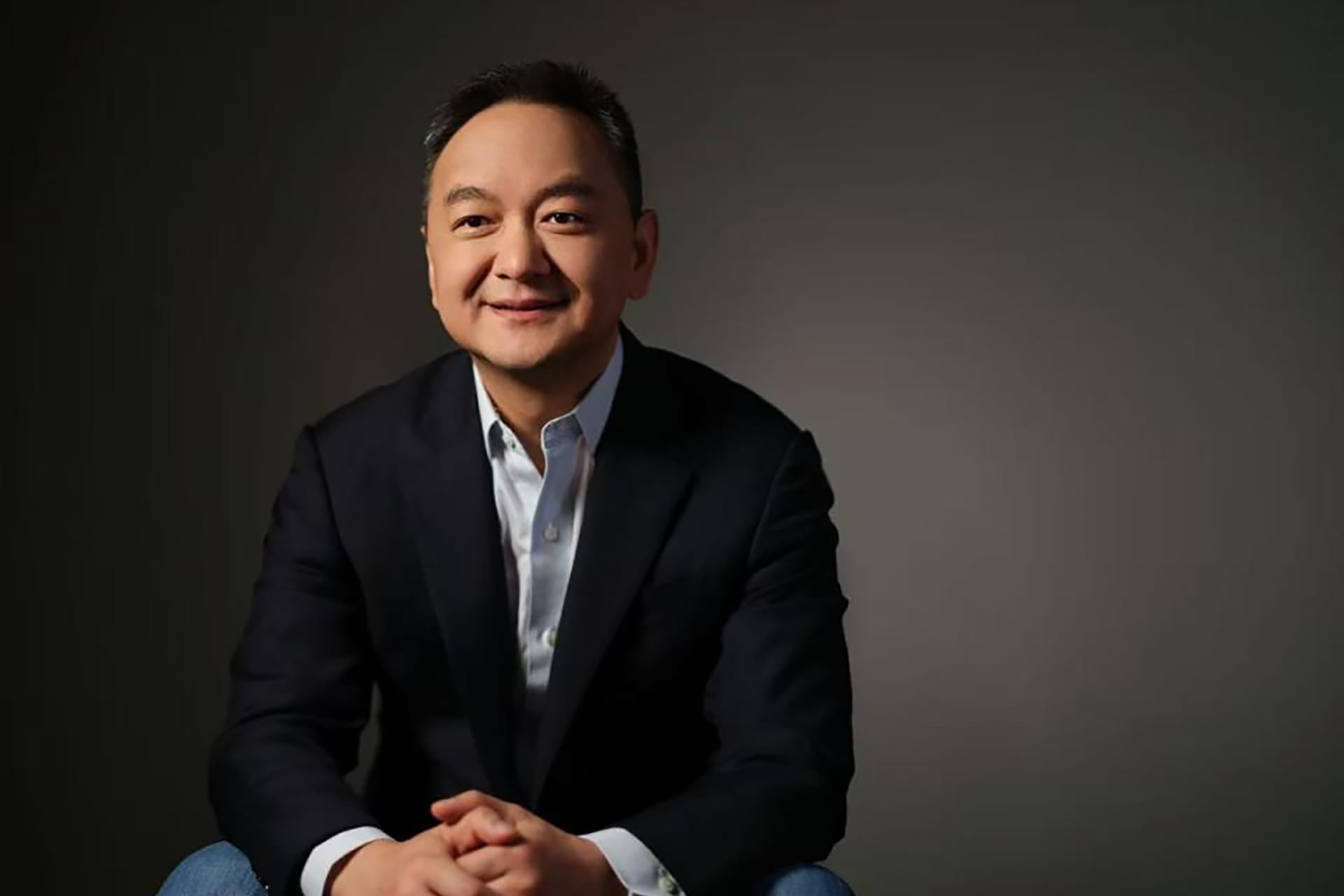
When James Peng founded Pony.ai in 2016, he expected robotaxis to require at least a decade of work before moving from vision to large-scale deployment. The technology had to mature. Regulations had to adapt. Public acceptance had to be tested. That timeline has largely held. Waymo vehicles now operate in San Francisco. Pony.ai's fleet accepts ride-hailing orders in Shenzhen's Nanshan district. The company's Toyota-backed autonomous system is powering the ComfortDelGro shuttle deployment that just launched in Singapore's Punggol district. Autonomous driving has moved from long-term ambition to live commercial operation across several major Asian cities. What Peng did not anticipate a decade ago is that the constraint on fleet expansion would be something the trade press has been almost entirely undercovering. The invisible errands.
When a human sits behind the wheel, that driver handles charging, car washing, vehicle maintenance, and even helping passengers with their luggage at the pickup point. Once the human is removed, all of those tasks become operational problems that the autonomous mobility company itself has to solve. The tasks are individually small. They are collectively significant. Peng told the Chinese trade press that Pony.ai has already built a full operations team and developed a set of operations and maintenance standards specifically to support autonomous vehicles. The team includes remote safety operators, ground support staff, and logistics workers. Even as the fleet expands rapidly, Peng said, the staff-to-vehicle ratio will not rise significantly. That framing breaks from the traditional assumption that more vehicles require more people in the operational supply chain. Peng believes this is a blind spot that both ride-hailing companies and automakers will discover the hard way when they enter robotaxi operations without the operational infrastructure Pony.ai has spent years building.
The competitive framing Peng offered the Chinese business press is unusually direct for the autonomous mobility category. On the increasing announcements from Tesla, Xpeng, Geely, and other automakers about robotaxi deployment, Peng was pointed. Making an announcement is always easy. Tesla has been talking about robotaxis for ten years. Has it done it? The strategic argument underneath the pointed framing is that technical capability answers the zero-to-one question of whether a company can build the system at all. Operating capability determines efficiency at scale. Pony.ai's seventh-generation vehicles have already achieved per-vehicle profitability in Guangzhou and Shenzhen. The company plans to expand its fleet to 3,500 vehicles this year. That specific number, in that specific market, on a validated financial model, is what separates the companies that have crossed the commercial threshold from the companies that are still positioning to cross it.
Peng also explained why Pony.ai briefly tried the large-scale Level 2 driver assistance business and quickly exited. His reasoning: the technical threshold is low, the user experience is not standardised, automakers hold the bargaining power, and intelligent driving companies can easily fall into price wars. That analysis is what most Chinese autonomous driving startups eventually arrived at, though most arrived at it after significant capital had already been deployed into the L2 category. Pony.ai's decision to exit early is worth studying, because the same strategic logic applies to Southeast Asian mobility investors evaluating whether to invest in L2 supplier relationships or to hold out for the L4 operating opportunities that follow.
The Editor's Note
If you are reading this and the pattern fits your business, start the conversation before the conversation starts itself. editor@unpublished.my.
The technical approach Peng articulated is also counter to the current mainstream direction of the autonomous driving industry. While most competitors have followed the large language model trajectory and are building unified autonomous driving algorithms with vast numbers of parameters, Pony.ai has continued using a strategy that combines multiple smaller models. The framing is operating efficiency and reduced computing power dependency. As driver assistance developers have been moving away from map dependencies, Pony.ai has again chosen not to follow the crowd. It will continue using a lightweight mapping approach for the long term. Peng's justification was memorable and unusually plain. You are familiar with the roads you drive often, so driving them is easier. Places you have not been to before are tiring. That is normal. So why not add maps? Even Tesla uses maps. The technical choice matters, because it shapes the specific type of infrastructure Pony.ai partners will need to have in place in every new deployment city.
The most consequential decision Pony.ai has explicitly made is to stay out of the embodied intelligence category, which is the trade press term for humanoid robots and physical AI systems that a significant portion of the Chinese venture capital ecosystem has been racing to enter. Peng was blunt. This is another thing that will take at least ten years. There will always be opportunities to do it, but you still have to see clearly and think clearly. The strategic discipline of choosing what not to do is often more consequential than the discipline of choosing what to do. Pony.ai has already scaled through the ten-year decision-making process for one category. Peng is signalling that he does not want to fund the same ten-year cycle for a second category before the first has been fully commercialised.
For the Malaysian and broader Southeast Asian operator, four implications run from this story.
One. The operational infrastructure investment gap is the specific bottleneck the Malaysian mobility policy conversation needs to prioritise. Every Southeast Asian city that wants to attract Pony.ai, WeRide, Baidu Apollo Go, or CaoCao's robotaxi deployments will discover that the deployment requires charging depots, cleaning stations, remote monitoring facilities, and dedicated ground support infrastructure that most cities have not built. The cities that build the infrastructure first, or that establish clear terms for private operators to build it, will receive the operational deployments first. The cities that wait for the operational infrastructure to arrive with the vehicles will find that the vehicles arrive on unfavourable terms because the deployment cost has been pushed onto the mobility operator.
Two. The staff-to-vehicle ratio commitment is the operational metric the Malaysian sovereign investor should be tracking. Pony.ai's stated commitment is that the staff-to-vehicle ratio will not rise significantly as the fleet expands. That commitment, if it holds, produces materially different unit economics than the historical assumption that more vehicles require proportionally more staff. Khazanah, PNB, EPF, and the other sovereign investment vehicles evaluating exposure to autonomous mobility should be pricing the sector against Pony.ai's ratio rather than against the pre-Pony.ai assumption. The two ratios produce very different valuations.
Three. The ComfortDelGro-Pony.ai deployment in Singapore is the direct precedent the Malaysian transport regulator should be reading. Pony.ai's Toyota-backed autonomous system is now operating a live commercial deployment in a Southeast Asian city on terms that the Chinese trade press has publicly discussed. The commercial terms of that deployment, the safety and regulatory framework Singapore established, and the operational infrastructure Singapore built will be the reference conditions Chinese autonomous mobility providers use when they approach the Malaysian Ministry of Transport, Prasarana, and the various state-level transport authorities. Malaysia has approximately eighteen months to decide whether it wants to match Singapore's regulatory posture, negotiate different terms, or accept whatever terms the Chinese providers propose based on the Singapore precedent.
Four. The decision not to enter embodied intelligence is the strategic-discipline lesson most Malaysian entrepreneurs should be reading carefully. Every venture capital cycle produces a category the trade press describes as the next major opportunity, and every venture capital cycle produces a class of founders who enter that category without the capital, the ten-year commitment, or the operational discipline to scale it. Pony.ai's specific decision (choosing to focus on completing the first ten-year cycle before starting a second) is the discipline most Southeast Asian founders should be applying to their own strategic bets. The founders who choose to focus produce durable businesses. The founders who spread across too many emerging categories produce failed companies with impressive slide decks.
The headline is a CEO interview about autonomous driving. The story is that the specific operational disciplines Pony.ai has developed, the specific technical choices Pony.ai has made, and the specific categories Pony.ai has declined to enter are shaping the terms on which every other player in the Southeast Asian autonomous mobility category will eventually operate. The Malaysian mobility investor who reads the interview version is reading the wrong version. The right version asks which of Pony.ai's disciplines can be applied to the Malaysian mobility investment conversation now, before the deployment terms are set by default.