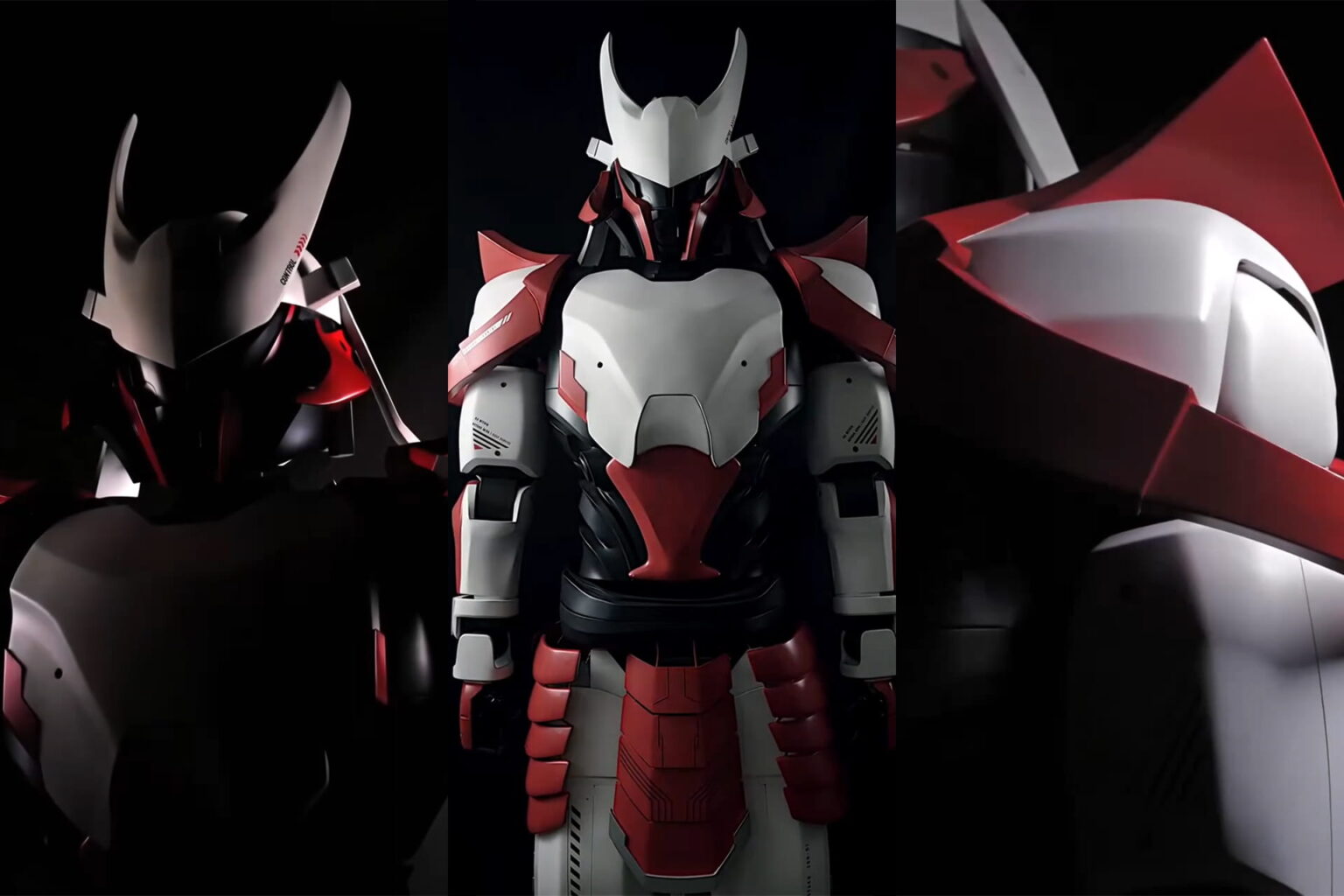
The dominant commercial narrative in Chinese humanoid robotics over the past twenty-four months has been a race to the price floor. Operators including Unitree, several AgiBot derivatives, and roughly a dozen other Chinese humanoid robotics companies have raced to publish sub-RMB 10,000 (approximately USD 1,490) pricing on their consumer-facing units, on the specific commercial hypothesis that whichever operator can produce the lowest-cost humanoid robot captures the largest share of the emerging mass consumer market. That specific race-to-the-price-floor pattern is the dominant venture capital allocation thesis across the Chinese embodied intelligence category. A specifically contrarian thesis is being built by a twentysomething founder named Lu Zhuoran, who goes by Takuzen, and whose company Rotaku is explicitly rejecting the price competition in favour of a different operating hypothesis. The specific hypothesis is worth reading precisely, because it predicts how the category will eventually bifurcate.
Lu's biographical context matters because it shapes the specific intellectual framework he brings to the category. He was born in Shenzhen in the 2000s and moved to Japan at age 15. He studied robotics and computer science at a Japanese institution described in the source interview as the country's fourth most selective, then transferred to the University of Wisconsin-Madison to study computer science. His stated reason for the transfer was that robotics remained traditional without intelligence integration. In 2023 he developed an interview application that used a digital avatar powered by a large language model. He had not planned to raise external funding. An intern persuaded him to submit an application to MiraclePlus, the venture firm founded by Lu Qi. The investment followed, and Rotaku became one of the youngest teams in MiraclePlus's portfolio that year. After the ChatGPT release, Lu decided that the moment for humanoid robots had arrived and dropped out of school to focus on the company full time.
The specific operating model Rotaku has built is worth reading precisely because it inverts the dominant Chinese humanoid robotics operational pattern. The team is ten people. The company develops every layer of its humanoid robot hardware and software in-house. It operates its own factory rather than depending on an original design manufacturer, which is the dominant Chinese consumer electronics operating model. According to the Chinese trade press coverage, Rotaku has already received substantial orders for its character-driven humanoid platform. While competitors push unit prices below RMB 10,000, Lu publicly describes the resulting products as industrial junk and rejects low-cost positioning as the guiding commercial strategy. The specific commercial consequence is that Rotaku is positioned differently from essentially every other Chinese humanoid robotics operator, and the specific question for the category's venture capital allocators is whether the differentiated positioning will produce the differentiated commercial outcome.
The strategic framework Lu articulated to the Chinese trade press is the specific intellectual asset that Malaysian technology investors should be studying hardest. The framework is organised around a term he uses repeatedly: character humanoid. The specific definition is a humanoid robot that has been given a distinct character (a worldview, a life story, admirable qualities and flaws, a specific way of seeing the world) rather than simply a body for sale. The commercial logic underneath the framing is that a human-shaped object is unlikely to work as a purely mechanical tool because the human form creates specific psychological expectations in the human user that an un-charactered robot will consistently violate. Lu cited Japanese aesthetic concepts (ki, the sense of energy or presence; mono no aware, the sorrow of impermanence) and architectural principles (the Japanese pattern that four pillars and a roof create a sense of place) as the specific intellectual foundation for the character-first design philosophy. The commercial argument is that character is the specific attribute that creates the durable emotional connection with the user that justifies premium pricing and sustains repeat purchase through accessory, software, and community ecosystems.
The Editor's Note
If you are reading this and the pattern fits your business, start the conversation before the conversation starts itself. editor@unpublished.my.
The specific population-level warning Lu articulated is also worth reading precisely because it shapes his commercial strategy. He puts the probability of human extinction within 50 years at approximately 20 percent, by his own stated reasoning. The specific commercial implication of that estimate is that Lu's strategic allocation prioritises technology development pathways that have long-term civilisational utility (humanoid robots that can operate space infrastructure, planetary environment construction, satellite repair) over commercial opportunities that optimise for near-term consumer revenue. His stated fallback if Rotaku fails is to start a space company, because he views automated space development as the specific technology pathway that most meaningfully affects long-term human survival probability. That specific framework is unusual for a consumer-facing hardware company founder, and it predicts a specific operating pattern (willingness to invest in long-horizon technology development even when short-term commercial pressure argues for faster monetisation) that most consumer-focused competitors will not match.
The specific commercial applications Lu described for Rotaku's character humanoid are the piece Malaysian operators should be studying with the most practical interest. The dominant initial application is food service, where the robot becomes part of the physical restaurant setting rather than a utility hidden in the back of the house. The specific commercial pattern is that restaurants historically bought spoons and pots as standardised tools, but once humanoid robots become a visible part of customer service, they have to reflect the restaurant's branded characters. The resulting SKU structure Lu described is interesting: automotive sector operators produce roughly 20 to 50 SKUs, while collectible toy operators (Pop Mart and its competitors) produce thousands of SKUs. A mature character humanoid company, by Lu's logic, should sit between those two extremes with dozens to hundreds of SKUs, each representing a specific character variant on a reusable underlying hardware platform. The specific tooling economics change dramatically relative to automotive manufacturing (where tooling can cost RMB 3 to 10 billion per vehicle platform with limited reusability) when the underlying hardware is designed to accept multiple character shells.
For the Malaysian and broader Southeast Asian operator, four implications run from this story.
One. The Malaysian technology investor (Khazanah Nasional's venture arm, Kumpulan Modal Perdana, Malaysia Venture Capital Management, Gobi Partners Malaysia, Cradle Fund, and the various family-office venture allocations) with existing or planned humanoid robotics exposure should be reading Rotaku's contrarian positioning as a specific validation that the category will bifurcate. The specific bifurcation thesis is that one tier will become commodity hardware competing on price (where operating margins compress toward zero as more operators enter) and a second tier will become character-and-platform operators competing on emotional connection, software ecosystem, and SKU breadth (where operating margins resemble consumer electronics premium brands). Capital allocated across both tiers will not perform equivalently. Specific investor positioning in the character-and-platform tier should be established now, before the tier's reference commercial relationships consolidate around the first-mover operators.
Two. The Malaysian F&B operator that has been considering restaurant automation should be reading the character humanoid framework as a specific product category to monitor rather than deploy immediately. The specific operational pattern is that current commercial robotics deployments (Sharpa at Dairy Queen, Hi-Dolphin's Cofe+ at various international airports) prioritise functional capability over character presence. The character humanoid framework predicts that the next generation of commercially deployed humanoid robots will integrate branded character presence into the customer-facing operation. Malaysian F&B operators (Mamee's QSR brands, Secret Recipe, Old Town White Coffee, PappaRich, Secret Garden) should be evaluating which specific branded character would be most commercially effective if the operator eventually deploys a character humanoid in customer-facing positions.
Three. The Malaysian consumer product brand with an established character or mascot (CARstens Classic chocolate with its brand mascots, Mamee's monster-themed branding, Milo's various characters, Munchy's and Julie's biscuit brand characters) should be reading the character humanoid framework as a specific future licensing and merchandising opportunity. The specific commercial pattern is that character humanoid operators will need licensing partnerships with established consumer character IP to produce the SKU breadth that the business model requires. Malaysian consumer brand operators with established character IP should be building the legal, operational, and commercial infrastructure now to license their characters into the character humanoid platforms that will emerge over the next 36 to 60 months.
Four. The Malaysian corporate venture capital allocator considering robotics category exposure should be studying Lu's specific operating discipline (ten-person team, in-house hardware and software, in-house factory, deliberate rejection of price competition) as the specific pattern that produces durable commercial value in the character tier. The specific implication is that the quality of operating discipline matters more than the scale of financial resources at the stage of category formation. Smaller, more disciplined operators with coherent intellectual frameworks will likely outperform larger, less disciplined operators with better-funded balance sheets over the three to five year horizon that will determine which companies emerge as the category leaders.
The headline is a twentysomething founder calling the humanoid robotics price race industrial junk. The story is the specific contrarian framework (character over price, in-house vertical integration over supply chain scale, long-horizon civilisational utility over short-term consumer monetisation) that predicts how the category will bifurcate and which specific operators will capture the premium tier of the market. The Malaysian technology investor who reads Lu's interview as a Chinese tech personality story is reading the wrong version. The right version asks which specific portfolio reallocations need to be made in the next twelve months to be positioned in the character-and-platform tier before the tier's commercial positioning consolidates.