In 2016, a specific running shoe mold almost ended up in an incinerator. It belonged to Salomon's XT-6, a trail running shoe designed for ultralong distances in punishing alpine conditions. The commercial case for keeping it alive was weak. Trail running was a niche sport. The shoe was expensive to produce. Its race-inspired red, black, and white colorway had limited consumer appeal outside the dedicated trail running community. A Frenchman named Jean-Philippe Lalonde, who had previously worked on Arc'teryx's high-end fashion line, intervened. He saved the mold. He saw that replacing the race-inspired colorway with muted earth tones or athletic-neutral palettes would give the shoe a materially wider commercial appeal. From that salvaged mold, Lalonde gradually built what became Salomon's Sportstyle line. That line became the specific commercial vehicle that carried Salomon from being a niche alpine equipment manufacturer with roughly USD 850 million in revenue to a global consumer brand with 2025 revenue exceeding USD 2 billion, up 29 percent year-on-year and double its 2022 level. Footwear now accounts for nearly 70 percent of total sales. The reference business school case study for how a mature European equipment brand reinvents itself as a global consumer category winner is now the Salomon case.
The specific consumer trend that carried the XT-6 and the broader Sportstyle line into global commercial relevance is the one the trade press labelled gorpcore. The term refers to the specific post-pandemic fashion movement that brought outdoor performance gear into everyday urban wardrobes, combining function and technical design with a mountain-inspired aesthetic. Gorpcore is why Shanghai office workers started wearing XT-6s. Gorpcore is why Tokyo creative directors began specifying Salomon as part of the standard premium streetwear kit. Gorpcore is why a Paris multibrand boutique told then-chief brand officer Scott Mellin in 2023 that young men were walking in wearing XT-6 pairs their fathers had passed down. The commercial momentum from gorpcore was the specific wave that transformed Salomon's revenue trajectory. For a brand that benefited that much from a specific aesthetic trend, calling the trend over might appear strategically risky. Guillaume Meyzenq, Salomon's global CEO, told 36Kr exactly that in a recent interview. His exact phrasing was that gorpcore is over.
The strategic framing Meyzenq articulated to defend the call is worth reading precisely, because it is the specific intellectual bet that will determine Salomon's next five years of commercial trajectory. His claim is that Salomon does not operate two separate stories. Sportstyle and performance are not disconnected. When consumers come for the style, what they are buying is still a product designed for athletic performance. The reason gorpcore ended is not that consumer taste moved to a different aesthetic. It is that two specific structural changes in how urban consumers relate to the outdoors have run their course and consolidated into a different consumer behaviour. First, the outdoors became a source of inspiration for urban consumers in a way it had not been in the 2000s or 2010s. Second, urban consumers began searching specifically for brands that could offer genuine outdoor technology rather than branded references to it. The specific implication is that the demand pattern underneath the gorpcore wave was never actually about aesthetic signalling. It was about functional capability. Consumers who bought XT-6s during the gorpcore phase were, in Meyzenq's framing, buying outdoor technology that happened to look good in cities. The brands that survive the end of gorpcore are the brands that can keep delivering the functional capability underneath, rather than the brands that provided only the aesthetic signalling on top.
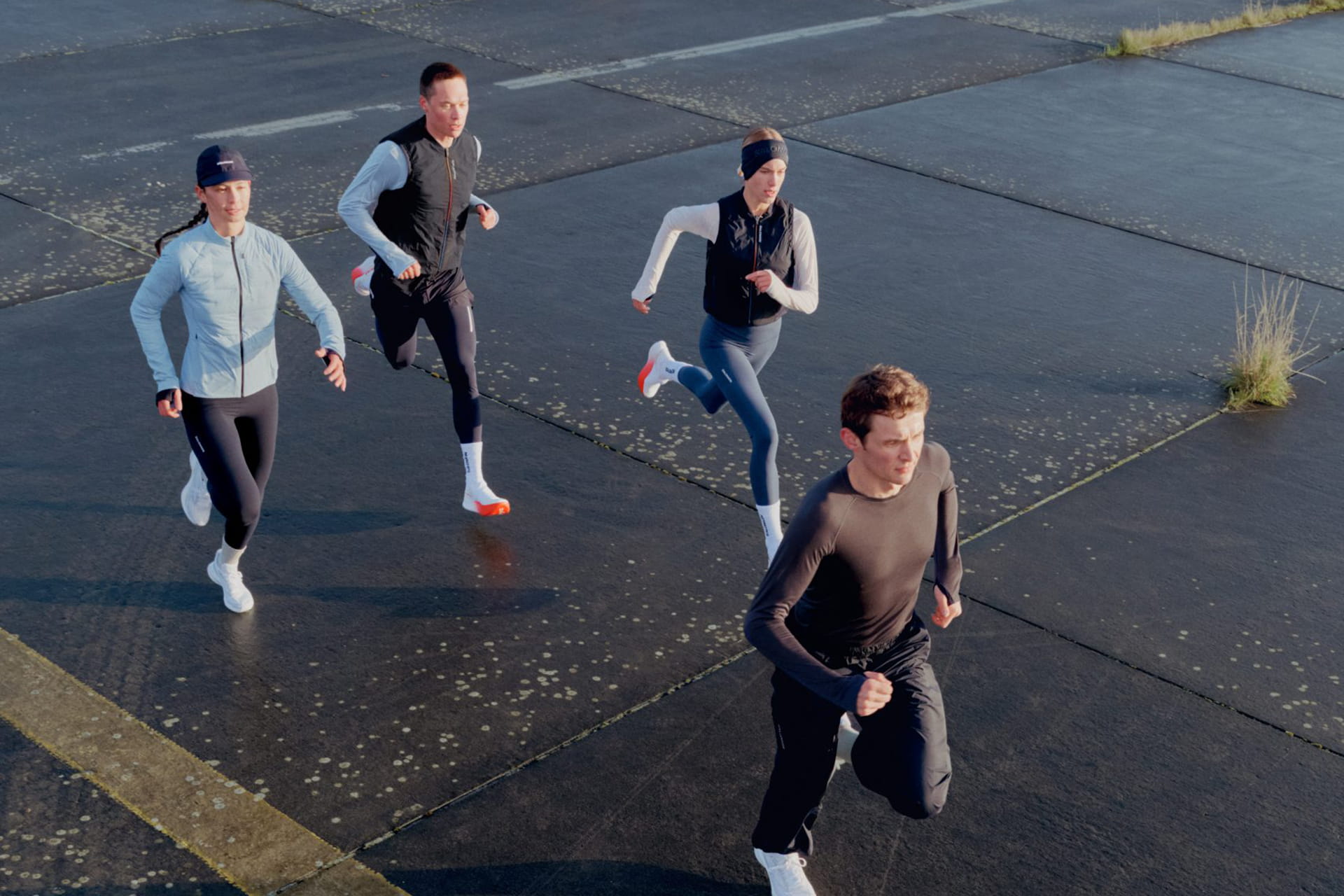
The strategic test for whether Meyzenq is right is the specific commercial trajectory of Salomon's apparel business over the next twelve to twenty-four months. The company is deliberately expanding apparel from a secondary category into a central one. Meyzenq told 36Kr that in the next generation of larger stores, apparel occupies about 60 percent of the retail floor space, compared with a historical pattern where Salomon stores were 200 to 250 square metres focused primarily on footwear. The Falcon Fly premium training and racing apparel line debuted with a winter collection early in 2026, followed by a spring training range, followed by a summer collection in June that used ultralight 7D yarn and was supplied to 26 runners at the second S/Pro marathon elite training camp. The company's new China World Mall flagship store in Beijing, which opened on August 10 and spans more than 700 square metres, is the specific physical embodiment of the apparel-centric commercial strategy. The commercial signal underneath the floor-space reallocation is that Salomon believes apparel sales can scale from a complement to footwear into a comparable revenue contributor over the next three to five years. If that scaling works, Salomon moves from a footwear-dominant brand with apparel attached into a full outdoor consumer category operator with footwear, apparel, and gear equally weighted.
The Editor's Note
If you are reading this and the pattern fits your business, start the conversation before the conversation starts itself. editor@unpublished.my.
The Greater China operating model is the piece the Malaysian retail landlord should be studying with meaningful attention. Salomon added a net 13 stores in Greater China in the second quarter of 2026, bringing its total to 315 directly operated and partner-operated locations. The company is targeting 45 net additions for the full year. Management believes the long-term ceiling for Greater China could reach 400 to 500 stores. Salomon also claims that its athletic footwear stores in Greater China and across Asia are the most efficient and profitable in the industry. The underlying commercial logic Meyzenq articulated is that China operates as a different retail market from Europe or the US. In Europe, the US, and Japan, the dominant go-to-market model is a few flagship stores in Paris, Tokyo, and New York that handle brand storytelling, with wholesale distribution providing scale. In China, that model does not work. The specific retail dynamic that forces a different approach is that China is primarily a direct-to-consumer market. The two routes to reach consumers are retail stores or e-commerce platforms. Wholesale distribution plays a materially smaller role than it does in Western or Japanese retail. The commercial consequence is that a brand operating in China needs sufficient physical retail density to carry the storytelling across a geographically dispersed consumer base, rather than relying on a small flagship network to anchor wholesale distribution. Salomon's 315 stores and planned 400 to 500 is the physical expression of that strategic reality.
The specific Chinese consumer transformation underneath the store expansion is worth reading precisely, because it predicts the equivalent transformation that will happen in Malaysia and across Southeast Asia over the next five to ten years. Meyzenq said Salomon's Chinese core consumer base was fewer than 100,000 people five years ago. Today it is close to ten million. That is a hundredfold expansion in five years. The specific mechanism that produced the expansion is worth understanding. Salomon ran communities, events, and Go Wild trail races. Through training programmes, community managers, and key opinion leaders, people in the broader outdoor community developed into semiprofessional trail runners or hikers. Trail running in China ten years ago had 10 to 20 races. Today it has 800. Salomon sponsors races, supports elite athletes, and runs the Golden Trail World Series globally. Salomon established academies to teach the technical dimensions of trail running, including how to deal with altitude-driven temperature changes and how to run at night. The specific strategic ambition articulated is to turn trail running into a culture rather than a passing trend, because culture lasts and trends do not. The commercial logic is that a brand that builds the culture around a specific sport earns the first-brand-of-mind position for every consumer who enters that sport, which is a materially more durable position than catching a wave of aesthetic adoption that will eventually move to a different reference brand.
The design philosophy Meyzenq articulated to describe why Salomon's products command premium positioning is the specific intellectual asset that Malaysian consumer product operators should be studying hardest. In January, Salomon appointed its first creative director, Finnish designer Heikki Salonen, who described the brand's character publicly as nerdy and weird. Meyzenq's response was that Salomon's secret is design shaped by performance. The specific operating pattern is that Salomon's shoes look the way they do by design because there is a performance need and purpose behind every design element. Colour teams, material and innovation teams, and athletes develop and test the products together. Every line and every functional detail on the product has a specific purpose. Technologies such as Quicklace, SensiFit, and Contagrip are used across both the performance and Sportstyle lines, which means the performance DNA is readable directly in the Sportstyle product's design. The specific commercial consequence is that Salomon's Sportstyle customers are, functionally, buying performance products with the surface signalling tuned for urban wear. That operating model is the specific thing most consumer brand operators do not do. The dominant industry pattern is to design products aesthetically and attach performance claims as marketing. Salomon reverses the sequence. Design starts from functional need and the aesthetic emerges from the engineering choices. That reversal is the specific operational discipline that is extremely difficult for competitors to replicate without rebuilding their design organisation.
For the Malaysian and broader Southeast Asian operator, four implications run from this story.
One. The Malaysian premium retail landlord has a specific twelve to eighteen month window to secure Salomon's Southeast Asian store rollout. The company has articulated a Greater China store-density strategy that implies a parallel Southeast Asian expansion as the next logical geography. Pavilion, Suria KLCC, The Exchange TRX, Mid Valley Megamall, Gurney Plaza in Penang, and the Johor Bahru premium retail destinations should each be evaluating what specific tenant proposition they can present to Salomon's regional expansion team. The specific commercial move is to initiate the conversation now, before Thailand's Siam Paragon network, Indonesia's Grand Indonesia and Plaza Senayan, and Vietnam's Vincom Center network lock in the reference commercial terms for Southeast Asia. Landlords that wait for Salomon to approach them will receive worse commercial terms than landlords that approach first with a credible, differentiated tenant proposition.
Two. The Malaysian premium consumer brand operator should be studying the design-shaped-by-performance operating model as a direct competitive template. The specific transferable discipline is to reverse the design sequence. Instead of designing a product aesthetically and attaching functional claims, design the product around a specific functional outcome and allow the aesthetic to emerge from the engineering choices. Malaysian premium consumer brand operators in beauty, apparel, outdoor gear, home goods, and food product categories should be evaluating whether their design organisation currently operates on an aesthetic-first or a function-first model. Converting from aesthetic-first to function-first is a multi-year organisational change, and the brands that start now will be positioned to compete against the next wave of global function-first entrants when those entrants arrive in Southeast Asia.
Three. The Malaysian sports and lifestyle community operator should be reading Salomon's China playbook as a specific transferable commercial model. The specific pattern is that Salomon did not simply sell shoes to runners. It built the running community infrastructure (academies, Go Wild races, key opinion leader networks, training programmes, athlete support systems) that produced the runners who then bought the shoes. Malaysian operators in trail running, road running, cycling, hiking, climbing, and water sports categories should be evaluating whether their current operating model is primarily transactional (selling products or services to existing community members) or infrastructural (building the community that will produce future product and service buyers). Infrastructural operators compound over time. Transactional operators do not.
Four. The Malaysian retail analyst and shopping centre consultant should be studying Salomon's 60-percent-apparel floor space reallocation as a reference signal about how category composition is evolving across the premium outdoor-and-lifestyle retail segment. The specific implication is that outdoor and lifestyle brands are shifting their physical retail from footwear-dominant to apparel-dominant floor plans. That shift has materially different implications for store size, visual merchandising investment, inventory depth, and staff training. Retail landlords that understand the shift can design next-generation retail space specifications that attract the brands moving to apparel-dominant floor plans. Retail landlords that do not will build retail space that does not fit the brands they want as tenants.
The headline is that Salomon's global CEO called gorpcore over. The story is the specific operating model, store strategy, category expansion, and community infrastructure investment that will determine whether Salomon's next five years deliver another USD 2 billion of growth or whether the end of gorpcore is also the end of Salomon's commercial momentum. The Malaysian operator who reads the Meyzenq interview as a European outdoor brand story is reading the wrong version. The right version asks which specific commercial, retail, design, and community investments the Malaysian operator needs to be making in the next eighteen months to be positioned when Salomon and the equivalent next-generation outdoor and lifestyle operators extend their regional footprint from Greater China into Southeast Asia.