The global luxury goods sector is in a specific transitional moment that the Southeast Asian retail landlord and premium consumer brand should be reading with unusual precision. Personal spending on luxury goods in China shrank 20.1 percent in 2024 and another 7.3 percent in 2025, according to Bain & Company. That specific two-year decline is one of the sharpest luxury demand contractions in the modern history of the category, and it has produced a specific commercial pressure on Chinese luxury manufacturers to look for growth outside their domestic market. Overseas profit contribution from Chinese luxury companies has doubled in the past decade to 16 percent of total profit in 2025, according to HSBC. International markets accounted for 26 percent of total revenue last year. Those numbers describe an industry-wide strategic reorientation that will reshape the competitive positioning of premium consumer goods across every major Asian market over the next thirty-six months.
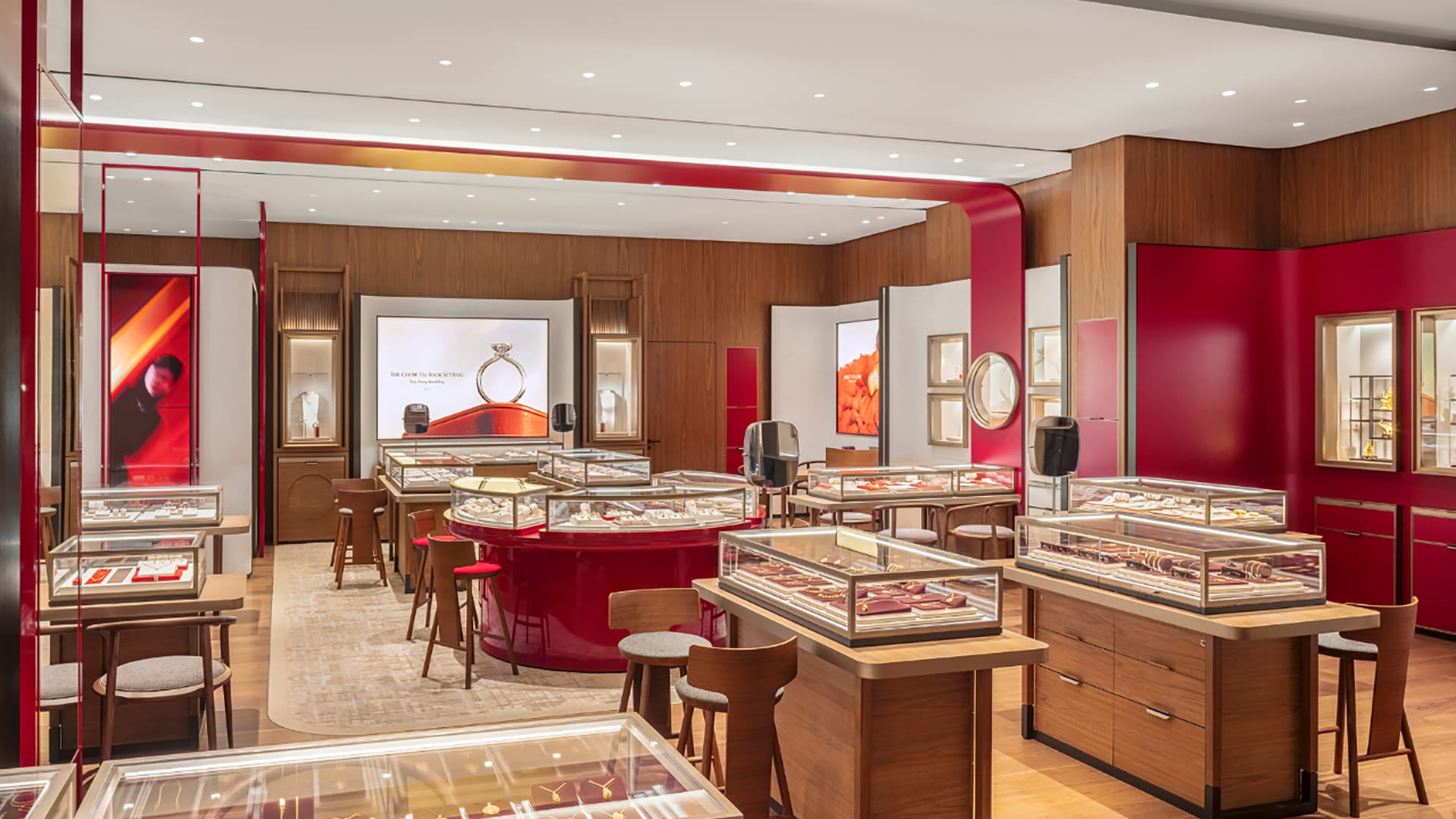
The specific geography Chinese luxury brands are choosing for their initial international expansion is worth reading carefully. Songmont, a Chinese handbag brand, opened its first overseas store as a pop-up in Bangkok's CentralWorld shopping centre. Chow Tai Fook, the Hong Kong-headquartered jewellery group, opened its first Thailand boutique in May at Siam Paragon in the heart of Bangkok and plans to expand its overseas stores from 55 to 100 by 2030. Florasis, the Hangzhou-based cosmetics maker whose products incorporate traditional Chinese medicine ingredients with designs inspired by ancient Chinese mythology, saw its Vietnam sales volume grow 20 times from 2024 to 2025. To Summer, the Beijing-based perfumer using Asian herbal elements, draws 60 to 70 percent of customers at its Hong Kong store from overseas including Singapore, Malaysia, South Korea, and Japan. Each of these specific market entry decisions is deliberate. Southeast Asia is being used as the testbed for global expansion, not as an incidental secondary market.
The demographic underpinning is what makes the testbed strategy commercially rational. Knight Frank research projects that five of the 20 global economies set to see the largest increase in the number of people with a net worth of over USD 30 million by 2031 are in Southeast Asia. Indonesia ranks top of the list with a projected 82 percent increase in ultra-high-net-worth individuals. Vietnam, the Philippines, Singapore, and Thailand also rank in the top 20. That specific demographic trajectory is meaningfully faster than the equivalent growth in North America, Western Europe, or Japan. Chinese luxury brands entering Southeast Asia are positioning themselves against a growing consumer base that Western luxury incumbents have historically underserved through Northern hemisphere-centric marketing and distribution decisions.
The competitive positioning Chinese luxury brands are executing is worth articulating precisely. The specific strategy is not to compete head-on with Louis Vuitton, Cartier, or Rolex on their established terms. It is to establish a new competitive dimension based on Chinese cultural design language, heritage storytelling, and craftsmanship narratives. Chow Tai Fook's recently launched Dawn collection is centred on the traditional Chinese motif of the four-petal flower, but with more restrained contemporary design than the deliberately traditional Hua collection. Atelier Wen, the independent Franco-Chinese watch brand, sells its Perception model for USD 4,850 using ancient engraving techniques for meticulous patterns on the dial. Silver Heights, a winery in Ningxia, produces bottles using well-known grape varieties in Chinese terroir. Each of these brands is executing the same underlying strategic move: establish a specific cultural design language that Western competitors cannot easily replicate, then convert that design language into premium price capture.
The Editor's Note
If you are reading this and the pattern fits your business, start the conversation before the conversation starts itself. editor@unpublished.my.
The role of social media in the market entry pattern is worth reading carefully. Chinese brands are generally well-versed at building followings overseas through platforms including TikTok, which primes the pump for official launches in new markets. To Summer's Hong Kong store manager reported that many overseas customers found the brand through TikTok, with some tourists marking the store as a must-visit destination in Hong Kong. Red Army Watches in Singapore, an independent watch retailer, reports that up to one-third of its products are Chinese brands and that these generate a disproportionately high level of customer interest relative to their numbers through pushing boundaries in design, storytelling, and mechanical creativity. That specific pattern of social media discovery leading to physical store visit conversion is the pattern that Western luxury brands have historically struggled to execute at scale, because Western luxury brands typically prioritise scarcity and controlled distribution over the accessibility and content-rich engagement that Chinese luxury operators emphasise.
The specific tariff context in the US is also worth mentioning because it reshapes the Chinese luxury brand geographic prioritisation. US tariffs have made some Chinese companies pivot toward Southeast Asia as their primary international expansion market. Florasis has diversified its international investments as market conditions evolved. That specific pivot away from the US and toward Southeast Asia produces meaningfully more Chinese luxury brand investment in Southeast Asian retail infrastructure, marketing, and consumer relationship building than would have happened in the absence of the US tariff context. Southeast Asia is receiving strategic investment that would otherwise have flowed to New York, Los Angeles, and San Francisco. That specific redirection of investment produces commercial opportunities for Southeast Asian retail landlords, marketing agencies, and consumer relationship management operators.
For the Malaysian and broader Southeast Asian operator, four implications run from this story.
One. The Malaysian premium retail landlord has a specific eighteen-month window to secure preferred tenanting relationships with the incoming Chinese luxury operators. Pavilion, Suria KLCC, TRX, The Exchange TRX, and the Genting Highlands premium mall developments should each be evaluating whether they have identified specific Chinese luxury brand tenants for the current expansion cycle. Landlords that establish relationships with Chow Tai Fook, Songmont, Florasis, and equivalent brands during the initial Southeast Asian expansion phase will secure the specific tenant mix that produces durable premium mall positioning. Landlords that wait for the brands to approach them will receive less favourable commercial terms after the reference deals have been established by Thai and Indonesian competitors.
Two. The Malaysian premium consumer brand should be reading the Chinese luxury design language strategy as a specific competitive threat and a specific competitive opportunity. The threat is that Chinese luxury brands establishing cultural design language positioning in Southeast Asia will compete for the same premium consumer wallet that Malaysian premium operators (Habib, Poh Kong, Wah Chan, Farah Khan, and various regional premium designers) are targeting. The opportunity is that Malaysian premium operators can execute the same underlying strategy using Malaysian cultural design language (Peranakan, batik, songket, Sarawakian textile motifs, Islamic geometric traditions) that Chinese operators cannot easily replicate. The specific commercial move is not to compete on price against Chinese luxury operators. It is to establish differentiated cultural design language positioning that produces its own premium capture.
Three. The Malaysian retail marketing agency should be evaluating whether its capabilities support the specific type of social media-led store visit conversion that Chinese luxury brands rely on. The dominant Malaysian retail marketing model currently emphasises promotional campaigns, celebrity endorsements, and mainstream media placement. The specific model that produces conversion for Chinese luxury brands is different: content-rich TikTok and Xiaohongshu engagement, in-store experiential design, and creator-driven storytelling that treats the retail visit as a content generation opportunity. Malaysian marketing agencies that build capability in this specific model will be positioned to serve the incoming Chinese luxury brand accounts. Agencies that do not will be excluded from that specific commercial opportunity.
Four. The Malaysian tourism authority should be evaluating whether the incoming Chinese luxury brand presence produces a specific tourism marketing opportunity. Bangkok has already established itself as a Chinese luxury brand testbed. Kuala Lumpur, Penang, and the Langkawi luxury tourism destinations should be evaluating whether coordinated positioning as premium retail destinations (specifically differentiated from Bangkok's positioning) would attract the incoming Chinese luxury brand marketing spend that will follow the retail expansion. Tourism Malaysia's positioning currently emphasises heritage, natural attractions, and value-oriented tourism. Adding a specific premium retail dimension aligned with the incoming Chinese luxury brand presence would produce meaningfully differentiated positioning that competing Southeast Asian tourism destinations have not yet secured.
The headline is Chinese luxury brands entering Southeast Asia. The story is the specific structural conditions (domestic Chinese luxury contraction, US tariffs, Southeast Asian UHNW demographic growth, Chinese cultural design language competitive positioning) that are producing a coordinated strategic reorientation of the entire Chinese luxury goods category toward Southeast Asian markets. The Malaysian retail operator who reads the individual brand entries as isolated market decisions is reading the wrong version. The right version asks which specific coordinated response Malaysian retail landlords, premium brand operators, marketing agencies, and tourism authorities need to be executing over the next eighteen months to be positioned when the reference commercial relationships are established.