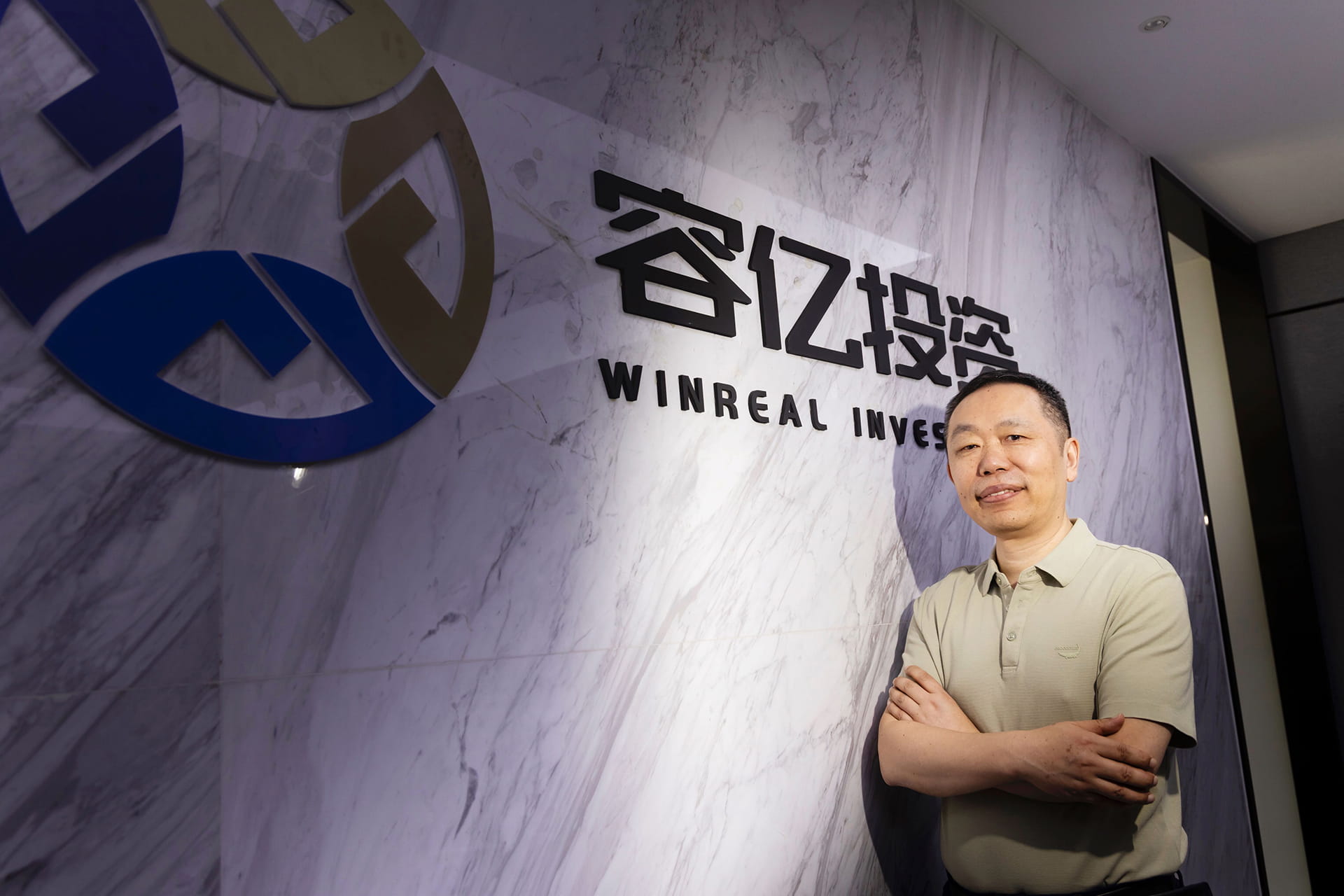
The Chinese venture capital ecosystem has produced roughly USD 8 billion in cumulative funding for humanoid robotics startups over the past 24 months, and most of that capital has flowed on the assumption that the sector's overall growth trajectory would produce satisfactory returns across the majority of portfolio positions. Huang Jinping, founding partner and chairman of Winreal Investment, is the specific institutional investor whose track record gives his contrarian framing the most weight. Winreal was the earliest institutional investor in Unitree Robotics, joining the Series A round in 2021 and investing in every subsequent round. That specific position (Unitree is now among China's most closely watched robotics IPOs) gives Huang a specific credibility to the framing he articulated in an August 2026 interview with 36Kr. Huang warned that most current embodied intelligence startups will not survive the next three to five years, that most of the current venture allocation into the category will produce disappointing returns, and that the specific framework investors should be using to evaluate the sector has three components that most current allocators are systematically ignoring.
The three-question framework Huang articulated is worth reading precisely because it is directly applicable to any Malaysian venture allocator with robotics exposure. Question one: can the technology work. This is the most basic question and the one most current allocators focus on almost exclusively. It asks whether the underlying technical approach (specific model architecture, specific sensor stack, specific actuation approach) is capable of producing the required capability at all. Question two: can it be engineered into a product. This asks whether the technical approach can be manufactured at reasonable cost, deployed at reasonable reliability, and maintained at reasonable operational expense across the operating environments the product will encounter. Question three: can it support a viable business. This asks whether the product economics (unit costs, gross margins, sales cycle, customer acquisition cost, retention economics) produce a durable commercial position after competitive pressure sets in. Huang's specific concern is that most current investors are answering only question one, assuming favourable answers to questions two and three based on sector momentum rather than on specific commercial evidence.
The specific market-structure warning Huang articulated deserves careful reading. Huang's model assumes an eventual RMB 500 billion (about USD 74.1 billion) robotics market divided across 20 companies. In that model, perhaps three companies will perform extremely well, capturing outsized share and generating high returns. Companies four through ten may remain viable, generating moderate returns but not the ten-times or twenty-times returns that venture allocators typically require. The remaining ten companies will likely struggle to survive, producing losses or write-downs across their investor base. That specific distribution is not the pattern that most venture allocators currently assume when writing checks into the sector. The prevailing pattern assumes that sector momentum will lift most portfolio positions, with a few unfortunate write-downs. Huang's framework produces the opposite prediction: three winners, seven survivors, ten losses.
The Wang Xingxing case study is worth reading precisely because it illustrates the specific type of founder discipline that produces the winner position rather than the loser position. Huang described Wang as demonstrating two specific characteristics that most young robotics founders do not have. First, near-obsession with robotics technology, willing to keep refining products and pushing performance across multiple hardware generations. Second, unusually strong cost discipline, scrutinising both hardware production costs and overall operating expenses at a level that is uncommon among young founders. Those two specific characteristics enabled Unitree to develop components in-house when the supply chain was immature, to control costs when competitors did not, and to survive the specific operating challenges that killed earlier-cycle competitors. The specific implication is that founder characteristics matter more than technology positioning at the earliest stages, because founder characteristics determine which companies survive the specific operational challenges that separate the eventual winners from the eventual losers.
The Editor's Note
If you are reading this and the pattern fits your business, start the conversation before the conversation starts itself. editor@unpublished.my.
The specific trap for late-stage investors is worth articulating precisely because it is the specific error most current Chinese robotics allocators are making. Huang described the pattern as arbitrage thinking imported from public markets: allocators who cannot access the leaders (because the leader positions are locked up by earlier investors) invest in companies ranked fourth through twentieth on the assumption that sector heat will lift all boats. That assumption does not hold from an industrial perspective. Leaders tend to become stronger over three-to-five-year horizons. Midtier and lower-tier companies tend to diverge, with a few unexpectedly outperforming and most underperforming. Investing in companies ranked eleventh through twentieth on sector-momentum reasoning produces a portfolio that is systematically exposed to the specific companies most likely to underperform. Malaysian venture allocators with robotics exposure should be evaluating whether their portfolio positioning reflects leader-focused conviction or arbitrage-focused momentum thinking, and reallocating accordingly if the analysis reveals the latter.
The specific capital-distortion warning is also worth reading because it applies directly to how founders behave when funding is abundant. Huang argued that founders who raise too much money too quickly may overestimate their capabilities, while investor expectations can push operating decisions away from the founder's long-term path. The specific mechanism is that large funding rounds carry performance expectations that founders feel obligated to meet through short-term operating decisions, even when those decisions are inconsistent with the specific product development trajectory required for long-term category leadership. That specific pattern is why Huang emphasised that Unitree spent years refining its technology and products, accumulating capability through repeated trial, error, and iteration in a way that cannot be compressed into a short period. Founders who bypass those years of accumulation, funded by aggressive early-stage capital, tend to produce impressive slide decks and disappointing operational results.
For the Malaysian and broader Southeast Asian operator, four implications run from this story.
One. The Malaysian sovereign and institutional venture allocator (Khazanah Nasional, Employees Provident Fund, Kumpulan Wang Persaraan, Petronas Ventures, and the various government-linked venture vehicles) with existing robotics exposure should be applying Huang's three-question framework to each specific portfolio position. Positions that pass all three questions represent the leader-focused conviction that Huang endorses. Positions that pass only the first question represent the specific type of arbitrage exposure that Huang warns will produce disappointing returns. The specific reallocation decisions need to be made in the next twelve months, before the sector positioning consolidates and reallocation becomes materially more difficult.
Two. The Malaysian venture capital limited partner should be evaluating whether the general partners it backs are executing leader-focused robotics investing or arbitrage-focused robotics investing. The specific evaluation question is whether the general partner has demonstrated ability to secure positions in the leader companies (or has clear articulated reasoning for backing specific non-leader positions), rather than accepting whatever positions are available in secondary funding rounds. Limited partners that continue to fund general partners without clear leader-focused positioning are effectively funding the arbitrage strategy that Huang predicts will underperform.
Three. The Malaysian robotics operator considering fundraising should be reading the specific capital-distortion warning carefully. Founders who raise larger rounds than they need, on more favourable terms than the underlying operational stage justifies, are structurally likely to produce operational decisions that damage their long-term positioning. The specific counter-discipline is to raise the minimum capital required to execute the specific product development milestones ahead, on terms that preserve founder decision-making autonomy on the specific operating trajectory that produces long-term category leadership. Malaysian robotics founders who follow that discipline are more likely to become the specific companies that Winreal-equivalent investors would fund in future rounds.
Four. The Malaysian corporate that is considering strategic investment or acquisition in the robotics category should be applying Huang's leader-focused logic rather than the arbitrage logic that dominates the current market. The specific commercial move is to identify one or two specific leader positions in the category (based on the three-question framework), establish strategic investment or partnership relationships with those companies, and avoid the temptation to diversify across the twenty-company portfolio that the arbitrage strategy would suggest. That specific concentrated positioning produces meaningfully better strategic value than the diversified positioning that would be defensible from a portfolio construction perspective.
The headline is a warning from Unitree's earliest investor. The story is the specific analytical framework that separates the roughly three winner positions from the roughly seventeen loser positions in the emerging robotics category, and the specific reallocation decisions that Malaysian venture allocators, corporate investors, and robotics founders need to be making in the next twelve months. The Malaysian venture allocator who reads Huang's interview as a general market commentary is reading the wrong version. The right version asks which specific portfolio positions need to be reviewed against the three-question framework, and which specific reallocation decisions need to be made before the sector positioning consolidates.