The story that is running in every English-language business publication about Southeast Asian manufacturing is the arrival story. Chinese electronics manufacturers moving to Malaysia. Chinese chemical plants moving to Indonesia. Chinese automotive assembly moving to Thailand. Chinese equipment makers moving to Vietnam. The narrative is a supply chain shift, the numbers are being tracked as inbound foreign direct investment, and the political framing is a decoupling story about how the region is absorbing production capacity that used to sit exclusively inside China. That narrative is directionally correct but strategically incomplete. The much more consequential story sits one layer underneath, in the industrial supply infrastructure that determines whether the arriving factories can actually operate reliably once they are on the ground.
The MRO market, which is the trade press abbreviation for maintenance, repair, and operations, is the piece Southeast Asian industrial policy has been quietly underinvesting in. Every factory in operation depends on a continuous flow of spare parts, industrial consumables, personal protective equipment, lubricants, seals, bearings, hand tools, and hazardous chemical supplies. In China, the MRO procurement system is mature, digitised, and coordinated across suppliers with unified material standards. In Southeast Asia, the same system does not yet exist at scale. Suppliers are fragmented. Material standards vary by country. Cross-border fulfilment cycles are long. Compliance requirements for hazardous chemicals differ between jurisdictions. Chinese manufacturers arriving with the assumption that they can replicate their domestic MRO procurement approach are discovering that they cannot. And when the MRO supply gap causes a factory shutdown, the cost is measured in per-hour production downtime rather than per-item procurement expense. Industry data from PSS Insight forecasts that the region's MRO market will exceed USD 58 billion by 2029, with annual growth above seven percent. That number is the target that any credible regional MRO player is now positioning against.
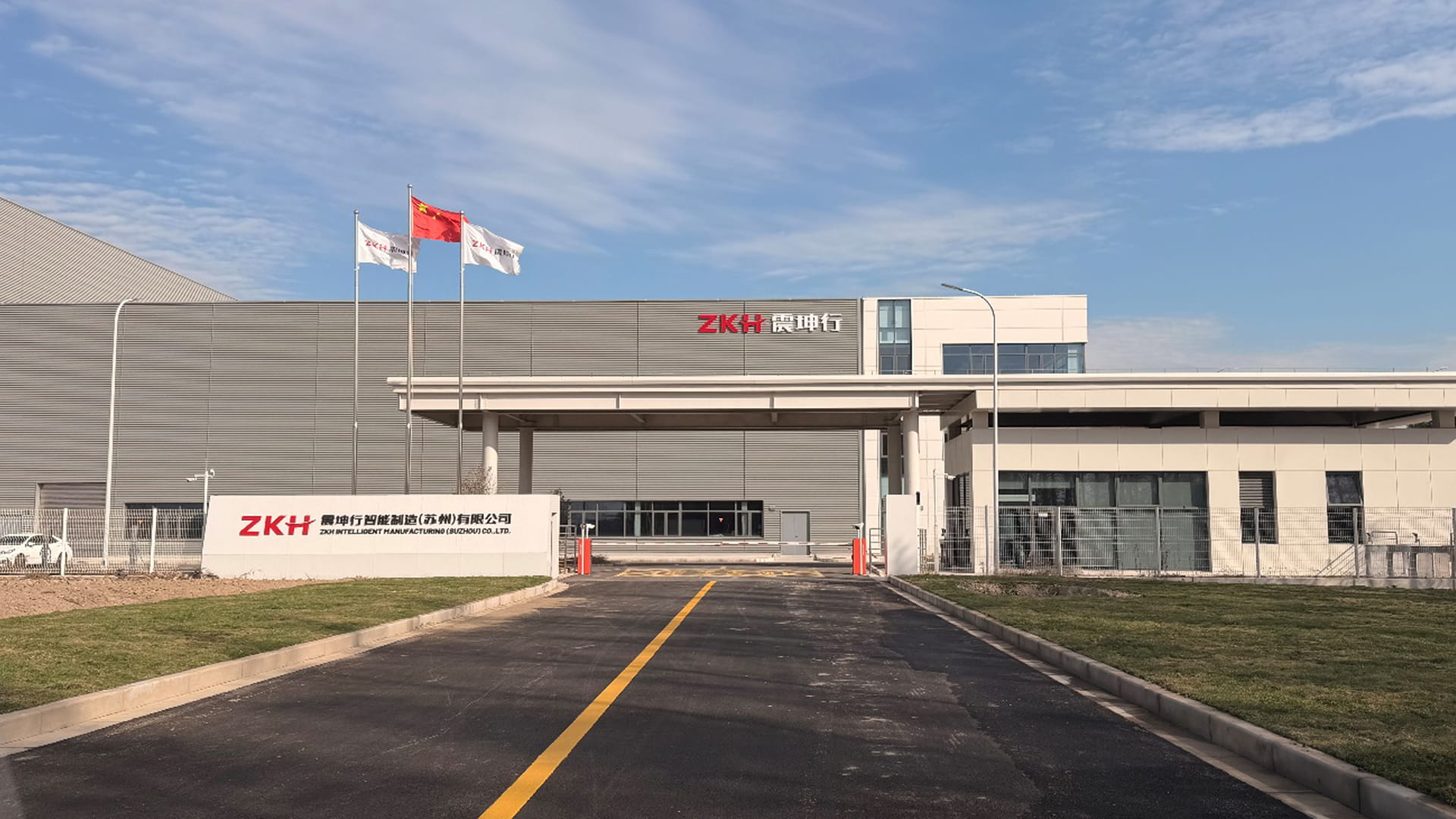
ZKH Industrial Supply is the Chinese digital MRO industrial services provider that has moved fastest to build the regional backbone. In 2025, the company established local entities in Thailand and Indonesia. It has built on-site teams, developed regulatory-compliant warehouses, and accumulated local supplier resources. Its regional supply model combines a cross-border inventory pool drawn from more than 27 million SKUs across 32 MRO product categories in China with local centralised procurement in the two Southeast Asian markets it currently operates in. The model is designed to address the specific procurement pain points Chinese manufacturers face when operating overseas. Cross-border sourcing. Warehousing and fulfilment. Customs compliance. Emergency supply support. The words matter. Every one of those categories is a piece of operational infrastructure that arriving Chinese manufacturers cannot build from scratch quickly enough to keep pace with their production timelines.
The strategic frame the company articulated to the trade press is worth reading carefully. As manufacturing continues to expand overseas, single-channel cross-border trade and fragmented local procurement can no longer meet the needs of large-scale factories. ZKH chose to first establish operations in two of Southeast Asia's key manufacturing markets, localising more than twenty years of digital industrial supplies and supply chain capabilities, and developing a professional MRO globalisation path suited to Chinese manufacturers expanding overseas. Read past the corporate framing and what is being described is a coordinated regional infrastructure play. The company is not selling parts to individual factories on a transactional basis. It is building the systems that Chinese manufacturing capacity depends on to operate reliably at Southeast Asian scale.
The Editor's Note
If you are reading this and the pattern fits your business, start the conversation before the conversation starts itself. editor@unpublished.my.
The Vietnam and Malaysia expansion is where the strategic decision now sits for Kuala Lumpur. ZKH has said publicly that its next phase of Southeast Asia expansion, beyond Thailand and Indonesia, will move into Vietnam and Malaysia through an asset-light model. Asset-light in this context means the company will leverage its existing regional warehouse network, its cross-border logistics capabilities, and its supplier resources to build MRO service coverage without the full capital deployment of new local warehouses. The commercial framing of that decision is efficient. The strategic framing of that decision is that Malaysia and Vietnam will be operating with less local MRO infrastructure investment than Thailand and Indonesia received. That difference in infrastructure investment produces different downstream economics, different competitive positioning for the local suppliers, and different strategic outcomes for the domestic industrial ecosystem over a five to ten year horizon.
The strategic decision the Malaysian Ministry of Investment, Trade and Industry (MITI), the Malaysian Investment Development Authority (MIDA), and the various state-level industrial authorities need to make now is which posture Malaysia adopts toward the ZKH build-out and the several other Chinese MRO players that will follow. The default posture is passive acceptance. Malaysia receives whatever level of local investment ZKH decides to make under its asset-light framework, competes with Thailand and Indonesia for the Chinese manufacturing capacity that follows, and inherits whatever supplier relationships and material standards ZKH establishes. The alternative posture is active shaping. Malaysia specifies the terms under which it wants Chinese MRO suppliers to operate domestically, including local supplier development commitments, data sovereignty over the digital material management systems, technology transfer for the standardised warehousing capabilities, and preferential treatment for Malaysian PPE and industrial consumables manufacturers within the ZKH supply pool. Both postures produce valid outcomes. They produce very different economic returns to Malaysian industrial policy over the medium term.
The specific reason the Malaysian industrial operator should be reading this story more carefully than the trade press has been covering it is that the ZKH build-out is happening simultaneously in Thailand, Indonesia, and (implicitly) in Vietnam and Malaysia. The four countries are competing for the same underlying Chinese manufacturing capacity relocation. The MRO infrastructure investment ZKH makes in each of those four markets shapes which country becomes the reference deployment for the next generation of Chinese factories moving offshore. Thailand and Indonesia have first-mover advantage because they were the first two markets ZKH established local entities in. Malaysia has the option to become a stronger third-position market by aggressively courting the Chinese MRO providers on terms favourable to Malaysian industrial development. Malaysia also has the option to become a weaker fourth-position market by accepting whatever asset-light infrastructure ZKH decides to deploy. The decision needs to be made explicitly, in the next twelve to eighteen months, not by default in 2028.
For the Malaysian and broader Southeast Asian industrial operator, four implications run from this story.
One. The domestic PPE and industrial consumables manufacturer should be reading ZKH's Southeast Asia expansion as the largest single procurement opportunity to arrive in the region in the current decade. ZKH's local supplier resource pool includes PPE, labour protection supplies, general-purpose hand and industrial tools, and standard industrial consumables. Malaysian manufacturers of any of those categories should be evaluating whether they meet ZKH's supplier qualification standards, and if not, what specific investments would qualify them. The manufacturers who qualify into the ZKH regional supply pool will be participating in Southeast Asian industrial procurement at a scale that no individual factory relationship could match. The manufacturers who do not qualify will watch that procurement flow pass through Thai and Indonesian suppliers instead.
Two. The Malaysian logistics operator has a specific window to build the last-mile industrial supply capability the ZKH model depends on. ZKH's operational promise is delivery within two to three days for local Southeast Asian warehouses. Meeting that promise across Malaysian industrial zones requires last-mile logistics capacity, refrigerated and hazardous material transport capability, and customs coordination that not every Malaysian logistics operator currently has at the required standard. The logistics operators that invest now to meet ZKH's operational specifications will be positioned to serve every subsequent Chinese MRO provider that follows ZKH into the market. The operators that do not will be structurally locked out of the category.
Three. The digital material management system is the strategic asset the Malaysian government should be pricing carefully. ZKH is building a cross-border digital material management system designed to unify material standards across countries and reduce the labour costs companies face in managing materials across regions. That system, in operational use across Malaysia's industrial base, would create data flows about Malaysian manufacturing capacity, procurement patterns, and supply chain dependencies that have significant strategic value. The Malaysian government should be making an explicit decision about whether it wants that data to sit inside a Chinese-owned system, inside a domestically operated system, or inside a hybrid structure that preserves Malaysian data sovereignty while accessing the operational efficiency of the ZKH platform. The decision is not urgent yet. It becomes urgent once the system is in operation, at which point the terms of data ownership are much harder to negotiate.
Four. The category of industrial services is the underappreciated economic opportunity underneath the Chinese manufacturing relocation story. The English-language trade press has focused almost entirely on the manufacturing capacity itself, measuring the FDI numbers, tracking the individual factory openings, and reporting the employment figures. The much larger economic value sits in the industrial services layer that supports the manufacturing capacity. MRO procurement. Industrial cleaning services. Preventive maintenance contracts. Predictive maintenance software. Industrial safety training. Regulatory compliance consulting. Each of those categories has a specific Malaysian services opportunity attached to it. Malaysian services operators should be building capability now, on the assumption that the manufacturing relocation is a decade-long structural shift and the services layer will grow to be materially larger than the current market shows.
The headline is a Chinese company opening warehouses in Southeast Asia. The story is the deliberate construction of the regional industrial supply infrastructure that determines whether Chinese manufacturing capacity relocation succeeds or stalls across the region, and whether Malaysia participates in the resulting economic upside as an active shaping partner or as a passive receiving country. The Malaysian operator who reads the arrival narrative is reading the wrong story. The right story asks which specific decisions Kuala Lumpur needs to make in the next twelve months to secure the strategic position that Thailand and Indonesia are currently establishing by default.