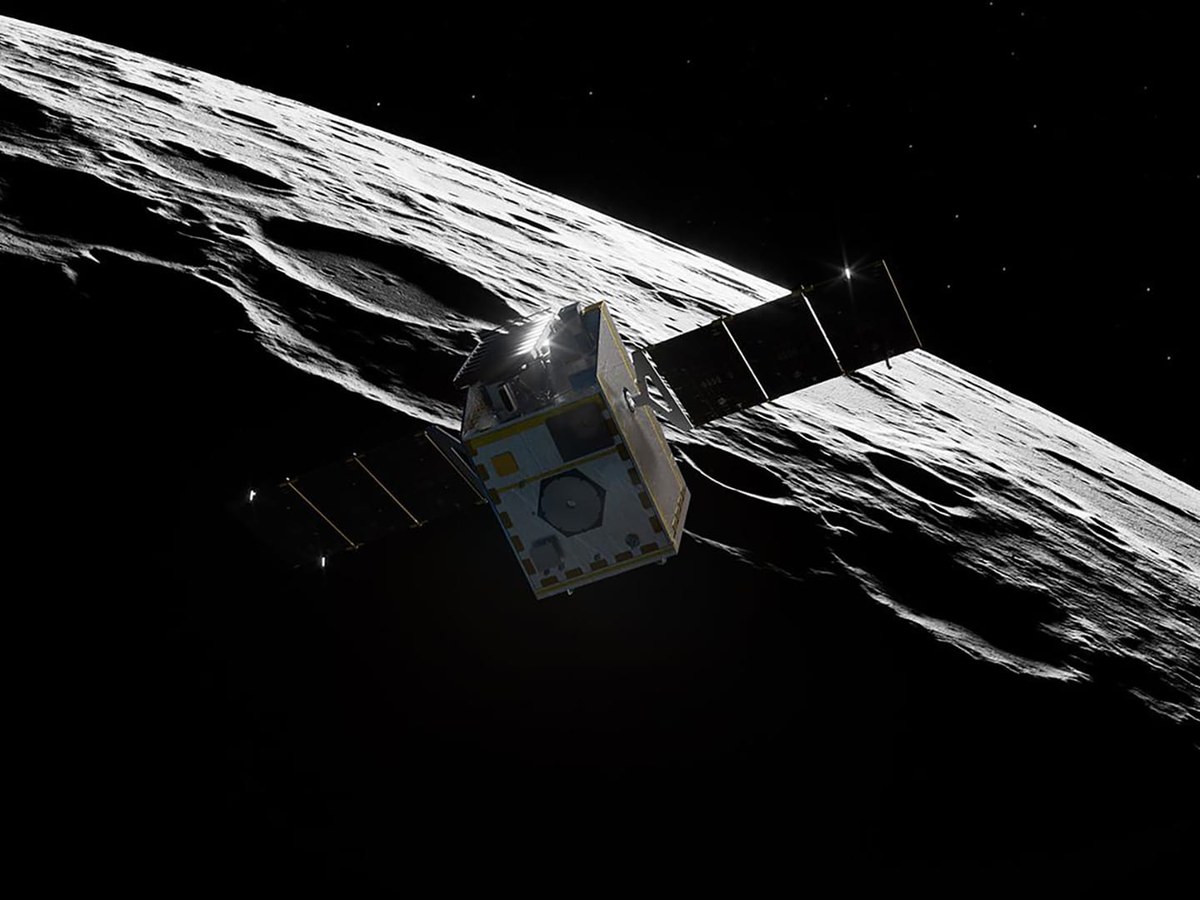
Travis Beals, a senior director at Google's Paradigms of Intelligence team, spent two years trying to dismiss the idea of putting AI data centers in space, powered by the sun. He could not dismiss it. The numbers held up. Project Suncatcher was the result. The first satellite equipped with Google Tensor Processing Units launches in 2027, in partnership with earth imaging company Planet Labs, to test whether the AI chips can survive orbit and run useful computations from it.
Google is not alone. Nvidia-backed startup StarCloud put an H100 GPU into orbit in November 2025 and claims it trained the first large language model in space. China's Ministry of Industry and Information Technology set up the Space Compute Professional Committee in April. In 2025, Chinese startup ADA Space and Alibaba-backed Zhejiang Lab launched what they called the world's first dedicated orbital AI computing constellation, twelve satellites carrying computing devices. The capital, the talent, and the policy infrastructure are converging in both Beijing and Washington at the same time.
The framing in the Western press has been about the technology. Solar power as unlimited energy supply. Space radiation as the engineering challenge. Launch costs falling to the point where it might one day make economic sense. That framing misses the actual structural question, which is about the supply chain.
Hong Shangguan, a veteran venture investor and former Lenovo Capital partner, named it directly. The space data center push is the latest front in the great competition between the US and China, where aerospace, AI, and semiconductors converge into a single industrial agenda. The technologies are early. The capital required is enormous. The timeline is long. None of this matters. The strategic position has to be secured now, before the supply chain locks in around whichever country gets to scale first.
Then read who is gearing up to supply that buildout. Foxconn, Quanta, Wistron, the dominant server suppliers to Nvidia and the cloud hyperscalers. Phison Electronics, a Taiwanese memory solutions supplier that has spent the past decade developing space-grade storage. Asia Vital Components, a key supplier of thermal dissipation systems for Nvidia data centers, has confirmed early engagements on space-grade thermal solutions. Ramon.Space, which has worked on missions for Japan's JAXA and NASA, is partnering with Ingrasys, a Foxconn server subsidiary, to build orbital data center infrastructure in the next two to three years.
Every single one of these companies is either headquartered in Asia or has its critical manufacturing operations in Asia.
This is the part Malaysian operators reading the headline should pause on. The narrative is about Silicon Valley building space data centers. The supply chain that makes that buildout physically possible runs through Taiwan, mainland China, Japan, South Korea, and increasingly through the Southeast Asian backend operations that those Northeast Asian giants use for cost-effective manufacturing. The companies in Penang, Kulim, Batu Kawan, and Senai Hi-Tech Park that are currently in the established semiconductor backend ecosystem are not external to this story. They are part of it.
The launch cost dynamic is the variable everyone is watching. According to a Citi report, the launch cost of one kilogram of cargo dropped to USD 1,500 in 2022, a thirty-fold decrease since 1981. Projections suggest it could fall as low as USD 33 per kilogram by 2040. Rob DeMillo, CEO of Sofia Space, said his company's 2030s business model is built around a target of USD 1,000 per kilogram, the price at which space-based data centers make economic sense. Robbie Schingler at Planet Labs, Google's hardware partner, said the magic point for parity with terrestrial data centers is closer to USD 300 per kilogram, which he estimates is ten years away.
The Editor's Note
If you are reading this and the pattern fits your business, start the conversation before the conversation starts itself. editor@unpublished.my.
SpaceX has done most of the work driving launch costs down with its Falcon 9 heavy-lift capability. SpaceX is also becoming the bottleneck. Jacob Flores at Type One Ventures pointed out that since Musk acquired xAI, SpaceX will prioritise launches for its own compute infrastructure. Other launch companies are stepping in to fill the gap. Rocket Lab reported record earnings and more than USD 2 billion in launch backlog as of early May. The launch services market is no longer single-sourced through SpaceX.
Geopolitical context matters too. Three Amazon Web Services data centers in the Middle East have been out of commission due to the Iran war. Japan and Singapore are among the countries investing in sovereign AI capacity, partly as a hedge against this kind of disruption. Steve Eisele, CEO of Lonestar Data Holdings, made the resilience case directly. Initial demand for space-based data infrastructure will come from countries and industries that need to know their critical data exists in a location no terrestrial event can compromise. Banking, telecommunications, healthcare, utilities. The data has to be somewhere that cannot be wiped out by a regional war or a major cyberattack.
Whether AI computing actually scales meaningfully into orbit in the next five to ten years is a separate question. Several analysts cited in the original reporting are sceptical. Ali Javaheri at PitchBook called some of the orbital data center pitches close to a marketing ploy, comparing them to running an LLM on a Mac Mini and calling it a data center. That scepticism is real and appropriate.
But the supply chain buildout is happening regardless of whether the most ambitious orbital data center claims pan out. Space-grade storage is being developed. Space-grade thermal solutions are being tested. Space-grade server architectures are being prototyped. The component-level supply chain for orbital compute infrastructure is forming now, with Asian manufacturing at its centre, and the companies that establish positions in that supply chain over the next thirty-six months will be the ones extracting value when the category matures.
Malaysian operators who supply the existing terrestrial semiconductor and electronics ecosystem should be asking themselves a specific question. Where does our current capability map onto the emerging space-grade requirement? Thermal management. Specialty packaging. Precision assembly. Cleanroom manufacturing. Quality validation. The skills that built Malaysia's position in conventional semiconductor backend operations are largely the same skills the space-grade supply chain needs.
The conversation that is missing in Malaysian industry circles is the one about how the existing OSAT and EMS infrastructure positions itself to participate in this next wave. The conversation that is happening in Taiwan, Korea, and Japan is exactly that conversation, with national-level industrial policy backing it. Malaysia is not absent from the underlying capability map. Malaysia is absent from the strategic conversation about how to deploy that capability into the new layer.
The space race for AI compute is happening. The supply chain to support it will be built somewhere. The Asian operators paying attention now are the ones who will be on the procurement lists when Foxconn, Phison, and Ramon.Space scale their space-grade product lines from prototype to volume. The ones who keep treating this as a Silicon Valley story will read about the Taiwanese and Korean operators who got there first.