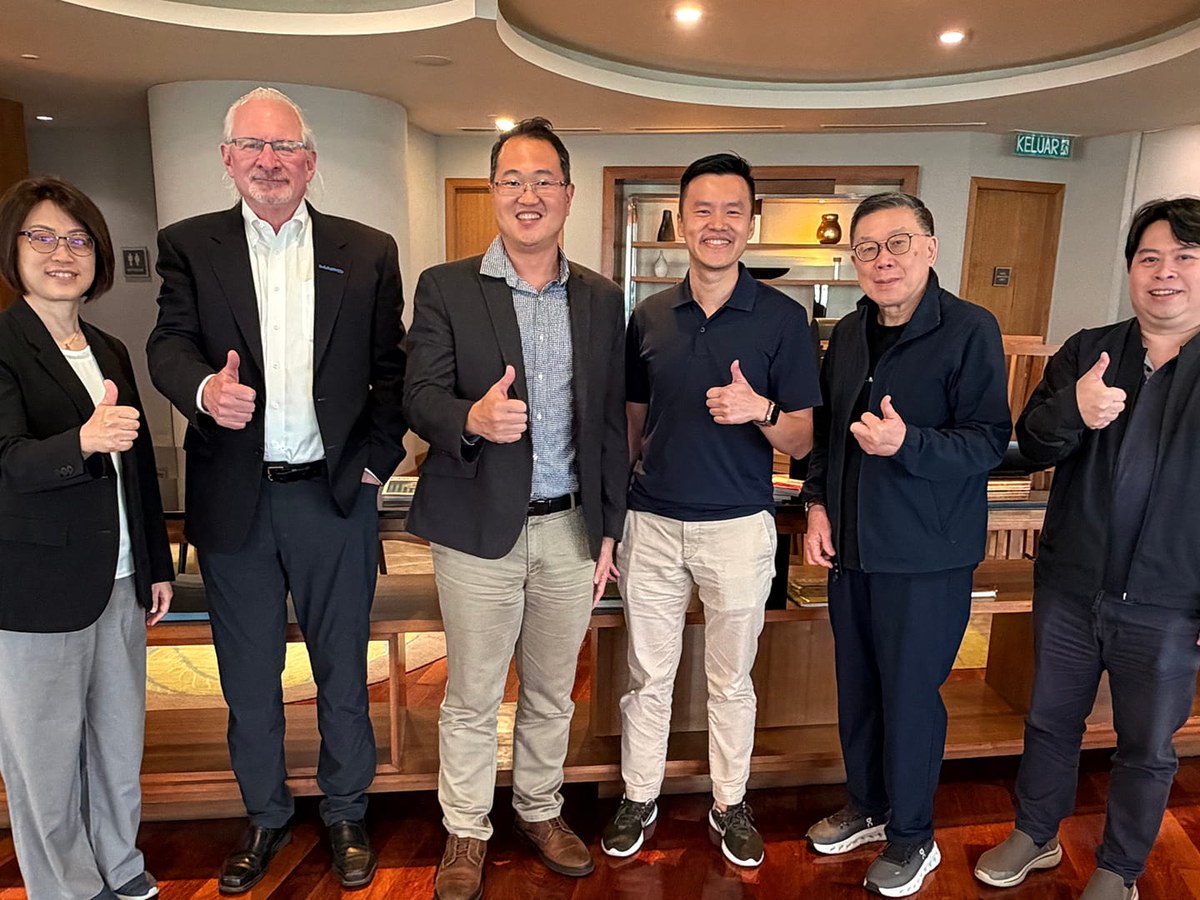
Kathryn Knight, founder and CEO of Muun AI, closed a pre-seed round of USD 700,000 with Wavemaker Impact in mid-April. The company builds industrial intelligence systems that convert machine telemetry into real-time operational insights. Translation. It listens to what factory machines are already saying about themselves, and turns that into something the factory operator can act on. No additional hardware required. No retraining models on plant-specific data sets. The platform identifies inefficiencies and produces predictive analytics from telemetry that the operator has been collecting and ignoring.
The pilot at a single Singapore manufacturing facility identified thousands of hours of recoverable inefficiencies. That is the line in the press release that the regional trade press skipped past. It deserves more attention than it received.
Start with the structural problem. Southeast Asian manufacturing has been digitising machine sensors and operational data for roughly a decade. Most factories of meaningful scale have at least some telemetry capture running. The data is there. The dashboards are there. The reports get produced. The operators look at them. The interpretation gap is enormous, because the operators looking at the dashboards are running a plant and do not have the analytical bandwidth to extract the insights the data could be producing if anyone were properly mining it.
Muun AI is targeting exactly that gap. The pitch is not new sensors. The pitch is better extraction from existing sensors. That is a different category from what most industrial IoT vendors have been selling for the past five years. Most of them have been selling hardware refresh. Muun is selling intelligence extraction on the hardware the operator has already bought.
The economics of that pitch are interesting. Hardware refresh is expensive, requires plant downtime, requires capital approval, and has a long sales cycle. Intelligence extraction is cheap, requires no downtime, can be approved at the plant manager level, and proves out within weeks. The operator who has already spent on telemetry capture sees Muun's value proposition more clearly than the operator who is being pitched on yet another sensor.
The pre-seed cheque size is the part that signals what Wavemaker Impact is doing. USD 700,000 is not a growth-stage cheque. It is a fast-pilot cheque. Wavemaker Impact's thesis is climate and operational efficiency in industrial contexts. Muun AI fits that thesis cleanly, because operational inefficiency in industrial settings is almost always energy waste in some form. Recovering thousands of hours of inefficiency at a single facility translates into measurable energy savings that show up in both operational P&L and corporate sustainability reporting. The two narratives now travel together.
The Editor's Note
If you are reading this and the pattern fits your business — start the conversation before the conversation starts itself. editor@unpublished.my.
What this means for the Malaysian manufacturing base, which is the part this desk wants to flag for operators reading from this side of the Causeway.
Malaysian manufacturing has roughly the same telemetry penetration as Singapore. The plants that matter have data. The data is sitting in OPC servers, in plant historians, in SCADA logs, in the Excel files the engineering team exports every Monday. The analytical extraction layer is mostly absent. Some of the larger operators have invested in internal data science teams. Those teams are typically small, overloaded with multiple priorities, and producing dashboards rather than predictions. The plants that do not have internal data science teams are working off vendor reports and gut instinct.
The Muun AI category, intelligence extraction from existing telemetry, is going to be one of the structural winners of the next industrial software cycle in Southeast Asia. The reason is simple. Hardware refresh is capital-constrained. Intelligence extraction is not. In a slowing economy where manufacturing margins are compressed, the operator who can identify recoverable inefficiency without buying new equipment is going to outperform the operator who is waiting for capital approval to upgrade the line.
This creates a near-term decision for Malaysian operators. The decision is not whether to adopt industrial AI. The decision is whether to adopt it through a Singapore-based vendor, a Chinese vendor, a global vendor, or a Malaysian-built vendor. Currently the Malaysian-built option does not really exist at scale. There are pockets of Malaysian industrial software, but no Muun AI equivalent has emerged as a category leader. The window for a Malaysian operator to either build that vendor or back one is open right now and will not stay open beyond the next twelve to eighteen months.
The other question worth flagging is what Muun AI's pilot results actually mean. Thousands of hours of recoverable inefficiency at one facility is a meaningful number, but the structural reason it is meaningful is what the inefficiency represents. Industrial inefficiency at the plant level is rarely about machine performance. It is about coordination. The machine ran at 70% utilisation instead of 90% because the preceding process delayed the input. The product was rejected because the tolerance drifted and nobody caught it before the batch was complete. The line stopped for forty-five minutes because the changeover took longer than planned. Every one of these is recoverable through better operational signal, not better hardware.
The systems that fix this are not deep-learning research projects. They are practical telemetry analysis combined with workflow integration. The hard part is not the AI. The hard part is convincing the plant manager to act on the analytical output. That is a sales problem and a change-management problem, not a technical problem. Muun AI's challenge over the next eighteen months will not be product. It will be turning the pilot success into a repeatable enterprise sale across the diverse manufacturing base that exists across Singapore, Malaysia, and the broader region.
The capital is set up for that journey. USD 700,000 is enough to run two or three more pilots, generate the case studies that establish credibility, and position for a larger Series A round in late 2026 or early 2027. The investors who will participate in that round will be looking for a specific pattern. Repeatable pilot results across diverse plant types. Measurable customer ROI in published form. A regional pipeline of qualified prospects. If Muun AI builds that pattern, the Series A will be straightforward. If they pilot well in Singapore but cannot replicate in regional markets, the Series A will be harder.
The Malaysian operator reading this who has a manufacturing footprint should be doing two things this quarter. One. Audit your existing telemetry capture. Find out what you are already collecting, where the data lives, and who looks at it. Most plant managers do not actually know the answer to all three questions, which is its own diagnostic finding. Two. Have a conversation with two or three industrial AI vendors. Muun is one option. There are others. The point is not to pick a vendor today. The point is to understand what the category looks like when you are not the one trying to evaluate it cold.
The operators who will outperform across the next manufacturing cycle in Southeast Asia are the ones who treated AI extraction as an operational priority, not a technology project. Muun AI's pre-seed round is one of the early signals that the category is now serious enough to attract impact-oriented institutional capital. The next signal will be when the Series As start landing. By then the category will have winners and the operators who waited will be evaluating tools that the early adopters already used to compress their margins downward, structurally and permanently.
The number to remember is not USD 700,000. The number to remember is thousands of hours per facility. That is the economic gap the next decade of Southeast Asian industrial competition is going to be fought over.