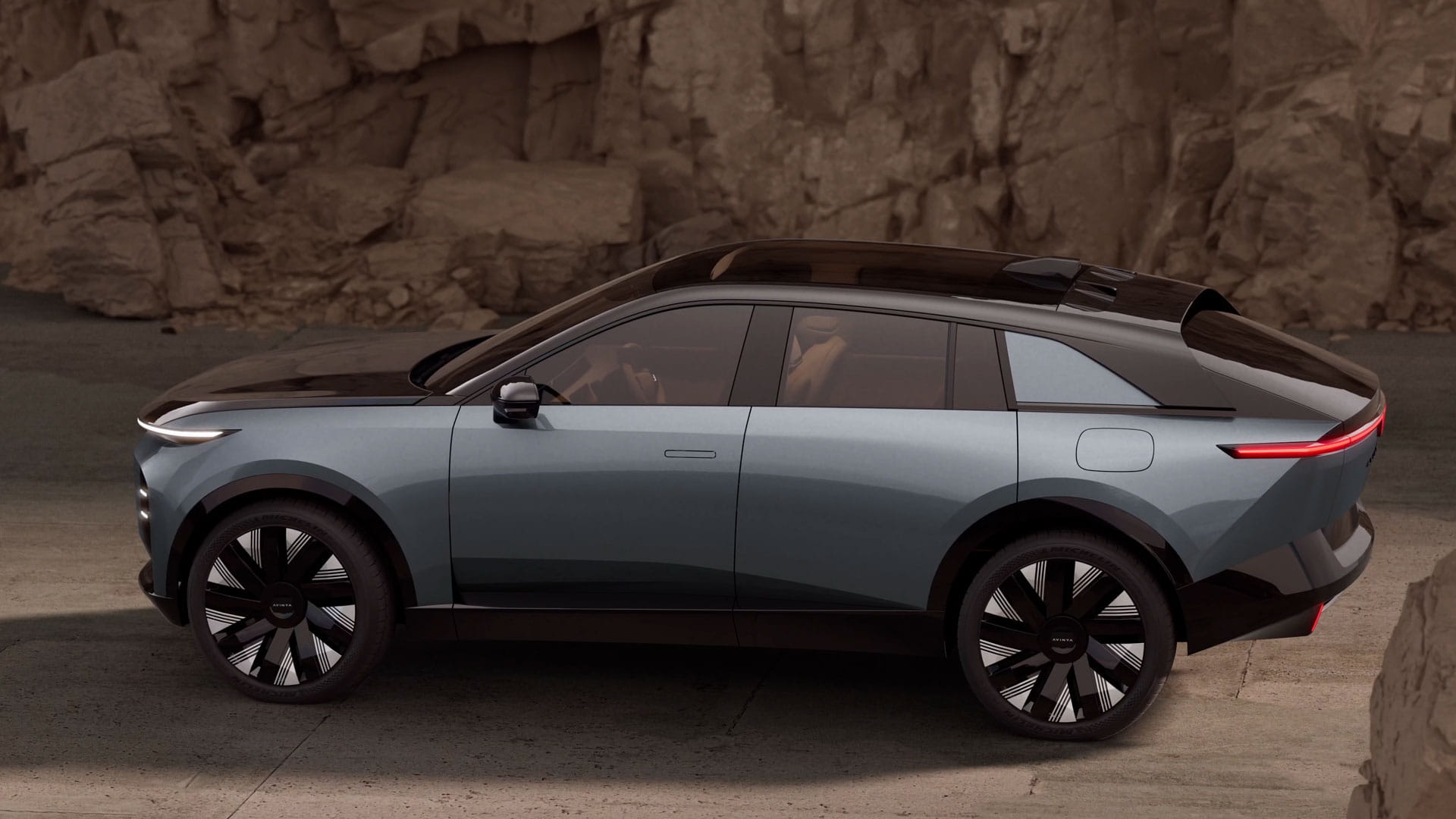
Tata Motors announced on June 3 that some cars from its upcoming premium Avinya lineup will be built on an EV platform jointly developed by its subsidiary Jaguar Land Rover and Chinese automaker Chery. The platform was originally meant for reviving the Freelander brand. It is now doing double duty for Tata's flagship Indian EV push. The first Avinya car is scheduled for next year.
Read the announcement against the broader pattern and the story changes meaning. JSW Group, the conglomerate built by Sajjan Jindal, has already obtained a separate license to use Chery's technology for a new brand expected to launch around India's festive season this October-November. JSW already had a China connection through its 35 percent stake, acquired two years ago, in MG Motor's India operations, which are owned by China's SAIC. Volkswagen has a stake in Xpeng. Stellantis, owner of Chrysler, Jeep, and Peugeot, has invested in Leapmotor and operates joint ventures with Dongfeng Motors. The Indian deals are not isolated. They are the regional expression of a global pattern. Carmakers everywhere are buying or licensing Chinese EV technology because the Chinese EV technology is now the fastest path to a launchable product.
The why is operationally specific. Vinay Piparsania, founder of automotive consultancy MillenStrat Advisory and Research, framed it precisely. The primary driver is time. Developing an EV platform from scratch could take billions of dollars and several years of development. Licensing could advance launches by at least three years and significantly reduce execution risks. In a market where Japanese, South Korean, and European carmakers are all simultaneously preparing India launches stung by Chinese EV inroads elsewhere, three years of time-to-market advantage is the difference between defining the category and chasing it. Tata and JSW both calculated that the licensing route is the only way to ship in time.
The market context makes the urgency rational. India is the world's third-largest car market. It has largely shunned Chinese carmakers directly because of strict foreign investment rules following the 2020 border tensions. The US war with Iran has pushed up gasoline prices, and Indian EV sales surged about 72 percent in March and April from the same period a year earlier, nearly 46,000 units cumulative. That is the kind of growth rate that produces a sales boom. The carmakers that have launchable EV products in 2026-2027 will capture the early demand. The carmakers that are still developing platforms will not. Licensing Chinese technology is the lever that converts a multi-year development cycle into a market-window-aligned launch.
The Editor's Note
If you are reading this and the pattern fits your business, start the conversation before the conversation starts itself. editor@unpublished.my.
The dependency is structurally deeper than the platform licensing visible in the headlines. According to the Institute for Energy Economics and Financial Analysis, nearly three-quarters of the lithium-ion batteries used in EVs in India are sourced from China. The import bill rose eightfold between fiscal 2019 and fiscal 2025, exceeding USD 3 billion. It could jump to USD 23 billion by 2030. Battery cell manufacturing is the more strategic dependency, and Indian companies including Tata's Agratas, Exide Industries, and the Amara Raja Group are building sprawling cell factories. But even those factories are operating on Chinese technology. Amara Raja has licensed technology from a Gotion subsidiary. Exide has tapped Svolt. The Indian battery-cell capacity that will eventually reduce import dependence is, in its current build-out, being built on licensed Chinese chemistry and licensed Chinese process knowledge.
Harshvardhan Sharma at Nomura Research Institute named the strategic problem cleanly. This is a practical short-term move, but India must convert it into a capability-building phase. The ambition should be to license, localise, learn, and eventually lead, not simply import and assemble. That sentence is the part the Malaysian operator should be reading. The licensing path is rational at the moment of the decision. It becomes a trap if the licensee does not use the period of licensed access to build the engineering capability that would have been built during the years of independent development. The Indian carmakers have made the licensing decision. Whether they convert it into capability is a separate question that will be answered over the next five to seven years through deliberate engineering, talent, and infrastructure investment, or by default through continued licensing renewals.
For the Malaysian operator, four implications run from this story.
One. Malaysian EV strategy is currently positioned on the assumption that the Malaysian market will eventually receive Chinese EV products through direct entry, joint ventures with Malaysian distributors, or assembly partnerships with Proton and Perodua. The Indian case demonstrates a fourth pathway that is less visible. Chinese technology arriving inside non-Chinese branded products. The Avinya is a Tata car running a Chery-developed platform. The end consumer sees Tata. The supply chain sees Chery. Malaysian distributors, dealers, and aftersales operators should be evaluating which products they are positioned to handle are actually built on which underlying technology platforms, because the support requirements, the parts supply chain, and the long-term economics flow through the underlying platform rather than the visible badge.
Two. The Malaysian battery and EV supply chain ambition, Perodua's stated EV plans, the various battery cell projects, Proton's transition strategy, faces the same structural choice as the Indian players. The fastest path to a launchable Malaysian EV product is licensed Chinese technology. The path that builds long-term Malaysian capability is independent development. Malaysian operators and policy planners need to make that choice explicitly rather than allowing it to be made by default through licensing decisions that compound over time. The strategic question is not whether to license. The strategic question is how to structure the licensing arrangements so that capability transfer is contractually enforceable and operationally measurable.
Three. The geopolitical risk that Nomura's Sharma flagged is portable. India cannot afford to be slow in EV adoption, but it also cannot allow critical mobility infrastructure to become overdependent on one country. The risk is not just supply disruption, it is pricing power, intellectual property dependence, cybersecurity, data, and future bargaining leverage. The same risk catalogue applies to Malaysia. Vehicle telematics data flows. EV charging infrastructure software. Battery management system firmware. Each of these is a category where the country that controls the supply chain controls more than just the physical product. The Malaysian regulatory framework for EVs over the next thirty-six months needs to address data sovereignty, software auditability, and supply concentration explicitly, not as bureaucratic add-ons but as the actual strategic terms of the EV transition.
Four. The opportunity for Malaysian aftermarket and service businesses is the side of this story that is being underreported. As licensed Chinese-technology vehicles proliferate across India and eventually into ASEAN markets, the regional aftermarket, parts distribution, service training, software updates, battery diagnostics, end-of-life recycling, becomes a category that operates downstream of both the original Chinese supplier and the visible badged manufacturer. Malaysian operators with the technical depth to service the underlying Chinese platforms, regardless of which brand sits on the bonnet, will have a structurally larger addressable market than the operators who service only the badged brands they already carry. The aftermarket play is less visible than the assembly play. It is also lower-capital, higher-margin, and more defensible.
The headline is two Indian conglomerates licensing Chinese EV technology to launch domestic premium brands. The story is the global automotive industry quietly restructuring itself around Chinese EV capability, and the regional supply chain implications of that restructuring being further along than most ASEAN operators have yet calibrated for.