For three years the Western analytical consensus on the Chinese chip industry has been organised around a single question. Can China catch up to Nvidia? The export controls were calibrated against that question. The supply-chain restrictions were calibrated against that question. The Western financial press has filed thousands of pages of analysis trying to answer that question. The question is the wrong question.
Tsing Micro, a Beijing-headquartered semiconductor company founded in 2018, has just completed the IPO counseling process for the ChiNext board on the Shenzhen Stock Exchange. The filing makes it almost certain to become China's first listed company built on a non-GPU chip architecture. Reading the filing as a Chinese catch-up story misses the point. The company has not been trying to catch Nvidia. The company has been building the alternative architecture that lets China stop running the race Nvidia is winning, and start defining a different race where the rules favour Chinese capabilities. The IPO is the moment that strategic decision becomes a publicly tradable equity.
The architecture is called RPU, reconfigurable processing unit. The trade press is now describing the category as the "general-purpose TPU." The phrase is doing a lot of strategic work. GPUs are flexible, they can run almost any AI workload, but they are not energy-efficient at any specific workload. TPUs are highly energy-efficient at the workloads they are designed for, but they are not flexible. A TPU built for one model architecture cannot easily be repurposed when the workload changes. The reconfigurable chip approach attempts to keep GPU-level flexibility while approaching TPU-level energy efficiency, by dynamically reconfiguring its computational operators in response to the workload at runtime. That is the technical pitch. The strategic pitch is more important. If RPUs work at scale, Chinese AI infrastructure does not need to depend on Nvidia, on TSMC's most advanced nodes, or on the GPU software ecosystem that has been the actual moat protecting Western AI capability.
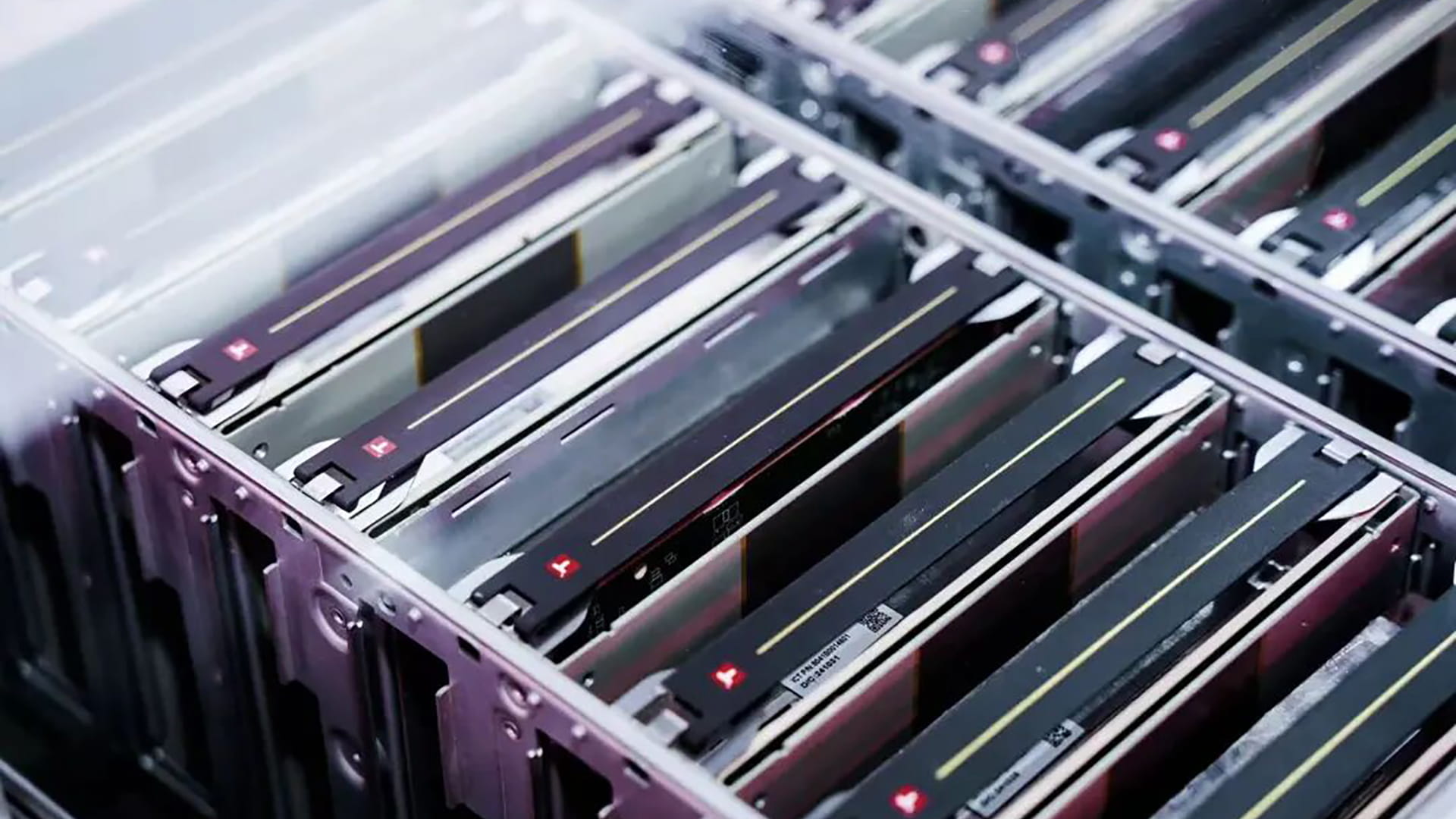
The Tsing Micro track record is what makes the IPO consequential rather than aspirational. The trade press has described the company as the world's first commercial reconfigurable chip company and as the largest commercial reconfigurable computing chip company globally by shipment volume. Cumulative shipments have reportedly exceeded thirty million units. The chips have been deployed at scale in more than a dozen Chinese computing centres with at least one thousand cards each. These are not laboratory demonstrations or PowerPoint claims. They are commercial deployments at industrial scale, in production environments, billing real customers. Any analyst reading this as a venture-stage company about to test its product against the market is reading it wrong. This is a company about to monetise an installed base.
The product line is split across two clear positions. The TX8 series is the cloud product, targeted at AI computing centres. Its flagship chip, the TX81, uses a self-developed chip-to-chip mesh architecture. The mesh allows data to move directly among chips, servers, and racks without first passing through network switches. The architectural decision is the part to study carefully. AI workloads at scale are bottlenecked at three places. Computational efficiency at the chip level. Interconnect bandwidth between chips. Memory access between compute and storage. Most chip designs address one bottleneck and tolerate the other two. The TX81 mesh approach claims to address all three through architectural design rather than through faster components. If the claim holds at scale, the operational economics of a TX81-based computing centre are structurally different from those of a Nvidia-based equivalent. That is the kind of difference that does not show up in benchmark comparisons but does show up in twelve-month total cost of operation.
The Editor's Note
If you are reading this and the pattern fits your business, start the conversation before the conversation starts itself. editor@unpublished.my.
The TX5 series is the edge product, targeted at computer vision applications. Together with the TX8 series, the product line is designed to span device, edge, and cloud computing scenarios. That coverage is unusual for a company of Tsing Micro's age and capitalisation. Most chip companies pick a position in the device-edge-cloud spectrum and stay there. Tsing Micro is attempting to be the single architecture that covers all three positions, with software portability between them. The strategic implication of that scope is that customers who adopt the architecture at any one level have a structural reason to standardise on it across the other two levels. That is the move that produces ecosystem lock-in. It is the move that Nvidia made with CUDA over twenty years. Tsing Micro is attempting to make the equivalent move in roughly eight.
The software layer is the part most foreign analysts are underestimating. Tsing Micro is one of the few companies that has achieved full-stack compatibility with all core components of FlagOS, the Chinese open-source AI operating system. The trade press reports that the company's adaptation scale ranks in the top two non-GPU architectures, alongside Huawei Ascend. The functional translation. AI applications developed on FlagOS can run on Tsing Micro chips without rewriting. When ten Chinese AI chip companies, including Tsing Micro, achieved same-day adaptation of the DeepSeek V4 model on FlagOS last April, the signal was that the Chinese AI software ecosystem has reached a level of maturity where new chip architectures can be adopted as fast as new models are released. That is not the position the foreign press has been describing. The foreign press has been describing a Chinese chip industry that is structurally years behind. The on-the-ground reality is that the Chinese chip industry is moving faster than the Chinese AI software ecosystem can absorb, and the software ecosystem is moving fast enough to absorb a lot.
The investor base is its own structural signal. Tsing Micro has attracted national funds, state-owned capital, industrial investors, and market-oriented investment firms. That mix is the part to read carefully. Chinese strategic chip companies typically draw from one or two of those investor categories. Drawing from all four means the company has been positioned to receive policy support, industrial coordination assistance, capital at scale, and ecosystem partnerships simultaneously. That is the investor configuration of a company the Chinese state is committed to making work, not a company the Chinese state is willing to let market dynamics determine. The IPO will let this configuration of backers monetise their position partially. It will not unwind the strategic alignment underneath the company. Public market investors who buy into the IPO are buying alongside the Chinese state, not at the moment the Chinese state is exiting.
For the Malaysian and broader Southeast Asian operator, four implications run from this story.
One. The Penang advanced packaging operator should be revising their five-year capability plan against the assumption that reconfigurable chip architectures will be a meaningful share of the chips moving through their facilities by 2028. The packaging requirements for chip-to-chip mesh architectures are different from packaging requirements for traditional GPU dies. The packaging line that is optimised for the current generation of Nvidia and AMD products will need to be supplemented, not replaced, by packaging capability for the mesh-oriented architectures coming out of China. Operators who plan that supplementation now will have first-mover access to Tsing Micro and the similar architectural plays that follow. Operators who wait will find the slots filled by Vietnamese and Indian competitors who have been more aggressive about positioning.
Two. The Malaysian AI infrastructure decisions being made right now by Khazanah, the MIDA, and the various sovereign cloud projects are being made on the implicit assumption that Nvidia is the only credible compute partner at scale. That assumption needs to be re-examined now. The Tsing Micro deployment at twelve Chinese computing centres with one thousand or more cards each is a real-world demonstration that an alternative architecture can be operationalised at industrial scale today, not in some hypothetical future. Malaysian sovereign AI projects that commit exclusively to Nvidia over the next twenty-four months are locking in a dependency that the Chinese sovereign AI projects have already started routing around. That dependency is going to age badly.
Three. The cost economics of the alternative architectures are going to become a competitive variable in Malaysian and ASEAN data centre projects sooner than most operators expect. Chinese reconfigurable chips are not currently subject to the same export restrictions as the most advanced Nvidia products. They are available to Malaysian buyers in a way that the top of the Nvidia product stack is not. As Tsing Micro scales out of its Chinese customer base and into the broader regional market, ASEAN data centre operators will have a credible price-performance alternative to evaluate. The operators who evaluate it early and benchmark it against their actual workloads will have a procurement advantage that the operators who wait for Western validation will not have.
Four. The strategic framing that the Tsing Micro case represents, building the alternative architecture rather than catching up to the incumbent architecture, is the framing that any Malaysian deep-tech company with regional ambitions should be studying. The dominant Malaysian deep-tech strategy for the past fifteen years has been to license, partner, or develop derivative products from established Western technology platforms. The Tsing Micro example is a reminder that the highest-return technology bets in the region right now are not derivative bets. They are bets on architecturally distinct approaches that work around the incumbent rather than through it. Malaysian operators in semiconductors, AI software, robotics, and adjacent categories should be asking which incumbent technology stack their category is currently routing through, and what the architecturally distinct alternative would look like if it were built with Malaysian engineering, Singaporean capital, and Indonesian deployment scale behind it. That is a harder question to answer than the licensing question. It is also the question that produces the structurally larger outcomes.
The Tsing Micro IPO will be reported in the Chinese trade press as a milestone in Chinese chip independence. It will be reported in the Western financial press as evidence that Chinese semiconductor capability is catching up faster than expected. Both framings are partially correct and both miss the larger pattern. The pattern is that China has been quietly building, deploying, and now publicly listing the alternative chip architecture that lets Chinese AI infrastructure operate independently of the Western chip stack. That alternative architecture works. It is in production. It is profitable enough to support a public listing. And the same strategic decision, build the routing-around path rather than the catching-up path, is now visible across at least a dozen other Chinese hard-tech categories that the foreign press has not yet started reporting on.
The headline is a Chinese chip company IPO. The story is what the architectural decision underneath that IPO says about the next decade of Asian technology strategy. The Malaysian operator reading the press release version is reading the wrong version.