The image released earlier this month for Celine's Pre-Fall 2026 campaign is, on first reading, a fashion editor's dream and an outsider's puzzle. A model sits against a whitewashed Mediterranean wall, hair loose and slightly tangled by air movement the photograph remembers. She wears a black printed dress with stars and dots and folds that catch the sun. Oversized tortoiseshell sunglasses. On her lap, almost casually, a brown hen. The styling is unforced. The lighting is what the Mediterranean does to skin in late afternoon. The image was shot, distributed to the trade press, and given the relatively small amount of formal launch theatre that has come to characterise Michael Rider's Celine. The image is unremarkable in the way that the strongest brand positioning often is. Once you understand what it is doing, it is impossible to mistake it for anything else.
What it is doing is the fourth installment in a single strategic argument. The argument: Celine, under Rider, is staking the next decade of its brand position on restraint as the category-winning move. The Spring 2026 campaign earlier this year, shot by Zoë Ghertner against stripped-back white walls and occasional Parisian streetscapes, established the visual language. The Summer 2026 campaign shifted the same restraint into a coastal register, with figures suspended in sun-bleached atmosphere rather than placed against architectural geometry. The Fall 2026 menswear campaign, shot by Andrea Spotorno in black and white on the cobblestoned streets of Paris, narrowed the focus further. Embroidered patches. Charm bracelets. Shoes that show a little skin. Now Pre-Fall 2026 arrives, taking the same restraint into a softer, almost domestic register. A model. A hen. A whitewashed wall. Each campaign is a different note. The argument they make together is the same argument, reinforced each season.
For the fashion industry, the argument is read primarily as aesthetic. Maximalism has been the dominant register for at least a decade, and Rider is reading the market correctly when he positions Celine against it. That reading is partially correct and structurally incomplete. The aesthetic shift is the surface. The underlying argument is commercial. Rider is making the case that the luxury category, which has spent the past ten years monetising attention through visual escalation, is now structurally vulnerable to a brand that positions itself outside the attention economy entirely. Celine is not asking for the attention. It is assuming it. That is a different positioning, and it produces a different relationship with the consumer over time.
The biographical context strengthens the case. Rider joined Celine in early 2025 after leading Polo Ralph Lauren as creative director for several years. Before Polo, he was an integral part of the Phoebe Philo era at Celine. Before Philo, he worked under Nicolas Ghesquière at Balenciaga. Each of those positions taught him a different aspect of the same skill: how to design clothes that the consumer wears for years rather than seasons. Polo Ralph Lauren is the American sportswear house whose business model is built on wardrobe staples that outlast the trend cycle. Philo's Celine was the European laboratory for the same idea translated into a luxury register. Balenciaga under Ghesquière was the architectural training ground for understanding how silhouette holds up over time. Rider's design language at Celine is the synthesis of all three. The clothes are designed to be worn, not photographed. The campaigns are designed to be remembered, not posted.
This matters because the commercial counter-position is more visible than ever. The competing luxury houses are running, at the same moment Rider is positioning Celine into restraint, campaigns that are progressively more theatrical. Balenciaga has hired film directors to direct sixty-second narrative films starring breakout actresses. Other LVMH houses have leaned into celebrity-driven, multi-camera, social-media-optimised campaigns where the spectacle is itself the product. Each of those houses is making a credible business case for their position. They are pricing the attention economy correctly given current consumer behaviour. They are also collectively defining the position that Rider is now visibly running against.
The Editor's Note
If you are reading this and the pattern fits your business, start the conversation before the conversation starts itself. editor@unpublished.my.
The position is not new. Phoebe Philo's Celine, from 2008 to 2017, ran the same argument. Old Celine, the wardrobe a generation of urban professional women wore through their thirties and forties, was built on the same restraint that Rider is now operationalising. The intervening Hedi Slimane era, from 2018 to 2024, ran the opposite argument with comparable confidence. Slimane built a moody black-and-white brand language around youth, rock culture, and visual escalation. That argument also worked commercially during its tenure. Slimane took to Instagram Stories shortly after Rider's first campaign last September to urge the house to move on from the image template he had cemented. The implication was that Rider's quieter direction would undersell what Slimane had built. The first nine months of Rider's tenure have suggested the opposite. The numbers Celine reports through LVMH have held up. The cultural conversation around the house has shifted. The wardrobe pieces are landing on the people Rider was designing for: the consumer who reads price-per-wear over price-per-post.
The Pre-Fall image, taken on its own, demonstrates the argument with unusual economy. The hen is the part to look at most carefully. A traditional luxury image would not have included a chicken. A chicken is the opposite of luxury signal. A chicken is rural, domestic, embarrassed by the camera, slightly ridiculous. The decision to put a chicken in a fashion campaign is the kind of decision that, if executed badly, produces a viral mockery. Executed correctly, as it has been here, the chicken does two things. First, it cuts through the visual language of the rest of the luxury category. No competitor has a chicken. The image becomes immediately distinguishable. Second, it signals that Celine's confidence in itself does not require the conventional codes. The model is not posed against a luxury car or a mansion. She is sitting against a whitewashed wall with a domestic bird in her lap, and the brand is so confident in what it is doing that the absence of conventional luxury signal becomes itself the luxury signal. The luxury, properly executed, is the freedom to omit.
For the Malaysian and broader Southeast Asian luxury and premium-brand operator, four implications run from this story.
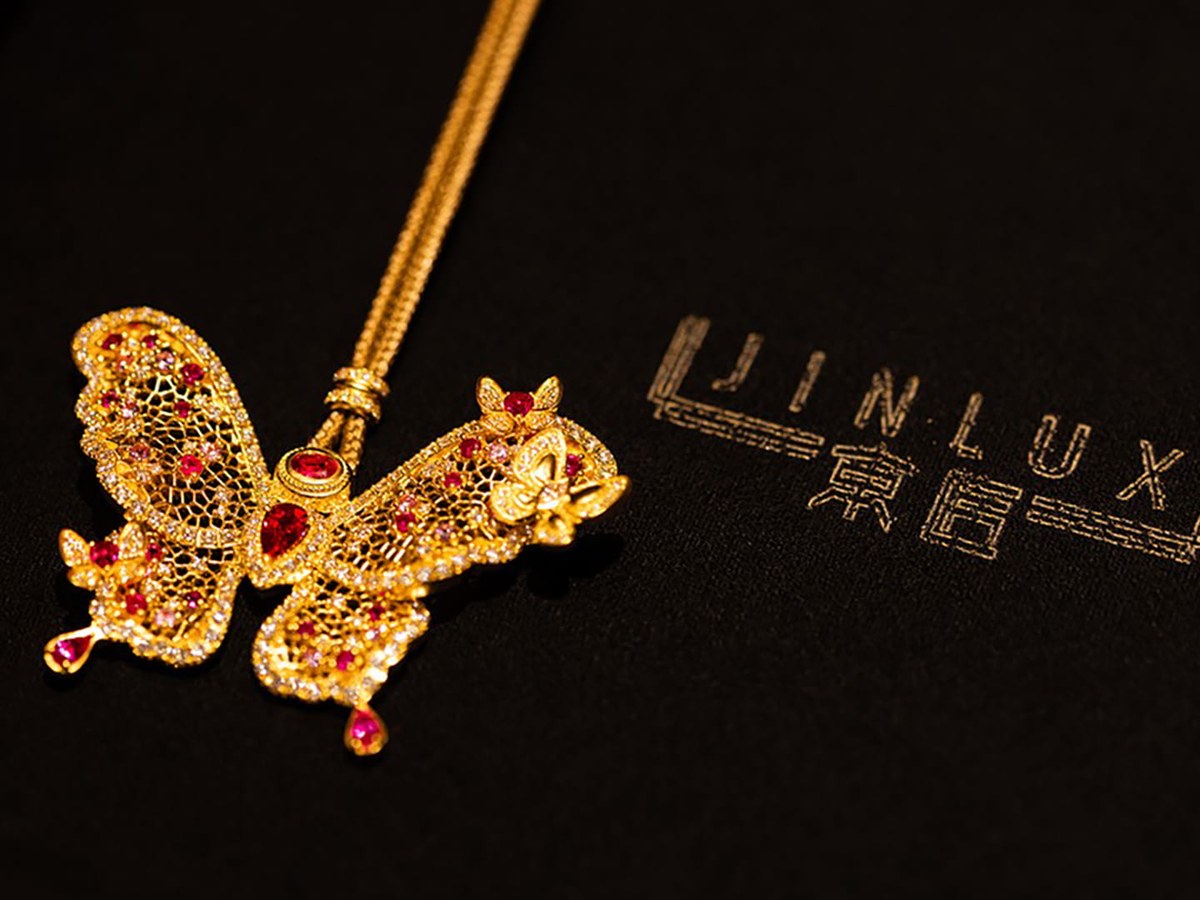
One. The maximalist positioning that has dominated regional luxury marketing for the past five years is approaching the end of its productive run. The Malaysian luxury operator who is currently planning a campaign cycle built on escalation (more spectacle, more celebrity, more product variants, more colours, more drops per quarter) is planning against the position that the most strategically sophisticated houses are now running away from. The early-mover advantage on restraint as positioning is available to regional operators who recognise the shift now. The late-mover penalty will be measured in three to five years of brand position dilution. Jinlux, the Chinese luxury jewellery brand UnPublished covered earlier, is one example of a regional player whose positioning is structurally compatible with the restraint argument. Most Malaysian premium brands are not yet positioned for it. They have time to recalibrate, but the window is narrowing.
Two. The price-per-wear versus price-per-post distinction is the operational metric the Malaysian luxury operator should be benchmarking against. Slimane-era Celine optimised for price-per-post. The Phoebe Philo Celine, and now the Rider Celine, optimise for price-per-wear. The two metrics produce different product decisions, different campaign decisions, different store layouts, and different retail margins. A premium F&B operator deciding whether to position around an Instagram-optimised experience or a quietly excellent product experience is making the same strategic choice. A boutique hotel deciding whether to design for the photograph or for the stay is making the same strategic choice. A craft retail brand deciding whether to optimise for first-purchase virality or for lifetime customer value is making the same strategic choice. Rider's Celine is the case study for what choosing the second option looks like when executed with conviction over multiple campaign cycles.
Three. The role of the parent group is the structural variable that makes Rider's bet possible. Celine is owned by LVMH. The parent group has the financial depth to support a multi-year repositioning that may underperform the previous tenure in the short term. A standalone luxury house, or a regional Malaysian premium brand without comparable parent depth, cannot afford the same patience. That difference matters for the operator. The strategic question for the Malaysian luxury brand operator is not whether restraint is the correct positioning. The strategic question is whether the operator has the capital depth, the board patience, and the family-business or sovereign-fund backing to execute restraint through a multi-year repositioning cycle. If the answer is no, the operator should be working with parent group equivalents (Khazanah strategic positions, family office backing, sovereign-linked vehicles) to build the financial runway that the strategic position requires. The capital structure decision is upstream of the positioning decision.
Four. The talent decision is the deeper lesson. Rider's effectiveness at Celine is partly visible in the campaigns and partly invisible in the design studio. He brought operating experience from Polo Ralph Lauren, design experience from old Celine and Balenciaga, and an understanding of what each kind of luxury house can credibly claim. That accumulated experience is the asset. The Malaysian premium brand operator who is building creative leadership for the next decade should be reading this carefully. The most strategically valuable creative leaders in the regional market over the next five years will be the ones with multiple-house experience, multi-discipline backgrounds, and the operational maturity to design for multi-year arcs rather than seasonal cycles. Those creative leaders exist in the region. They are largely working in design houses that are not yet positioned to use them. The Malaysian operator who builds the structural conditions to attract that level of creative leadership now will be operating in a structurally different category in five years than the operator who continues to hire for short-cycle campaign execution.
The photograph of a model holding a hen against a whitewashed wall will be remembered, by the people who pay attention to the luxury category, as a small but specific marker in the Michael Rider tenure at Celine. The fashion historians will index it. The trade press will catalogue it. The competing creative directors will study it. The argument it makes, in editorial terms, is that the house is comfortable, and that the comfort itself is the position. The argument it makes, in commercial terms, is that the Celine business is being repositioned around a metric (price-per-wear, multi-year wardrobe relevance, restraint as confidence) that the rest of the luxury category has been collectively undervaluing for a decade.
The headline is a Celine campaign. The story is what happens when a luxury house decides, with the full backing of its parent group, to take the strategically harder position. The Malaysian luxury operator reading the press release version is reading the wrong version. The right version is the one that asks which side of the same strategic decision the operator is on, and what changes if the answer is the other side.