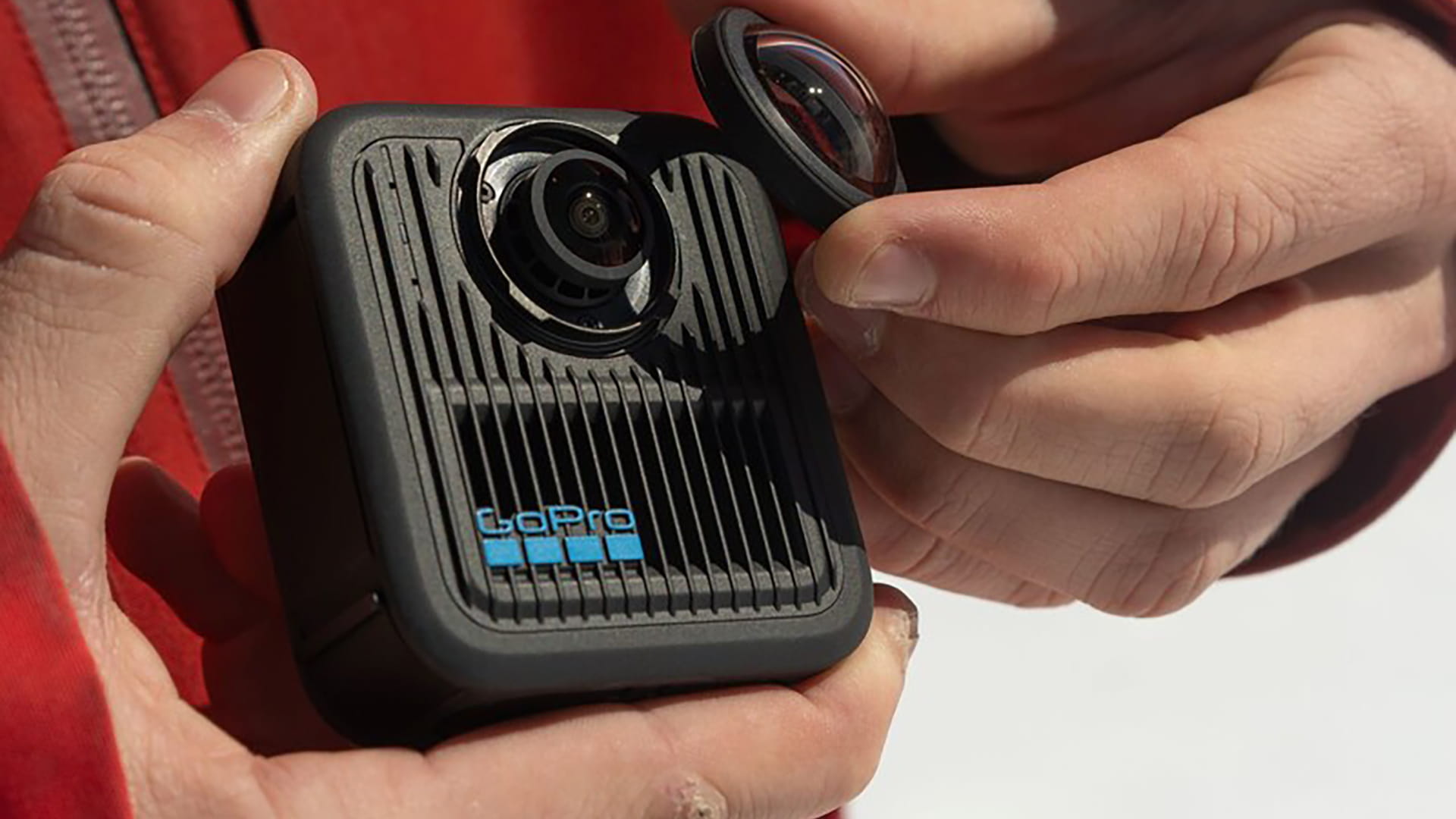
The announcement was buried in a paragraph last month. GoPro has hired a financial advisor to review strategic options, including a sale or merger. The company has received multiple acquisition approaches since the review began. Three consecutive annual losses, the most recent at USD 93.5 million. Revenue down 19 percent year-on-year to USD 652 million, less than half the level the company reached at its 2015 peak. Workforce reduced by roughly 20 percent. New ventures into defense and space being explored as growth alternatives.
The mainstream business press will read this as a company in trouble. That framing is partial. The more accurate framing is that the category GoPro invented in 2002 has been quietly handed over to a different set of operators, and the handover happened more decisively than most consumer hardware analysts have been willing to publicly acknowledge.
Read the IDC numbers carefully. In 2025, DJI captured 62 percent of the global handheld smart camera market. Arashi Vision, which sells cameras under the Insta360 brand, held 20 percent. Together, two Chinese companies held 82 percent of a category that, at the start of the decade, was substantially defined by GoPro. While GoPro's shipments fell 26 percent year-on-year, the two Chinese companies posted sharp increases. The overall market grew 83 percent to 16.7 million units. The category is expanding. GoPro is contracting within it. The most charitable framing of that combination is that GoPro is no longer participating in the market it created.
How did this happen. The technical answer, from BCN analyst Ichiro Michikoshi, is that GoPro fell behind on two specific issues. Overheating during extended recording. Low-light performance. Both are core technical specifications for the use cases the camera is meant to serve. A camera that overheats is a camera that stops working in the middle of the footage that justifies the purchase. A camera that performs poorly in low light is a camera that limits when and where the customer can use it. Each of these is a fixable engineering problem. GoPro did not fix them at the pace the category required. The Chinese rivals did, and pulled ahead.
The strategic answer is more uncomfortable. DJI and Insta360 did not win this category by underpricing. They won it by out-innovating. DJI partnered with Sweden's Hasselblad to absorb the optical engineering heritage of a premium camera brand into its image processing stack. Arashi Vision did the same with Germany's Leica. These are not the moves of companies trying to compete on price. These are the moves of companies trying to compete on category leadership at the high end, and they did so while GoPro was still operating from a premium positioning that no longer matched the product reality.
The Osmo Pocket 4P, which DJI launched at the Cannes International Film Festival on May 14, is the case that closes the argument. Previous Osmo Pocket models used digital zoom. The 4P features optical zoom that minimises image degradation. DJI invited film industry professionals to the launch, framing the camera as a tool for professional-level video production. A premium camera category that GoPro never reached, in a venue designed for the audience that defines premium standing. The signaling is precise. DJI is not competing for GoPro's existing customers any longer. DJI is now defining the customer category itself.
The Editor's Note
If you are reading this and the pattern fits your business — start the conversation before the conversation starts itself. editor@unpublished.my.
The competitive pattern between DJI and Insta360 is also worth reading carefully, because it reveals how categories are now being expanded inside China-based competition rather than between China and the West. Arashi Vision became the global leader in 360-degree cameras after launching its first one in 2016. DJI responded with its own 360-degree camera in July 2025. Insta360 then countered in December 2025 with a 360-degree-camera-equipped drone, entering DJI's core territory. DJI followed with a 360-degree drone in March 2026. The rivalry is now expected to intensify in the gimbal camera segment, where Insta360 is preparing to launch its first gimbal camera by the end of June. Two Chinese companies, neither of them GoPro's traditional competitor, are now expanding the category back and forth at a rate that GoPro is not participating in.
The structural question underneath this is the question every Asian hardware operator should be asking from their own desk. How did a US company that invented a category, that owned the brand association with that category, that had a multi-year head start and a multi-billion-dollar market cap, end up at three consecutive years of losses and a banker shopping the company. The answer is not pricing. It is not marketing. It is not even strategy in the abstract. It is the steady accumulation of small technical decisions and small customer-side improvements, made every single product cycle by competitors who treated the category as a marathon and not as a closed market.
For Malaysian and Southeast Asian hardware operators looking at their own categories, the GoPro trajectory is a structural warning. The categories that look defended by brand association and first-mover advantage are categories that can be quietly hollowed out by Chinese competitors operating at a faster product cycle, on better technical specifications, with partnerships into premium component supply that the incumbent has not made. The same dynamic that played out in handheld smart cameras between 2020 and 2026 is playing out right now in robot vacuums, electric scooters, home audio, smart locks, home security cameras, e-bikes, smartwatches, wearables, and consumer drones. The starting positions are different. The endpoint of the curve is not.
The lesson is not that Chinese competitors are unbeatable. The lesson is that the playbook of premium-brand-association without continuous technical leadership is the playbook that loses. The companies that hold their categories against Chinese competition are the companies that match the Chinese product cycle on iteration speed and exceed it on one or two specific technical specifications that the target customer actually cares about. The companies that lose are the ones that lean on heritage and assume the brand carries the price premium without the underlying engineering to justify it.
GoPro's planned response, according to the company, is to launch new cameras this year with larger sensors to improve low-light performance, and to resolve the heat management issues that analyst Michikoshi flagged. The same Michikoshi noted that many users still favor GoPro's distinctive color rendering. The implication is that there is still a path back, if the company can ship those technical improvements before the next product cycle from DJI and Insta360. The implication is also that the path back is harder when the incumbent is now playing catch-up rather than setting the pace, and when the incumbent has just lost 20 percent of its workforce and is asking a banker to evaluate a sale at the same time.
IDC forecasts global handheld smart camera shipments will reach 40 million units by 2030, 2.4 times the 2025 level. The category is going to keep growing. The question is who captures the growth. Based on current trajectories, the answer is DJI and Insta360, with some share to whichever Japanese mirrorless brands decide to enter the smaller-form-factor segment, and a residual share for whoever ends up acquiring GoPro and operating what is left of the brand. The Western action camera era is closing. The Asian-led smart camera era is opening. The transition is happening in real time and very few category outsiders are pricing it correctly.
For the Malaysian operator reading this from a different hardware category, the takeaway is not to feel sympathy for GoPro. The takeaway is to read the operating playbook that won the category, and to decide whether the playbook in your own category is closer to the operator that lost or the operators that won. Most regional hardware operators are still running the incumbent playbook. The incumbent playbook is being beaten in real time, in adjacent categories, by competitors who are now expanding into the regional categories next. Watching this happen to GoPro and learning nothing from it is a strategic position that does not survive contact with the next product cycle.
The headline is a banker hired to find a buyer. The story is a category transition that closed faster than anyone outside the industry was willing to publicly acknowledge.