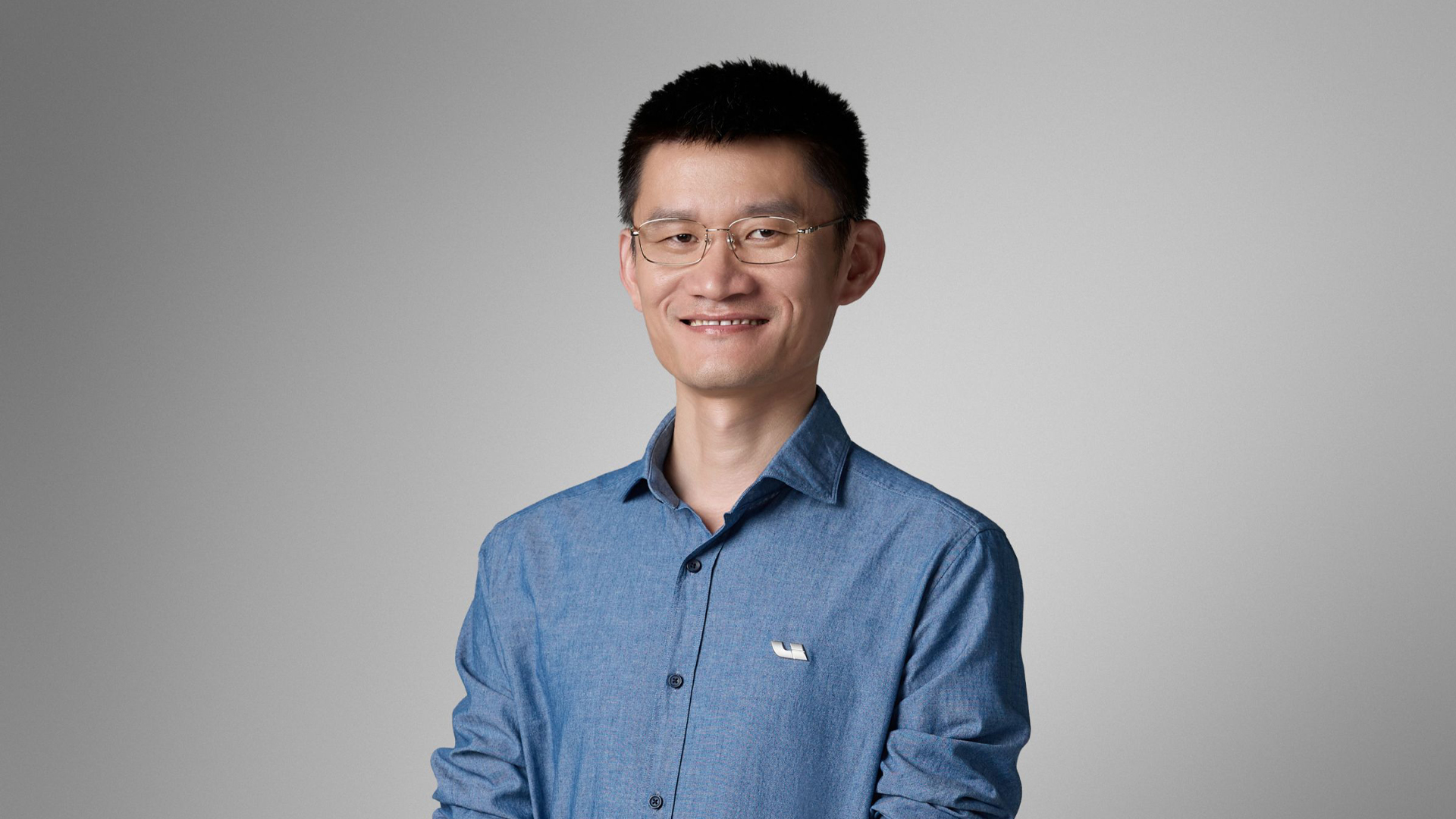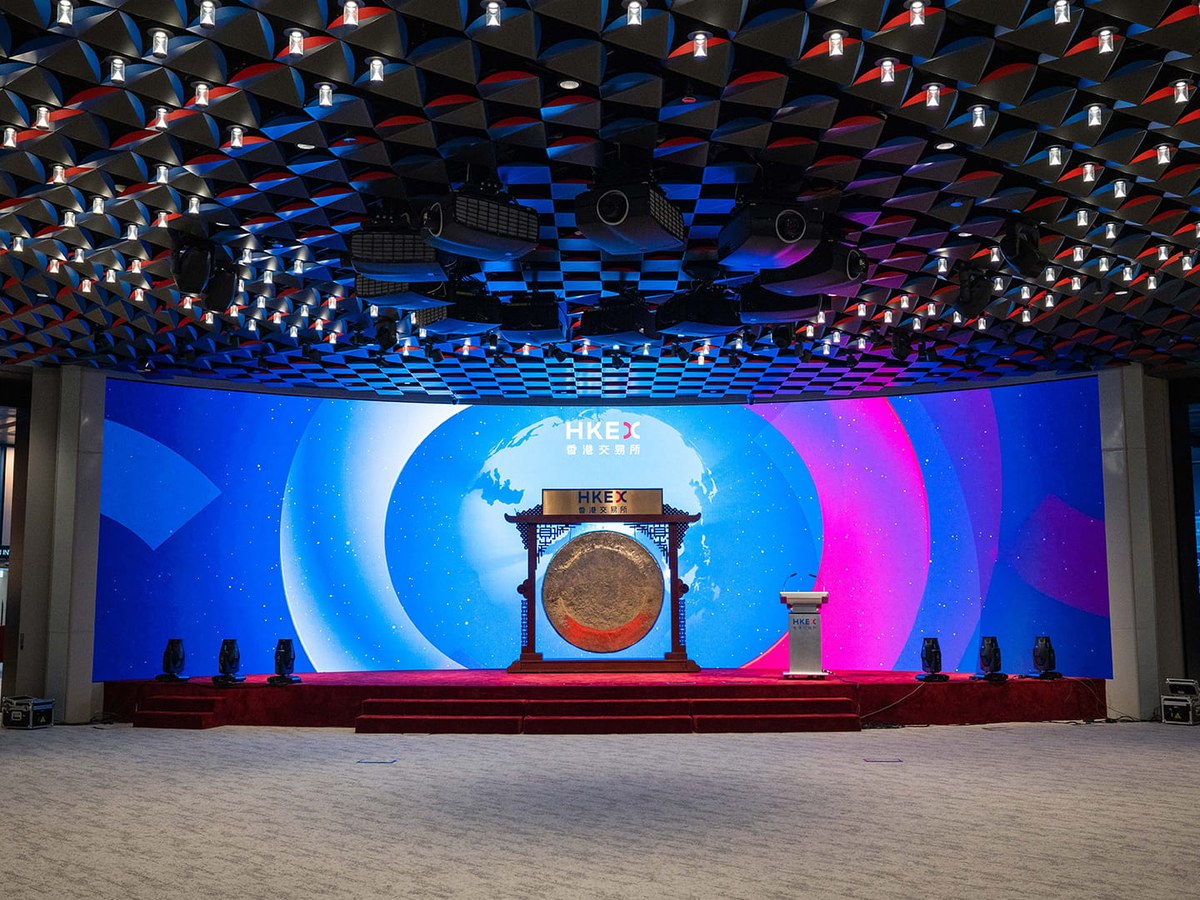
Yu Yinan has the kind of resume that does not exist in Southeast Asia and is increasingly common in China. PhD in technology. Did not enter academia. Joined the founding team of Horizon Robotics in 2015 as employee number one, after Yu Kai, the eventual founder, asked him a single question. Shall we go build artificial intelligence chips together. He said yes. Nine years later, Horizon Robotics listed on the Hong Kong Stock Exchange in 2024 as the largest Hong Kong IPO of that year, according to 36Kr. By that point, Yu Yinan had managed supply chain, sales, finance, and other commercial functions inside Horizon Robotics. He left at the end of 2024 to start Vbot.
The Vbot pre-Series A round closed at RMB 500 million, roughly USD 73.4 million. The round was jointly led by Orient Renaissance Capital, Huatai Zijin Investment, and Fosun RZ Capital. Participation from SAIC-backed Shang Qi Capital and Mornway Capital. Existing investors including Cathay Capital, Capital Today, Hillhouse Capital, Ince Capital, Baidu Ventures, and Borui Capital also participated.
Read that cap table again. The lead investors are not consumer-product specialists. They are sovereign-adjacent and listed-financial-arm investors deploying institutional capital at scale. The existing investors include Hillhouse, one of the most disciplined late-stage funds in the region, and Baidu Ventures, the corporate venture arm of one of the most aggressive AI players in China. The mix is not a consumer-electronics cap table. It is an embodied-intelligence-platform cap table. The difference matters because it tells you what these investors believe Vbot will become, not what Vbot currently sells.
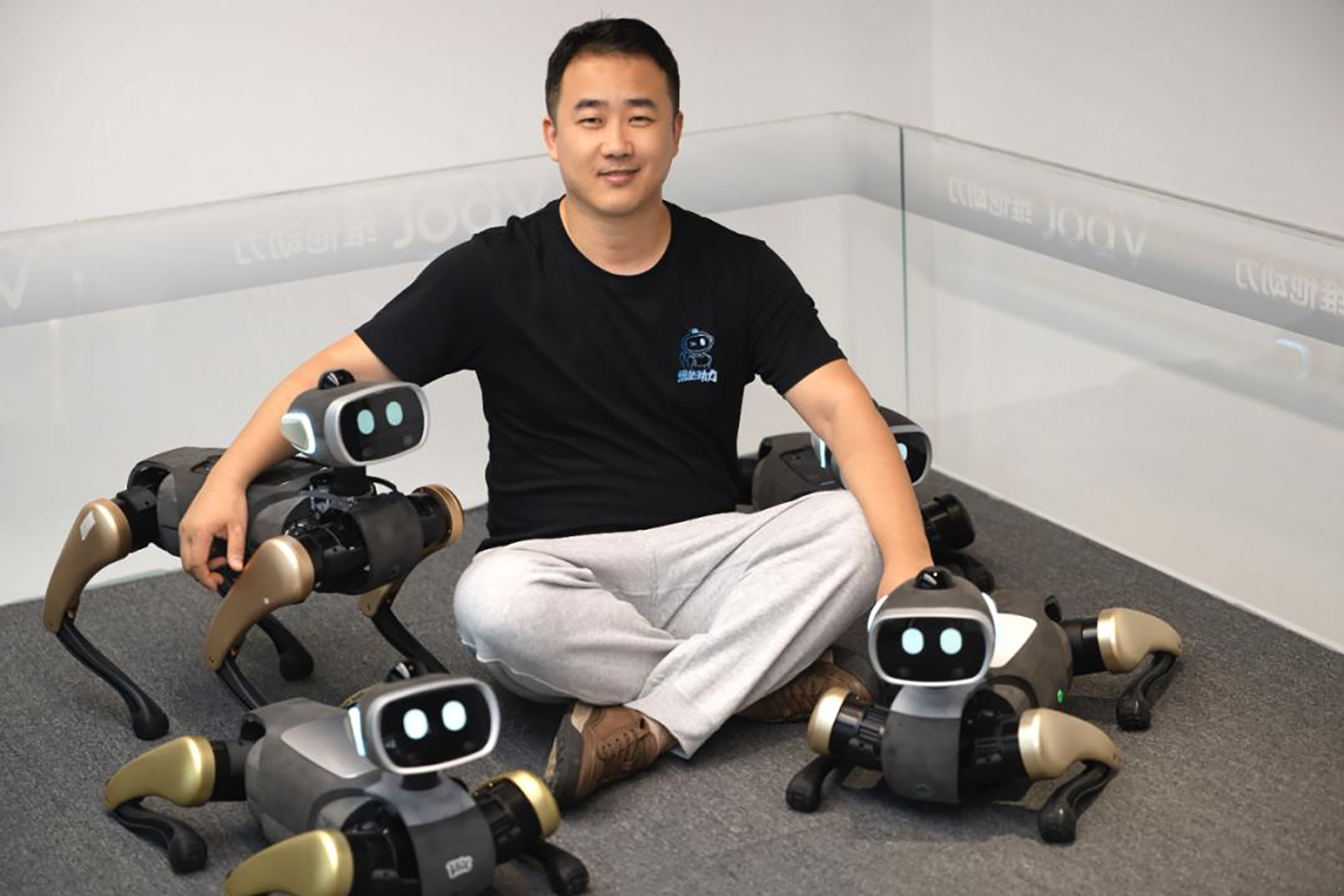
What Vbot currently sells is a quadruped robot. A robot dog. Production began in early May. The first batch of five hundred units rolled off the production line on May 8. Total orders since launch have exceeded eight thousand units. The production line was built jointly with Huaqin and is still ramping. The plan is to deliver fifteen hundred units in May. Two thousand five hundred per month by June. At full capacity, monthly output can exceed four thousand units. The customer profile that Zhao Zhelun, the Vbot co-founder, described is informative. Mostly thirty-to-forty-five-year-old middle-class families with children. The same households that own Li Auto, Nio, Tesla, Mercedes-Benz, BMW, Audi, and Porsche vehicles.
That demographic overlap is not coincidental. It is the predicted next platform purchase for the household that has already adopted electric vehicles, smart-home systems, and discretionary consumer electronics. The robot dog is the entry point. The longer-term play is the platform position in homes that have demonstrated willingness to spend on early-stage premium consumer technology.
The Editor's Note
If you are reading this and the pattern fits your business — start the conversation before the conversation starts itself. editor@unpublished.my.
The strategic framing Yu has built around the company is what makes Vbot a different kind of robotics startup. Most consumer robotics companies pitch the product. The robot vacuum. The pool cleaner. The lawn mower. The pet companion. Each one is a single-purpose device sold against a single use case. Yu's framing is different. He is building what he calls a platform-based robotics operating system and core component ecosystem. The hardware form factor is determined by the scenario. The platform is determined by the architecture.
The next phase of Vbot's R&D will focus on three areas. One. Robot body R&D for full-size humanoid robots that combine motion and task capabilities. Two. World model R&D for general manipulation and mobility. Three. An embodied intelligence operating system based on an agentic OS architecture. The goal is to support a broader robotics application ecosystem across homes, commercial spaces, offices, and other environments.
Translation. The quadruped robot is the entry vehicle. The platform is what gets sold next. The question for any investor putting money into Vbot today is not whether the robot dog will sell. The question is whether the operating system, the component ecosystem, and the data flywheel will produce the kind of platform position that makes the company defensible against Tesla, against Unitree, against the next generation of Chinese robotics entrants, and against whatever Apple and Meta eventually launch.
The reason this matters for Southeast Asian operators is the timeline Yu put on the consumer home robotics market. He believes that around 2027, home robots with real practical value will start to appear. Not demonstration capabilities. Continuous high-quality service in some home scenarios. He thinks the market will then expand exponentially as task complexity increases. That timeline implies that the consumer category from which the next decade of robotics revenue will be generated is being formed in China right now, by companies like Vbot, with the capital structure and supply chain depth to scale into volume within twelve to eighteen months.
The data flywheel Yu described is the structural moat. When large numbers of robots operate in real home scenarios, they encounter the long tail of unpredictable physical situations that simulation cannot fully capture. The robots that succeed and the robots that fail at the boundary of their capability produce the most valuable training data. Vbot filters this data on-device, uploads it to the cloud for secondary processing, uses it to train better new models, and pushes them to all robots through OTA updates. The cycle drives continuous capability evolution. The companies that get robots into homes first build a data flywheel that the late-arriving companies cannot easily reproduce.
That logic is identical to how the early autonomous driving companies built their data position. Tesla shipped first. Tesla collected the most data. The data position compounds. The competitors who arrive five years later are not just behind on hardware. They are behind on data flywheel infrastructure that the early movers spent five years building. The same dynamic is now playing out in consumer robotics, with Vbot positioning itself as one of the first companies to commit to home deployment at meaningful scale.
The technology synergy with humanoid robots is the part Yu was explicit about. More than half of the joints, the computing platform, batteries, sensors, structural materials, and suppliers can be fully reused between quadruped and humanoid form factors. The operating system, electrical and electronic architecture, and communication protocols are almost one hundred percent reusable. The world models and vision-language models are highly transferable at the higher algorithmic levels. The only fully differentiated part is the lowest-level motion control layer, which is strongly tied to the specific body form. The framing Yu used is clean. One intelligence system adapting to different bodies.
That framing is also what positions Vbot to compete when Tesla's third-generation humanoid robot reaches mass production. Yu's view on that scenario is not defensive. He believes a Tesla mass-production event will be the equivalent of the Model 3 entering China. A super event that defines the industry bellwether, aligns industry understanding, and tells the broader market what the right playbook is. The Tesla event will not overturn Vbot. It will drive the entire industry chain and ecosystem to accelerate. Just as Tesla drove the rise of Nio, Xpeng, and Li Auto, it will drive the rise of the Chinese consumer robotics ecosystem.
For Southeast Asian operators, this raises a set of questions that very few are seriously discussing. The first is what happens to the existing consumer electronics retail base when home robotics becomes a meaningful product category. The Vbot offline experience network at Raffles City Changning and Solana Beijing is the early signal of what physical retail for the category will look like. Premium urban locations. High-touch demonstration formats. The kind of foot traffic and customer experience model that current Southeast Asian electronics retail is not configured for. Senheng, Harvey Norman, the Apple Authorised Reseller network. None of them are positioned to be the first regional retail partner for a Vbot or a Unitree.
The second question is whether the supply chain for consumer robotics will land in Southeast Asia or remain consolidated in China. The component synergies Yu described between quadruped and humanoid robots imply that the supplier base will concentrate where the volume is. The volume is currently in China. The volume will move toward Southeast Asia only if regional electronics manufacturing positions itself to participate in the supply chain. Penang is well placed for the semiconductor portion. Johor is well placed for the assembly. Neither has been actively pursuing the consumer robotics supplier mandate, because the regional consumer robotics demand is not yet large enough to justify it.
The third question is what the consumer market in Malaysia, Singapore, Indonesia, Thailand, and Vietnam looks like when home robotics reaches the maturity of, say, the smartphone market in 2010. Most of the regional consumer-electronics import channels are not set up for the category. The financing options are not built. The after-sales service capability does not exist. The first regional operator to position for that demand, with showroom, financing, service, and content, will have an unfair advantage when the category arrives at scale.
Yu's closing position on the industry is worth quoting. Claims that the industry is cooling have existed for years. But we believe the long march of embodied intelligence has only just taken its first step. The industry is far from convergence. He is right. He is also describing why the cap table behind Vbot looks the way it does. The investors are not betting on a robot dog. They are betting on the platform position that the robot dog establishes for a company that will sell something else, with the same underlying technology, to the same customer base, two and three product cycles from now.
The Malaysian operator reading this should not be evaluating Vbot. The Malaysian operator should be evaluating whether the regional ecosystem is preparing for the category at all. The current answer is mostly no. The window to change that answer is the next twelve to eighteen months. The framing here is the same framing as every other category in this region. The capital is moving faster than the regional positioning is. The operators who notice early will be the ones positioned when the wave actually arrives.