Li Xiang, founder and CEO of Li Auto, spent twenty minutes on stage at the Beijing Auto Show introducing the new Li L9 Livis. Half of that time was on the chassis. Half. The most expensive flagship presentation slot the company has owned all year, and the CEO spent it discussing the suspension system, the braking architecture, and the steering technology. Not the interior, which Li Auto used to lead with. Not the assisted driving system, which most of his peers spend their presentations on. The chassis.
That is the part the regional auto press is not contextualising properly. The choice of what to put on stage tells you what the company believes its next decade of competitive position rests on. Li Auto believes the chassis is now where the technological moat is being built. That belief is correct. The belief is also extremely difficult to act on at any meaningful scale, which is why Li Auto's bet is interesting beyond just the Li L9 Livis itself.
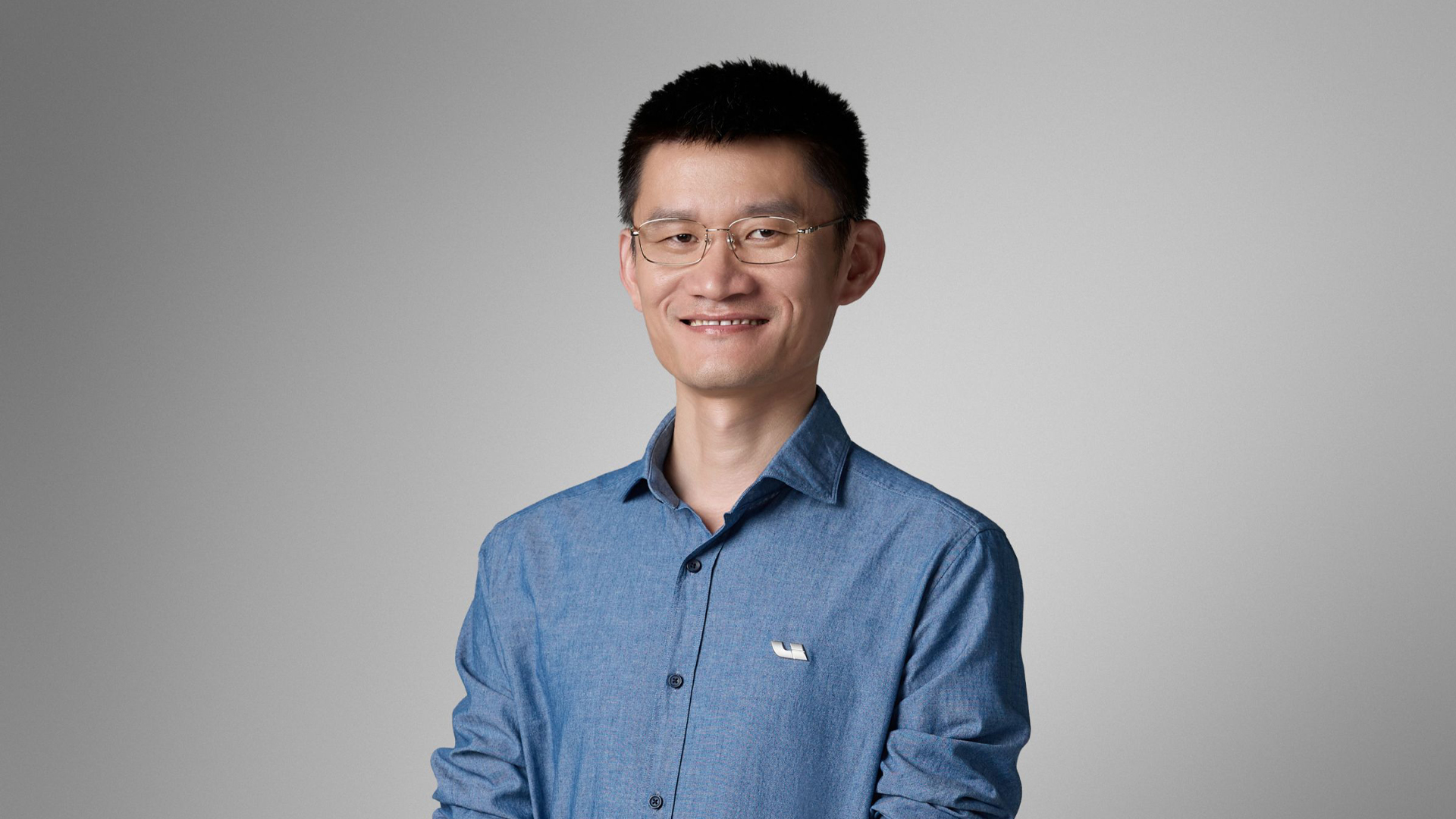
Liu Liguo, head of vehicle electric R&D at Li Auto, was the executive 36Kr interviewed for the deeper architectural conversation. The summary of what he described is straightforward in language but extraordinary in implication. Li Auto, working with selected suppliers but with the software developed entirely in-house, has implemented three chassis technologies that none of its competitors have currently combined in mass production. Brake-by-wire, also called EMB or electromechanical braking, which eliminates hydraulic braking entirely and uses independent motors at each wheel. Eight-hundred-volt active suspension, capable of producing more than ten thousand newtons of independent force at each wheel. Steer-by-wire, where the steering wheel is connected to the wheels only by electrical signal, with no mechanical linkage.
Each one of these is technically demanding on its own. The achievement is not implementing one of them. The achievement is implementing all three simultaneously, in coordinated form, with software developed in-house that allows the three subsystems to communicate at the level of milliseconds.
Why does this matter beyond the engineering. It matters because of what it implies about the next decade of automotive competition.
The Editor's Note
If you are reading this and the pattern fits your business — start the conversation before the conversation starts itself. editor@unpublished.my.
Liu's framing of why Li Auto did this himself is the part worth quoting at length. Many OEMs, he said, have procured steer-by-wire and brake-by-wire from suppliers. But the software for the three systems comes from black boxes provided by different suppliers. The code cannot communicate. There is no way to achieve unified control. Li Auto developed the software for all three systems in-house. The code sits within the same architectural system. Data is naturally connected. Only this way can the domain controller truly coordinate the three directions, instead of passing messages through black boxes.
That sentence describes a different competitive position than most outside observers think Li Auto occupies. The outside view of Li Auto, particularly the view from analysts who do not follow Chinese automotive R&D closely, has been that the company is a product company. A clever interior. A family-oriented positioning. The refrigerator-television-sofa joke that became shorthand for the brand. Soft moat. Easily copied.
That view is now provably wrong. The chassis architecture that Li Auto has built is not soft moat. It is a four-year cumulative development effort, requiring co-development with suppliers on the hardware side, full-stack software development on the integration side, four million kilometres of road testing across twenty-three Chinese provinces, ASIL D safety certification from DAkkS, and a custom chip architecture that allocates one hundred to two hundred TOPS of compute specifically for chassis algorithms. None of those investments compound for a competitor who decides to copy the strategy in 2027. They have to be done from scratch.
The chip architecture point is worth pausing on. Li Auto's Mach M100 chip was designed with a dedicated vehicle control area reserved from day one of the chip design process. Liu described it as having multiple small rooms separated by partitions. Vehicle control sits in one room. Assisted driving sits in another. The two have different iteration cycles, different safety levels, and different latency requirements. Physical hard isolation was designed at the chip level, not at the software level, because time-sharing or virtual machines could not handle the safety isolation requirements. Liu said only Tesla has done this kind of integration more extensively. Li Auto is the second to reach this level.
That is the structural advantage. Li Auto can put one hundred to two hundred TOPS of dedicated compute behind the chassis execution layer. In a traditional OEM, that one hundred to two hundred TOPS would already be comparable to the entire assisted driving compute capacity of some competitors. Li Auto has reserved that much compute specifically for the chassis. That allocation is what enables the deep coordination between subsystems that Liu described.
The functional outcomes are measurable. During emergency avoidance, the coordinated chassis system intervenes three hundred milliseconds earlier than traditional solutions. End-to-end latency from sensor signal to wheel response is compressed from more than one hundred milliseconds to within thirty milliseconds. Braking distance is more than two metres shorter than the previous-generation electrohydraulic braking system, with the same tyres and the same road conditions. Across four million kilometres of testing, including manually disconnected signal scenarios, there has been no total failure.
The strategic positioning Li Auto is building toward is what they internally call embodied intelligence. The argument is that perception and decision-making in autonomous driving are necessary but not sufficient. The decisions still need to be translated into physical motion of the vehicle. That translation happens at the chassis. If the chassis cannot execute the decisions reliably, smoothly, and with low latency, then the upstream perception and decision systems are functionally limited regardless of how sophisticated they become.
This is the same insight that Tesla arrived at through a different path. It is the same insight that the Chinese leading autonomous driving companies, including WeRide and Pony.ai, are now starting to build toward. It is not the insight that most legacy OEMs are operating from. Most legacy OEMs continue to treat the chassis as a procurement category to be optimised on cost, and the assisted driving as a separate software stack to be integrated on top. That separation works at low autonomy levels. It does not work at Level 4. The chassis has to be the execution arm of the autonomous driving brain, and the two have to be designed together.
For the Asian automotive supplier base, this changes the conversation. The suppliers that have historically dominated the chassis category have been the global tier-one majors. Bosch. Continental. ZF. Each of them has decades of expertise in electro-hydraulic braking systems. Each has stable commercial returns from existing platforms. None of them has had the commercial urgency to move from EHB to EMB at the pace Li Auto required. Liu's framing was diplomatic. He said it was not a question of capability. It was a difference in commercial drive. Translation. The global tier-ones moved at the pace their existing customer base allowed. Li Auto needed faster. The Chinese supplier Bethel was willing to move at Li Auto's pace. That is who they chose.
The Malaysian automotive component manufacturers reading this should understand what this implies for the next decade. The component categories that will see the most disruption are the ones being electrified, software-defined, and consolidated into integrated systems. Braking, steering, suspension, and increasingly the entire chassis domain. The component suppliers who win in this transition are the ones who can co-develop with OEMs at OEM speed, support full software integration, and accept the commercial risk of new architectures before they are proven. Most Malaysian tier-two suppliers are not positioned to do any of these. Some of the larger Malaysian tier-ones have the capability but not the customer relationships in China where the disruption is moving fastest.
This creates a strategic question for Proton, Perodua, and the broader Malaysian automotive ecosystem. The vehicles being built in Malaysia today are still using the EHB architecture that Li Auto has just publicly abandoned. The architectural shift is happening on Chinese vehicles first. It will spread to the rest of the Chinese auto industry within three to five years. It will spread to global OEMs on a slightly longer timeline. When it reaches the Malaysian assembly base, the suppliers who supported the transition will be in a structurally different position than the suppliers who did not.
The other point Liu raised, which is worth flagging for the wider Asian operator base, is that chassis technology and robotics technology share the same origin at the control level. From operating system to algorithms, from chips to vehicle applications, the development environment is the same. Li Auto's chassis capabilities can migrate to robots. That is not a hypothetical. That is the premise behind every Chinese automaker now publicly entering the robotics category. The chassis work being done today on premium SUVs is the foundation for the embodied intelligence work being done tomorrow on humanoid robots. Same supplier base. Same algorithmic frameworks. Same chips.
What Liu said about robotics is worth reading literally. From the underlying operating system to algorithms, from chips to vehicle applications, everything is developed in-house. This technology system provides a solid foundation whether we are building cars or robots. That is the premise behind automakers entering robotics.
The Li L9 Livis will be delivered shortly. Liu's closing framing was that the past four years were about teaching the chassis to think with electricity. The next phase is about teaching the chassis to help people think. The day the L9 Livis reaches users is not the endpoint, he said. It is the first day this truly begins.
For Southeast Asian operators across the automotive and emerging robotics categories, the question is whether the architectural shift Li Auto has just made public will be treated as a Chinese-specific innovation that does not require regional response, or as a preview of what the next decade of vehicle and robotic system architecture will look like globally. The first framing is comfortable. The second framing is correct. The Malaysian automotive supplier who is reading the Li L9 Livis announcement as a product launch is reading it wrong. It is a category launch. The product is incidental. The category is the part to plan against.